Experts: Arizona law bars local policies restricting ICE
Arizona local government policies restricting federal immigration enforcement from performing their duties are illegal because state law overrides local law, according to experts.
In recent months, local jurisdictions have passed policies aimed at impeding federal officers from conducting operations.
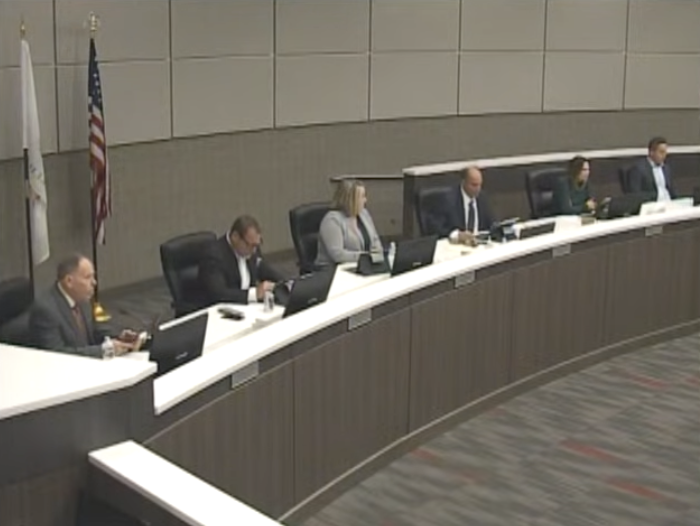
In February in Southern Arizona, the Pima County Board of Supervisors passed a resolution that banned federal law enforcement from using county-owned property without permission for civil immigration enforcement activities. (Pima is the state’s second-most populous county and is home to Tucson.)
The next month, the Phoenix City Council approved an initiative requiring U.S. Immigration and Customs Enforcement to obtain the city’s permission before conducting operations within it.
State Republicans filed legal complaints with Arizona Attorney General Kris Mayes’ office regarding these two local government actions.
Both complaints cite Arizona law that states “no official or agency of this state or a county, city, town or other political subdivision of this state may limit or restrict the enforcement of federal immigration laws to less than the full extent permitted by federal law.”
John Kincaid, the president of the Center for the Study of Federalism, told The Center Square that “if state law says local governments have to cooperate, then they have to do that because state law is supreme over local law.”
Andrew Arthur, who is the Center for Immigration Studies’ resident fellow in law and policy, also said “state law is going to trump” local law and overrule decisions made at the local level.
According to Kincaid, a professor at Lafayette College in Easton, Pa., if states don’t have a law in effect requiring local governments to enforce federal immigration laws, then local governments are not required to do so.
Kincaid said because of “dual sovereignty” in America’s federal system, “state and local governments are not obligated to assist the federal government in carrying out its functions.”
“They are not obligated to enforce federal law,” he said.
Kincaid noted these entities can’t “interfere with or obstruct the federal government from performing its own functions.”
“That crosses a line. They can simply be non-cooperative,” he said.
Kincaid said one of the earliest foundations for this legal interpretation is the U.S. Supreme Court’s 1842 case, Prigg v. Pennsylvania.
Justices said states “did not have to cooperate with the federal government in apprehending fugitive slaves, so many northern states passed personal liberty laws, which said state and local officials would not assist the federal government or anyone else in apprehending fugitive slaves,” the professor said.
This Supreme Court case is the origin of local governments passing resolutions that prevent them from obstructing the federal government but not from cooperating with it, he noted.
Local governments can restrict access to their properties, but if the restriction is specifically directed at federal immigration authorities, it raises constitutional issues, said Arthur, a former immigration judge.
These restrictions are “really questionable because they may run afoul of the anti-discrimination interpretations of the Supremacy Clause,” he added.
The U.S. Constitution’s Supremacy Clause says that federal law takes precedence over state law when they conflict.
Kincaid cited a 1997 U.S. Supreme Court case, Printz v. United States, which said the federal government can’t make state and local officials enforce federal law.
“Under the Printz decision, there’s no way that the federal government could require state and local officials to cooperate with federal ICE agents,” he said.
Jeremy Beck, co-president of NumbersUSA, said local jurisdictions started passing policies pushing back against federal immigration law during the Obama administration.
He said former President Barack Obama inherited a program that started in the George W. Bush administration called “Secure Communities.” The program created “automatic cooperation between local jails and federal agencies,” Beck said.
If people were booked into a jail and had their fingerprints taken, they were run in a federal database, and if the database determined people were in the country illegally, then federal immigration authorities would be notified and have a hold put on them so they could pick them up in jail, according to Beck.
After activists pushed back, the Obama administration ended the program, Beck said.
Since the Trump administration, local jurisdictions have been passing policies that “limit, prohibit or ban cooperation” with federal law enforcement, Beck said.
Beck also noted that more state and local police departments nationwide have joined the federal 287(g) program, which allows state and local law enforcement officers who are trained to perform specific immigration duties.
Since President Donald Trump returned to office, the federal program has seen a 641% increase in partnerships with local and state law enforcement, with more than 1,000 agencies now participating, according to the U.S. Department of Homeland Security.






Showers And Thunderstorms
Latest News Stories

Unpermitted Log Cabin and Stage Prompt Rezoning in Beecher
Frankfort Park District to Renegotiate Crystal Brook Park Agreement

Federal court blocks Trump from dismantling four agencies

State reps: Pritzker turns ‘blind eye’ to Chicago’s public safety crisis

Illinois quick hits: Medicaid coverage for parental home visits; ‘Trouble in Toyland’ report

Potential data center in Illinois village raises local concerns

New Lenox to Host Large Pollinator-Friendly Solar Farm

Hunter Prairie Park Redevelopment Nears Completion with New Amenities

JJC Receives Clean Audit, Reports $21.6 Million Increase in Net Position

Will County Board Passes 0% Tax Levy, Creating “Unbalanced” Budget Crisis

Poll: Majority of Americans still support legal immigration

New Illinois youth center begins housing youth in Lincoln