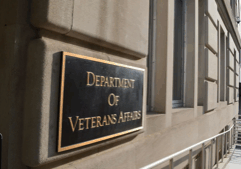
Federal services to slowly recover following end of government shutdown
With the longest government shutdown in history finally over, federal agencies are slowly bringing affected services back online and hoping to resume normal operations by the end of next week.
Tens of millions of low-income Americans on food stamps should receive November benefits within 24 hours, Politico reported. The U.S. Department of Agriculture, which administers the SNAP program, tapped into some emergency funds to cover 50% of payments.
Multiple states had sued the Trump administration for not using additional reserve funds to fully cover the program. The administration was in the process of appealing two court orders to do so when Congress finally voted to reopen the government Wednesday night.
Some of the most disruptive consequences of the 43-day shutdown, however, may take longer to remedy.
Over the past six weeks, millions of U.S. flyers experienced thousands of delays and cancellations as increasing numbers of unpaid air traffic controllers skipped workdays to take up odd jobs.
To ensure air safety, the Federal Aviation Administration ordered 40 major U.S. airports to incrementally reduce flight volumes, which reached 6% on Tuesday. The reduction level will stay at 6% until data shows it is safe to scale back, FAA Administrator Bryan Bradford announced after the government reopened.
“The data shows that controller staffing is improving rapidly, which allows us to hold flight reductions at six percent while maintaining the highest levels of safety in our airspace,” Bradford said. “We’ll continue to monitor system performance hour by hour, and we won’t hesitate to make further adjustments if needed.”
Air traffic controllers and hundreds of thousands of other federal workers will receive backpay soon, and those who were furloughed will start returning to work. The Trump administration aims to deliver backpay for all federal workers who have missed paychecks since Oct. 1 by Nov. 19, Semafor reported.
The speed with which federal employees return to their jobs will partially determine how quickly federal agencies can operate at full capacity.
Federal museums, parks, research centers, and the National Zoo, which have remained closed since the second week of the shutdown, will “reopen on a rolling basis by Monday, Nov. 17,” the Smithsonian Institution said.
The National Museum of American History, the National Air and Space Museum, and the Steven F. Udvar-Hazy Center will reopen first on Friday.
The American Federation of Government Employees, which represents over 820,000 federal workers, celebrated the passage of Republicans’ bill to reopen the government but lamented how “the livelihoods of more than two million federal employees have been held hostage by politicians who would rather play politics than do their jobs.”
AFGE added that it “remain[s] concerned about the growing use of government shutdowns as leverage for political gain.”
If U.S. lawmakers don’t use the next 10 weeks to finish the regular appropriations process, the government could partially shut down again on Jan. 31.





Partly Sunny
Latest News Stories
Federal debt expected to climb, but how much debt can U.S. carry?

Op-Ed: If Illinois wants clean energy, it needs data centers

Illinois senator’s bill on transgender ‘mental illness’ sparks debate
Lawmaker says Illinois behind 44 states in legislative transparency

Illinois Quick Hits: Foreign national faces harboring, forced labor charges
Meeting Summary and Briefs: Legislative Committee for February 3, 2026
Health & Safety Committee: Opioid Overdose Deaths Drop to Zero in January as Behavioral Health Department Expands Role
Illinois GOP state reps call on Dems to stop taxing s’mores, other goods
Illinois Quick Hits: Tangent to expand in Montgomery

Retail advocate: Swipe fees ruling is largest Main St. ‘relief package’ in Illinois

Smith & Wesson wins appeal chance in Highland Park lawsuits

Illinois Republicans say federal student data probe may reach Illinois State after Tufts review