Op-Ed: If Illinois wants clean energy, it needs data centers
If Illinois Gov. J.B. Pritzker wants to reach his environmental and economic goals, data centers will need to be central to the plan.
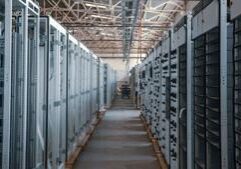
Last month, the governor’s office released a report showing Illinois’ energy demand is increasing. ComEd customers saw monthly energy bills jump 11% last June, with another 2% increase expected next June. Families are already facing higher housing, grocery and transportation costs, so even modest increases in utility bills put more strain on their budgets.Some groups such as the Citizens Utility Board are quick to point to data centers, which consume roughly 5% of the state’s total electricity, as the cause of rising prices.Fears over data centers hiking utility bills have prompted backlash. The Aurora City Council voted to place a moratorium on new data centers until their impact can be studied. Residents in Naperville are pushing back against potential data center development for similar reasons. A Jan. 5 meeting in Lincoln drew nearly 250 people to oppose a Logan County data center proposal.But if Illinois were to shut down major facilities such as CyrusOne’s Aurora data center or Microsoft’s Northlake data center, residents could still see their energy bills rise.That’s because Illinois is in the middle of a major shift toward clean energy.In 2021, Pritzker signed a sweeping clean energy and climate law setting a goal of eliminating coal and natural gas power by 2050 in favor of renewable sources such as wind and solar. But as the governor’s own report acknowledges, new generation sources are slow to come online. Formerly reliable power plants are shutting down, creating supply constraints that drive up costs.Even with a recent bill to expand the state’s access to nuclear energy, Illinois risks falling behind on its clean energy goals without the investment needed to bring new sources online.That’s where data centers come in.Technology companies understand their innovations require significant energy, and they have demonstrated a willingness to pay for it. Recently, seven major data center customers pledged $2 billion to ComEd to cover transmission charges in Illinois during the next decade and shield customers from extra costs that might result from their energy demands. Beyond just covering those costs, half of U.S. solar and wind energy procurement in 2024 could be traced to firms operating large-scale data centers.In June 2025, Meta committed to the Clinton Clean Energy Center in Illinois, allowing the nuclear facility to continue operating without raising rates for residents. Digital Realty also agreed to support three solar projects in the state last year.These companies and more are willing to invest because Illinois is particularly attractive for data center development. It sits at the center of the nation’s fiber-optic network, has robust transportation infrastructure and offers proximity to major population centers. Illinois is home to robust nuclear energy sources which provide the reliable power that data centers require.Recently, headlines have focused on major companies leaving the state for better economic and tax environments. If data centers want to locate in Illinois and invest in our energy infrastructure and overall economy, they should be welcomed.Not only are they investing in the machinery, facilities and people needed to bring more clean energy online in our state, but a PwC study also found data centers supported 115,000 Illinois jobs in 2023. That study showed in the same year data centers contributed over $1.8 billion in state and local taxes, supporting community priorities and improving quality of life. In a state with some of the highest combined state and local taxes, such a contribution is essential to affordability.While the concerns over short-term increases in energy bills are understandable, they must be viewed in the larger context of Illinois’ energy and economic needs. Progress comes at a price. Data centers have demonstrated a willingness to pay that price to unlock new, more efficient and less environmentally damaging energy sources.If Illinois locks them out, someone else must pay the bill, meaning taxpayers or utility customers.





Mostly Cloudy
Latest News Stories

Democrats push back against education department dismantling

Trump urges Senate GOP to pass $95B budget bill before August break

New tariffs face lawsuit, fall short on revenue, analysis finds

Illinois quick hits: United delays launch of service at Willard Airport

Election 2026: Field increases in U.S. Senate special Republican primary

Drivers pay more as gas tops $4 nationwide

Trump warns China, Russia against aiding Iran amid escalating strikes

Democratic members of Congress hold field hearing on ICE shooting in Houston

Watchdogs target Rush for what they say is its‘woke’ agenda, misuse of tax dollars

Healthcare fraud in California has made Medi-Cal “fiscally unsustainable”

Illinois quick hits: Gas prices continue slow climb

Pediatrics group wants to dismiss lawsuit against Florida attorney general

More pros than cons: ALEC panel discussion focuses on positives of data centers

Trump hits 60 nations with forced-labor tariffs