Trump hits Canada with new tariffs Congress may be powerless to stop
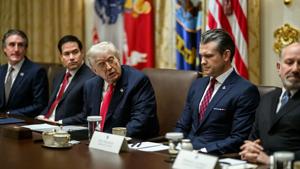
President Donald Trump imposed 50% tariffs on Canadian cars, alcohol and dairy this week, again using executive authority without looking to Congress.
It was the third time this year the administration reached for a new legal tool to tax imports. Outside economists say those taxes land overwhelmingly on Americans, at a cost the Tax Foundation puts near $700 per household in 2026.
In February, the Supreme Court ruled 6-3 that Trump could not impose tariffs under the International Emergency Economic Powers Act, wiping out his broadest tax authority. Hours later, he imposed a 10% global tariff under Section 122 of the Trade Act of 1974, only to have a federal trade court strike that down in May as unauthorized by law.
That ruling was stayed on appeal, and the Section 122 tariff expires on its own July 24. Meanwhile, the administration’s most durable tool, Section 301, survived when the Supreme Court declined in June to hear a challenge to it.
The Section 338 duties on Canada, invoked under a 1930 tariff law with almost no modern precedent, are the newest addition. Signed Monday, they apply a 50% duty to about $20 billion in Canadian goods under three proclamations targeting motor vehicles, alcohol and dairy, effective Aug. 19.
The alcohol and dairy lists stay close to their names. The motor-vehicle proclamation does not: it exempts actual cars and parts, already covered by Trump’s Section 232 auto tariffs, and instead lands the 50% duty on hundreds of unrelated goods – plywood, paper, furniture, toys and smartphones among them.
The White House said the tariffs were overdue. A White House spokesman told The Center Square the tariffs were “tailored and targeted tariffs in response to Canada’s unfair trade practices and retaliation against American products.”
U.S. Trade Representative Jamieson Greer, in a CNBC interview Tuesday, described them as “a natural consequence of the Canadian retaliation,” noting Canada had banned U.S. liquor, capped auto imports and limited dairy access while giving other countries better terms.
“The United States has never used” Section 338, said Clark Packard, a trade policy researcher at the Cato Institute, who expects the tariffs to draw a court challenge and noted an argument that the 1930 provision was “essentially superseded” by Section 301.
Alex Durante, an economist at the Tax Foundation, said some of Trump’s actions may not square with the statute.
“A lot of these restrictions on alcohol, for instance, a lot of that’s being done at the provincial level, so it’s not clear that the federal government is really discriminating against the U.S. in that way,” he told The Center Square.
Packard cautioned against overstating the impact: the duties cover only “about 5.5 to maybe 10% of all Canadian exports,” he said, and “the political salience of this is far outstripping the economic impact.”
Durante said the midterms likely won’t force Trump to change course on tariffs. Congress “has kind of relinquished a lot of their authority over trade to the president over the past several decades, and I don’t really see that changing regardless of who’s in charge.”
Opponents, Packard said, “are going to have to continue to rely on courts.” He said even that “provides limited relief, because the president just pivots to something different.”
Trump insists foreign exporters pay the costs of the tariffs, but Durante said the evidence points the other way.
“There’s not really much evidence that the foreign countries are paying these tariffs,” he told The Center Square. “It’s mainly been U.S. consumers and businesses that have been paying them.”
The Tax Foundation estimates the duties cost the average household about $1,300 in 2025, falling to roughly $700 this year after the Supreme Court struck down the IEEPA tariffs.
A March Center Square Voters’ Voice Poll found 42% of voters say consumers pay for tariffs; just 12% said foreign countries do.



Mostly Sunny
Latest News Stories

Central Ohio data center will have its own power plant
Supreme Court allows Trump to fire FTC members

Supreme Court blocks Trump’s firing of Lisa Cook

America 250: Freedom Trucks travel across U.S. celebrating American history

U.S. Supreme Court allows late mail-in ballots to be counted

Illinois Quick Hits: Gas prices fall, remain higher than a year ago

White teacher gets new life for race discrimination suit

Poll: About half of Americans confident in democracy’s future
Pennsylvania will be at the ‘Great American State Fair’ after all

Everyday Economics: The consumer is still spending, but not out of the woods

Illinois lawmaker promotes welfare water aid bill as critics raise concerns over federal expansion

America 250: Founding fathers, presidents point to the Bible as the anchor of liberty