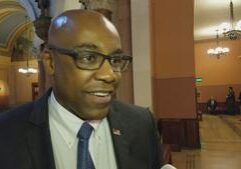
Illinois attorney general has paid private attorneys $2 million in recent years
(The Center Square) – Illinois’ top state attorney has paid more than $2 million in the past three years to private law firms, several of which have contributed to his campaign, to defend the state against a variety of claims, according to data obtained by The Center Square.
Most of that money has gone to two prominent law firms for two high-profile lawsuits that targeted the Illinois Department of Corrections, one of which recently obtained class-action status.
That class-action case was launched by four women in 2021 who claim they were subjected to repeated and unabated sexual harassment by inmates of a maximum-security prison over the course of several years, including what the lawsuit called “masturbation attacks.”
The other case involved a now-deceased man who claimed in 2018 he was wrongly detained in solitary confinement in an Illinois prison continuously for two decades.
The man’s treatment spawned legislation to limit such confinement — which ultimately failed to get approval of both chambers of the state legislature — and to require corrections officials to document their use of the punishment, which became law last year.
In both lawsuits, the Illinois Attorney General’s office initially led the defense of the department and their leaders but later paid hundreds of thousands of dollars to two Chicago law firms to litigate the cases: Hinshaw & Culbertson LLP and Franczek PC. As a result, the two firms were by far the largest recipients of taxpayer money from the attorney general’s office since the start of 2023, records show.
Hinshaw has billed the office for nearly $1 million in that time. Franczek’s total was about $620,000.
The attorney general’s office did not respond to a request to explain its decision-making process for when to seek help from outside counsel and how it selects the firms. Government agencies are allowed by state law to give no-bid contracts for legal counsel.
Franczek did not respond to a request to comment for this article, and a spokesperson for Hinshaw, which donated $500 to Attorney General Kwame Raoul’s election campaign committee the year he was first elected, declined comment.
Four other private law firms were contracted by the office during that time to defend other state departments against civil claims. Of those firms it was Valentine, Austriaco & Bueschel, of Chicago, that billed the most: about $267,000.
Aurora Austriaco, an attorney and partner at the firm, donated $5,000 to Raoul’s committee in the past five years, according to state records. Austriaco did not respond to a request to comment for this article about the donations and their potential to create a conflict of interest.
Austriaco’s contributions were relatively small — Raoul’s committee has raised more than $5 million over that time period — but elected officials can allay taxpayer concerns by soliciting bids for the work, even if it’s not required by law, according to Abigail Bellows, a senior policy director for anti-corruption and accountability for Common Cause, a national government watchdog.
“It’s enough that it could give people pause,” Bellows told The Center Square. “It could make people have questions about the integrity of an attorney general’s office, which is, of course, not anything that the attorney general or the public ever wants to have about a law enforcement official. Having more competitive and open procurement processes helps avoid those questions from even starting.”
The remaining three firms were: Quintairos, Prieto, Wood & Boyer for about $151,000; Tristan & Cervantes for about $116,000; and Sanchez Daniels & Hoffman for about $57,000.
Tristan & Cervantes donated $2,500 to Raoul’s campaign committee in 2024, state records show. Sanchez Daniels & Hoffman donated $1,000 in 2018.
The office also hired a former assistant attorney general, Desiree Kumar, to handle certain complaints from inmates. Kumar was paid about $32,000 and was not part of the other law firms.
The attorney general employs about 450 attorneys and has an approximately $185 million budget each year.
Prison harassment
Four women who were medical and mental health employees at Pontiac Correctional Center allege that inmates persistently showed them their penises and openly masturbated in front of them for years in their cells, recreation areas, the infirmary and other locations.
They “have been subjected to thousands of intentional penis exposures and acts of masturbation by the male inmates at the Pontiac prison,” according to the lawsuit, which was filed in 2021.
A judge granted the suit class-action status this year. That allows similarly affected employees to join. Those who brought the suit estimated about 50 people might be part of the class.
Pontiac is a maximum-security prison with about 2,000 inmates in north-central Illinois.
The lawsuit alleges the “masturbation attacks” had increased over time because prison officials did little to quell them. The suit claims gender discrimination because physical attacks against male staffers were swiftly addressed, whereas inmate offenses against women were not.
Further, at least one of the women said prison officials repeatedly suggested she quit her job to avoid the abuse, saying that the harassment was unavoidable.
The women were employees of the Department of Corrections or Wexford Health Sources — a Pennsylvania company that was contracted to provide inmates with healthcare — or both. The lawsuit targets the department and Wexford, each of which have said in court documents that they made “good faith efforts” to comply with laws that prohibit discrimination based on gender.
The department claims the women “failed to take advantage of any opportunities provided by their individual employers to prevent or correct harassment, or otherwise avoid harm,” according to court records.
One of the lawsuit plaintiffs who still works for the state as a corrections nurse is paid more than $120,000 each year, according to state records.
It’s unclear when the litigation will conclude. The state has paid more than $560,000 to outside law firms for work on the lawsuit.
Solitary confinement
Anthony Gay was imprisoned in 1994 for stealing a hat and $1 and then violating his probation by driving a car without a license, according to a lawsuit he filed in 2018 against state officials.
He was 20 years old. In prison, he began to display symptoms of borderline personality disorder and was violent. That led to his captivity in solitary confinement for more than two decades.
“Anthony lived alone in a small, bare, stifling cell, where he was deprived of all human contact for close to 24 hours per day,” his lawsuit alleged. “The impact of solitary confinement on Anthony was catastrophic.”
Gay mutilated his body repeatedly and flung bodily fluids at prison guards, which were considered assaults and extended his incarceration by about 15 years.
He cut into his body in several places and embedded objects, including a spoon in his thigh that was sufficiently deep to require surgery, the lawsuit alleged. He mutilated his penis and cut off a testicle and hung it on his cell door.
“It was plain for anyone to see that solitary confinement was ravaging Anthony’s mind, and that he was in desperate need of appropriate mental healthcare,” the lawsuit alleged. “But instead of placing Anthony in a setting that would alleviate the impact on his mind, or providing him treatment to get better, the defendants responded by prolonging Anthony’s extreme isolation.”
State officials blamed Wexford for any potential missteps in Gay’s mental health treatment, and the officials were removed from the lawsuit by a judge in September 2025, according to court records.
The state paid Hinshaw & Culbertson about $730,000 to defend them.
Wexford recently reached an undisclosed settlement with Gay’s estate, court records show. Gay died in 2024. A Wexford spokesperson did not respond to a request to comment for this article.
Illinois ended its arrangement with Wexford last year and switched to a different healthcare provider for its prisons.






Isolated Showers And Thunderstorms
Latest News Stories
Officials: Trans athlete bans won’t change Illinois school sports

Advocates worry new law will raise drug prices, harm self-insured businesses

Illinois Quick Hits: Toll burden 5th in U.S.

Complaint: District used tax dollars for referendum campaign

Supreme Court to hear Chicago assault weapons ban challenge

Illinois Quick Hits: Chicago TV crew attacked near lakefront
California Assembly passes $350 billion budget

Fetterman and McCormick voted for bipartisan housing reform. Will Trump sign it?
U.S. Supreme Court to hear asylum, voting, pipeline cases next term

Illinois second in local fines and forfeitures

Report: Taxpayer dollars help nonprofit hospitals pad executive salaries, pay for lawsuits

Over 7 million student loan borrowers have 90 days to switch repayment plans