Advocates worry new law will raise drug prices, harm self-insured businesses
A national pharmaceutical manufacturer advocacy group is suing Illinois over its 2025 Prescription Drug Affordability Act.
The Pharmaceutical Care Management Association filed a complaint June 16 in Springfield federal court against the Illinois Department of Insurance and Ann Gillespie, its director. PCMA wants a judge to agree the law is pre-empted by the federal Employee Retirement Income Security Act, a position it argues is in line with a 2016 U.S. Supreme Court opinion, Gobeille v. Liberty Mutual Insurance.
That decision clarified any state law requiring an ERISA plan or agents of a plan to make detailed disclosures to state agencies establishes a relationship sufficient to trigger the exemption.
Representing PCMA are Foley Hoag, of Boston, and Brown Hay + Stephens, of Springfield.
“Prescription drug prices are far too high for too many Illinoisans, said David Marin, PCMA president and CEO. “Yet this bill threatens to make them even higher. Our lawsuit aims to protect the self-insured businesses and labor unions who provide health benefits for Illinois workers. Unless challenged, Illinois’ pharmacy network restrictions and stringent reporting requirements will lead to higher costs and burdens for these employers while raising cost-sharing and premiums for patients.
“There are many ways to lower prescription drug prices and deliver affordability to patients and employers. But prohibiting the use of tools proven to lower costs and deliver cost-efficient, high-quality pharmaceutical care to patients and imposing onerous reporting burdens is not one of them. The court has an opportunity to uphold the ability of self-insured employers to design benefits that meet the needs of their workforce without unnecessary state interference.”
According to the complaint, the state law improperly requires pharmacy benefit managers to submit annual reports to the insurance department starting Sept. 1, 2026, with those documents to list, by plan, “a list of drugs including corresponding information on therapeutic class, brand name, generic name or specialty drug name,” “number of covered individuals,” “number of drug-related claims,” “dosage units,” “dispensing channel used” and “average wholesale acquisition cost per drug” along with how much each plan spends on drugs, in gross, and plan customers’ total net spending, among other obligations.
Pointing back to Gobeille, PCMA noted ERISA already requires reporting on some of the same information, such as the mandate for most self-funded ERISA plans to report to the U.S. Department of Labor a form covering liabilities, assets, receipts, paid claims and other disbursements. It said failure to comply with the new Illinois law can trigger fines of up to $10,000 daily.
PCMA also challenged the state law’s prohibition on steering patients toward affiliated pharmacies, including financial incentives or penalties. The complaint noted, “Plans cannot offer a preferred pharmacy network without providing beneficiaries discounts and other forms of incentives to drive their prescriptions to preferred pharmacies.” It further said the types of provisions it challenges have already been invalidated in some litigation or are currently subject to injunctions elsewhere, a sign they are likely to be rules as pre-empted under ERISA.
“Going forward, PBMs will have to develop burdensome administrative processes and state-specific plan designs applicable to ERISA plans in Illinois but not to ERISA plans in other states,” according to the complaint. “The inefficiencies inherent in these kinds of state-by-state compliance efforts are precisely those that ERISA’s express preemption clause was designed to prevent.”
In addition to a court order declaring the PDAA’s reporting requirements and its anti-steering and network decision provisions invalid and unenforceable, PCMA seeks a court order permanently halting the state from implementing or enforcing the law as applied to any benefit plans that fall under ERISA regulations.
PCMA is represented in the case by attorney Kristyn DeFilipp and others with the firms of Foley Hoag, of Boston, and Brown Hay + Stephens, of Springfield.




Showers And Thunderstorms Likely
Latest News Stories

Frankfort Approves $1.3 Million in Bills, Including Annual Insurance Payment

Meeting Briefs: Frankfort Village Board for June 2, 2025
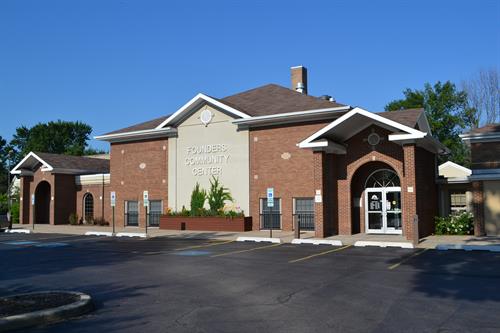
Frankfort Park Board Holds Closed-Door Talks on Five Oaks HOA Dispute
Frankfort Library Board Reorganizes with New Officers, Seeks to Fill Vacancy

Frankfort Library HVAC Project Nears Completion, Cost Estimated Up to $260,000
Meeting Summary: Frankfort Public Library District for May 22, 2025
Frankfort Township Approves Employee Raises, Details Major Infrastructure and Service Projects
New High-End Bar ‘Ace & Vine’ Gets Green Light from Township Board
Golf Carts Not Permitted on Township Roads, Supervisor Clarifies
Meeting Briefs: Frankfort Township Board for May 19, 2025
Will County Board Rejects Two Solar Farm Projects After Heated Public Opposition
County Approves $15 Million Water System Takeover for Southeast Joliet Area
Board Postpones County Purchasing Code Overhaul Amid Union Contractor Debate
New Frankfort Square Park Board Takes Helm Amid Strong Financials, Maksymiak and Moore Elected Leaders