California Assembly passes $350 billion budget
The Assembly on Monday afternoon passed all of the bills making up California’s roughly $350 billion budget.
Afterward, the bills immediately went to the Senate for its votes, which hadn’t been completed as of publication time.
Both budget committees in the Assembly and Senate debated the 2026 budget during separate meetings early Monday, with Democratic and Republican leaders going toe-to-toe over funding veterans’ programs.
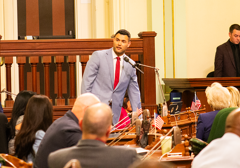
“From the general fund, it appears we’re spending less than $500 million on veteran services,” Assemblymember David Tangipa, R-Fresno and vice chair of the Assembly Budget Committee, said at the committee’s Monday morning meeting. “Now, if we look at providing full-scope Medi-Cal for illegal immigrants, it appears we’re spending $3.4 billion.”
Assemblymember Jesse Gabriel, D-Encino and chair of the Assembly Budget Committee, said many veterans’ programs are paid for through federal taxpayer dollars, not state funds.
“That’s a core area of federal responsibility,” Gabriel said during the budget hearing. “That’s what the federal government’s supposed to do. I know there has been supplementary work that the state has done, but the comparison is absolutely off-base.”
The Assembly passed one of the most prominent budget bills on Monday afternoon, Assembly Bill 111, which authorizes $351.7 billion in spending, which includes $251.5 billion from the general fund – essentially, the state government’s main checking account.
That budget also allocated state funding to K-12 schools and higher education. Approximately $1 billion of Proposition 98 money will pay for community schools. California voters passed Prop. 98 in 1988 to establish a minimum level of funding for K-12 and community college schools, according to The California Budget & Policy Center. Some of that money is going to pay for block grants, services for homeless students and other educational services.
Other budget bills, including one regarding taxpayer-funded transportation programs, passed the Assembly on Monday afternoon.
The transportation budget bill, which authorized an increase on the cap on the State Route 710 Rehabilitation Account from $1.2 million to $15 million, also included a stipulation that $30 million of transportation dollars be used for the High Road Construction Careers program. There was no explicit dollar amount designated to the high-speed rail, road or highway maintenance in that budget bill.
The Senate Budget and Fiscal Review Committee also debated the budget early Monday, with Sen. Roger Niello, R-Fair Oaks, saying during the meeting that the committee got Monday’s version of the budget over the weekend before a Sunday budget briefing.
“This process leaves a lot to be desired,” Niello said. “There is way too much detail in here for us to totally comprehend what’s in here.”
Democratic lawmakers were concerned that despite allocations in the budget that would pay for healthcare for some illegal immigrants, some would not qualify for programs paid for by Medi-Cal, the state’s version of Medicaid.
“In this time, we are already seeing about 300,000 folks lose their Medi-Cal benefits in L.A. County already,” Sen. Lola Smallwood-Cuevas, D-Los Angeles, said during the Senate budget hearing. “Folks are very confused about their food benefits, and when you take food and you take healthcare away, those are the things that are rights. Those are the things that make us human.”





Patchy Fog
Latest News Stories

Planning Commission Backs 5-MW Peotone Solar Farm; Developer Pledges Pollinator Habitat and Community Funds
Joliet Junior College Board Approves $2 Tuition Increase Amidst Heated Debate Over Enrollment and Spending
Lincoln-Way Board Ratifies Three-Year Support Staff Contract with Significant Hourly Raises
Frankfort Seeks Public Vision for Downtown Urban Design
Green Garden Residents Seek Frankfort’s Support in Opposing 6,000-Acre Solar Farm
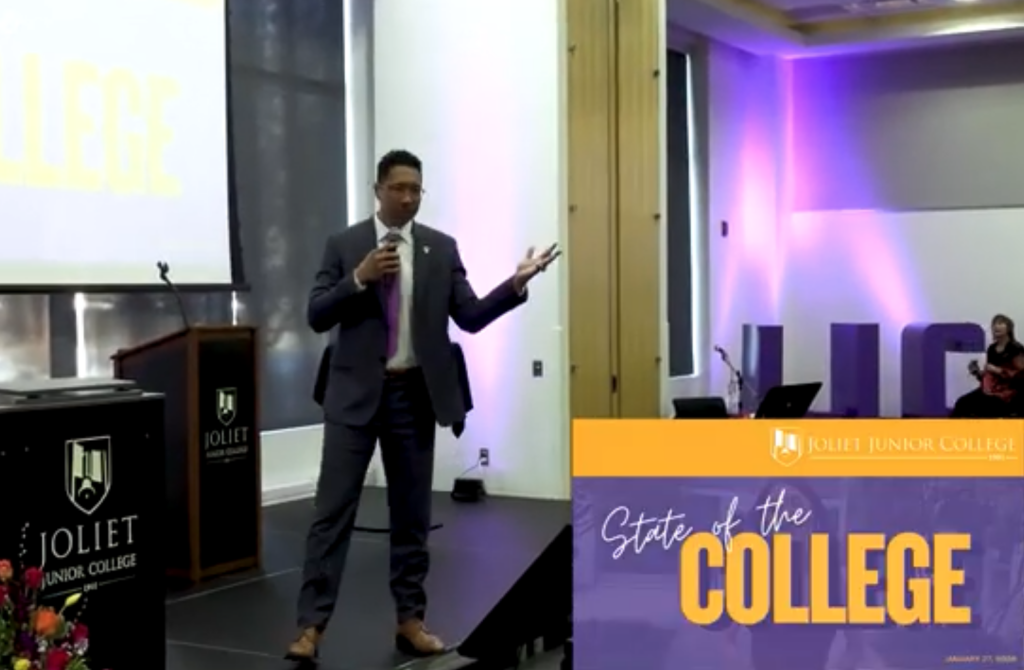
State of the College: Local Legislators Bolster Student Support Services

Meeting Summary and Briefs: Public Health & Safety Committee for February 5, 2026

State of the College: Dual Credit Program Enrollment Hits 6,000 Students
Meeting Summary and Briefs: Finance Committee for February 3, 2026

Fairmont Neighborhood Plan Update Prioritizes Infrastructure and Beautification Following Demographic Shift
Health & Safety Committee: Monee Church Kitchen Project Highlighted in County Health Impact Report
U.S. Ed Dept. investigates Puyallup wrestler’s sexual assault allegation by trans athlete