Everyday Economics: The consumer is still spending, but not out of the woods
Last month, inflation was still too high but some households got a little breathing room.
In May 2026, the Federal Reserve’s preferred inflation gauge, the PCE price index, was 4.1% higher than a year earlier – still more than double the Fed’s 2% target. But the income side of the report looked better. Inflation-adjusted disposable personal income rose 0.3 percent in May, after three consecutive monthly declines.
That sounds encouraging. Real income is what gives consumers room to spend. When purchasing power improves, households can buy more without relying as much on credit, savings, or delayed bill payments.
But May’s income gain was not as strong as it looked.
Part of the increase came from labor income, which is good news. Private wages and salaries rose in May, consistent with a labor market that has not rolled over. But a large part of the rebound also came from a jump in farm proprietors’ income, boosted by disaster-relief payments to producers. That support is less likely to repeat in the months ahead.
Strip out that one-time farm-payment boost, and the story looks much less comforting. Nominal disposable income still rose. But after adjusting for inflation, real disposable income was essentially flat. Roughly 85% of May’s real disposable income gain was the one-time farm payment. In other words, the headline said purchasing power improved. The counterfactual says much of that improvement was a mirage.
That matters for the consumer outlook.
For businesses, the useful question is not whether nominal spending rose. It did partly because prices were higher.
Real consumer spending still rose 0.3 percent in May. Consumers were not just spending more dollars because prices were higher. They were buying a little more in real terms. But if the income support was partly temporary, the spending gain may be harder to sustain.
Another good question is what industries or sectors are still benefiting from consumers buying more stuff.
Goods did the heavy lifting. Real goods spending rose about 0.5 percent after falling in April, led by a rebound in durable goods. Nondurable goods also improved. Services rose, but more modestly.
That spending mix matters for hiring and wages.
Where could employment pick up from here?
Look where consumers are still buying more in real terms and where the work is labor-intensive. Selected retailers, wholesalers, transportation firms, warehousing businesses, and inventory-sensitive companies may see some support from the rebound in goods demand. That does not guarantee a hiring boom, but it can support hours worked, sales staff, logistics jobs, and wages in pockets of the economy.
Services are more complicated. Health care remains the cleanest source of steady labor demand. It keeps adding jobs, and demand is less cyclical than most consumer categories. Americans are getting older and demand for healthcare services is likely to keep increasing. Recreation-related activity also bears watching if real spending continues to hold up. But restaurants and travel-adjacent businesses should be more cautious. The broader services side did not show the same real acceleration as goods, and spending at food services and accommodations looked soft relative to the stronger goods categories.
This is the business forecast: demand is not collapsing, but it is narrowing.
That distinction is especially important for housing. New-home sales fell in May 2026, new-home inventory rose to more than 10 months of supply, and residential construction continued to slow. Housing starts fell sharply in May, with single-family starts also slipping. Elevated mortgage rates, stretched affordability, and higher inventory are still weighing on activity.
Residential housing is not getting a lift this year.
That means housing-adjacent businesses – builders, suppliers, furniture stores, mortgage firms, real estate services, and local businesses tied to turnover – should not plan for a sudden rebound. The risk is not a crash. The risk is a long, flat bottom with sticky labor costs and limited pricing power.
Now comes the next test.
This week, the Bureau of Labor Statistics will release the June jobs report, one day early because of the Independence Day holiday. Last month’s report looked strong on the surface. In May 2026, payrolls rose by 172,000, the unemployment rate held at 4.3%, and March and April were revised up by a combined 93,000 jobs.
But the details were not a green light everywhere. Job gains were concentrated in leisure and hospitality, local government, and health care. Some of the leisure strength may prove temporary, especially with major summer events like the FIFA World Cup and travel season underway. Financial activities lost jobs. Retail, construction, manufacturing, wholesale trade, information, professional services, and transportation and warehousing showed little change.
So the question is simple: has the labor market really re-accelerated, or will payrolls eventually converge toward the softness already visible in parts of the household survey?
My base case is stabilization, not a boom: job growth cooling toward something closer to 100,000 to 150,000 per month, unemployment staying in the low-to-mid 4s, and wage growth continuing to ease gradually.
Consumers are still spending. But they are not out of the woods. The labor market is still doing enough to keep the floor from falling out. It is not yet doing enough to deliver a broad, durable improvement in purchasing power.





Mostly Sunny
Latest News Stories

White House touts D.C. crackdown; no timeline on National Guard deployment
Security clearances of 37 former, current intel professionals revoked

USDA reverses use of taxpayer dollars to fund solar panels on farmland

Governor defends mental health mandate, rejects parental consent plan
Major U.S. retailer reverses course on tariffs, says prices will go up
Illinois quick hits: Arlington Heights trustees pass grocery tax
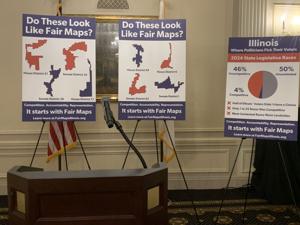
Plan launched to place redistricting amendment before voters in 2026

Illinois GOP U.S. Senate candidates point to economy, Trump gains
Executive Committee Details Spending of $134 Million in Pandemic Relief Funds
Lawmaker criticizes $500 student board scholarships amid lowered K‑12 standards

Illinois news in brief: Work begins on $1.5 billion O’Hare expansion; Police catch man accused of road rage, shooting
Soaring utility bills, solar federal tax credit cuts dominate Illinois energy debate