Energy group praises bill curbing EPA regulatory ‘abuses’
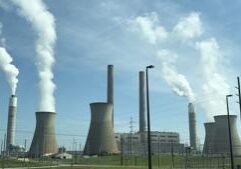
Recently introduced legislation that would rein in certain regulatory powers of the Environmental Protection Agency has drawn praise from dozens of energy industry groups.
The bicameral End EPA Abuse Act, sponsored by Sen. Mike Lee, R-Utah, and Rep. Andrew Clyde, R-Ga., forbids the agency from enforcing policies that fall under the purview of Congress.
That includes regulations which “can reasonably be determined” to undermine the electrical grid’s reliability, force fossil fuel power plants to change fuel sources, restrict the use or sale of internal-combustion engine vehicles, or “otherwise technically, economically, or practically infeasible.”
The Competitive Enterprise Institute, a free market think tank which had previously criticized the EPA for policies like tightening carbon emissions standards for power plants, hailed the bill’s sponsors for taking action.
“Instead of reacting to agency overreach after-the-fact, this bill makes it clear up front that the EPA is prohibited from using the Clean Air Act to take actions that common sense tells us Congress never would have authorized,” Daren Bakst, director of CEI’s Center for Energy and Environment, told The Center Square. “The legislation lists specific prohibitions addressing abuses we know the EPA has already engaged in and will likely try again. It also has an important catch-all provision to prohibit other future abuses.”
The Clean Air Act, enacted in 1970, allowed the federal government and states to develop regulations to limit the emission of toxic air pollutants from industrial and mobile sources.
Amendments to the act beginning in the 1990s expanded the EPA’s authority, allowing the agency to take actions like limiting the sulfur content in diesel fuel and enforcing the phasing out of ozone-depleting chemicals.
Bakst believes as soon as the EPA approves or tries to implement regulations so strict that they effectively force transition to electric vehicles or renewable energy generation, for example, the agency is clearly overstepping its authority.
In 2022, for example, the U.S. Supreme Court stopped the EPA’s attempt to broadly limit carbon emissions from American power plants in a way that would force a nationwide transition away from coal-powered electricity generation to other nonfossil fuel sources.
“Nobody with a straight face can say that Congress wanted the EPA to use the Clean Air Act to try and kill off gas-powered cars or to change how the country produces electricity,” Bakst said. “The agency has constantly been trying to act more like an economic planning agency than the Environmental Protection Agency.”
The End EPA Abuse Act is supported by the American Energy Institute, the American Energy Alliance, the American Consumer Institute, and others. Twenty state attorneys general have expressed support for the legislation as well.






Slight Chance Showers And Thunderstorms
Latest News Stories

Will County Board Approves New Fee Schedule for Recorder of Deeds

Frankfort Fire District Explores Tax Referendum, Moves to Hire Outreach Consultant

Summit Hill 161 Awards $115,905 Contract for Dr. Julian Rogus School Play Area
Frankfort Fire District to Spend $92,000 on New Cardiac Monitors
Frankfort Fire District Reviews Tentative Budget for Fiscal Year 2025
Will County Board Formally Opposes Heavier, Longer Trucks on National Roadways

Energy advocate applauds oil and gas commingling updates

Will County Board Approves Permits for Landscaping Business and Restaurant Liquor Service in Frankfort Area
Board Approves Engineering Contracts for Mokena Road Widening

Will County Awards $1.46 Million Contract for Kankakee Street Bridge Replacement in Manhattan Township
Crete Township Community Center to Get New Digital Sign
Texas legislature passes redistricting map, governor to sign into law