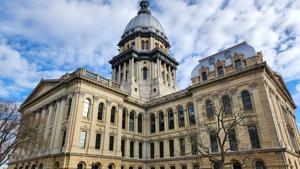
Illinois sued over prediction market law imposing new taxes, regulations
(The Center Square) – A lawsuit against a new Illinois law taxing prediction markets has been filed in federal court, presenting a challenge state lawmakers expected before they passed the measure.
Kalshi, a company with a prediction-based platform that allows users to place wagers on the outcome of real-life events, seeks to block the state law from taking effect Wednesday.
The company argued the federal government’s Commodity Futures Trading Commission is its sole regulator, which the CFTC also argued in a lawsuit against the state this year.
Under the current administration, the CFTC has been working collaboratively with companies to craft regulations fitting the services they provide.
“Kalshi will be subject to criminal penalties in Illinois unless it either ceases to offer Illinois residents sports event contracts that are perfectly lawful in the eyes of Kalshi’s exclusive federal regulator or pays Illinois millions of dollars and submits to the State’s regulatory regime,” Kalshi’s legal representation said in the filing.
Users place bets on Kalshi by buying “event contracts,” which act as shares in potential event outcomes. A correct prediction is paid out based on the share of overall contracts a user purchases.
State officials have been critical of platforms like Kalshi because they allow users to bet on sports, which the Illinois Gaming Board heavily regulates and taxes.
The new measure – included in the state’s 2027 revenue package – imposes the same requirements on prediction markets as are placed on other sports betting platforms, such as Fanduel.
Requirements include a 1.75% tax on the first 5 million wagers placed on a service each year – doubling to 3.5% on additional wagers – and for platforms to pay a $15 million licensing fee, which must be renewed every four years for $1 million.
State Sen. Michael Hastings, who introduced a similar measure this year, said in a hearing this April nearly 90% of all sports betting is done on prediction markets, according to his findings.
“This enormous activity occurred entirely outside of the regulatory framework, while our licensed operators must follow every rule,” Hastings told the committee. “In my mind, that’s lost revenue to the state of Illinois.”
Gov. J.B. Pritzker’s office the state will fight for its law.
“Prediction companies are seeking to use the courts to avoid complying with the same rules and consumer protections that apply to other wagering operators in Illinois. The state of Illinois will continue defending Illinois’ authority to regulate these activities and protect consumers,” said a spokesperson for the governor in a statement.
Pritzker also signed an executive order earlier this year barring state employees and officials from using betting markets, while also responding to claims of insider trading through prediction market bets in Washington.
The president’s son, Donald Trump Jr., serves as an advisor to Kalshi and also serves on the board of Polymarket, another popular prediction market.
Reporting from the Financial Times on Friday revealed Trump Jr. was gifted a $300,000 stake in Kalshi in early 2025, which is expected to balloon as the company raises more capital.





Sunny
Latest News Stories

Trump’s $1.5 trillion military budget: What taxpayers are getting
DOJ indicts Southern Poverty Law Center on wire, bank fraud charges
Ceasefire extended, fractured Iranian government cited

Lawmakers call for AI in financial literacy, systems
FTC probe into APA urged over contradictory stances on gender-affirming care for minors
Cherfilus-McCormick resigns from U.S. House

International Energy Agency leader says energy crisis worst in history
Republicans unveil budget resolution allotting up to $140 billion for ICE, CBP

Military spy budget surges 49%, details secret

Illinois Quick Hits: CTA leader addresses transit security
Advocacy groups respond to new executive order on psychedelics
Senators grill Warsh on Fed independence, assets