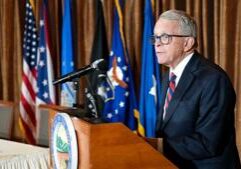
DeWine vetoes absentee voter photo ID
Ohio legislative Republicans have not committed to an override of Republican Gov. Mike DeWine’s veto of a bill requiring voter ID for absentee ballots, but they did offer strong criticism of their fellow GOP members.
Senate President and GOP lieutenant governor nominee Rob McColley, R-Napoleon, called DeWine’s action disappointing and likened it things happening in Democrat-controlled states.
“Photo ID laws are supported by a vast majority of Ohio voters,” McColley said in a statement. “It is disappointing the governor would oppose such a commonsense election security bill when Democrat controlled states such as Virginia and Hawaii have repealed their photo ID laws. HB 472 when combined with this fall’s Constitutional Amendment requiring photo identification to vote would have given Ohioans the confidence to know that their election system was the most secure in the country.”
But DeWine said voters already have confidence in Ohio’s election and the bill offers no new election security, only expense, and not discourage potential voter fraud.
“House Bill 472 would not discourage fraud, would not add any real security, and would create an additional and significant burden for Ohioans who vote by mail,” DeWine said in a statement. “This bill is not needed, because Ohio does an excellent job running elections. We know who wins on election night and not weeks later!”
DeWine also said the Ohio Association of Election Officials – a trade group made of up Republican and Democrat state election officials that represents all 88 Ohio counties – said the state’s elections are regarded as one of the most secure in the nation.
The veto drew praise from some voter rights groups.
“Thank you, Governor DeWine, for recognizing the strength of Ohio’s existing election checks and balances and the importance of ensuring accessible voting for all Ohioans,”CatherineTurcer, executive director of Common Cause Ohio said in a statement. “This legislation was rushed and unnecessary.”
The Ohio Legislature is not expected to return to session until after the November elections.
DeWine also vetoed House Bill 173, which would have exempted companies that buy and resell electricity at a profit from being defined as public utility companies. However, the so-called “submetering” companies would still have been subject to oversight of the state Public Utilities Commission.
DeWine thought the legislation should have included greater protections for consumers.
“While this bill does contain some consumer protections, they are not as robust as those afforded to customers of Ohio’s electric utilities,” DeWine said. “I commend the Legislature on the work done on this bill. They included provisions to protect consumers. However, the submetering model, itself, is fundamentally flawed.”
State Reps. Tristan Rader, D-Lakewood, and Sean Patrick Brennan, D–Parma, praised the veto, agreeing it would weaken consumer protections for people who live in submetered apartments and condominiums and for small businesses.
“This bill would have codified a broken submetering scheme that puts middlemen between tenants and the utilities they depend on,” Brennan said. “After the Ohio Supreme Court affirmed that these companies can be treated as public utilities, HB 173 would have weakened hard-won consumer protections for renters and utility customers. This veto is a victory for basic fairness.”

Mostly Sunny
Latest News Stories
Legal experts anticipate SCOTUS will overturn drug user gun ban
Parents’ rights advocates hail SCOTUS ruling against secret gender transitions

Critics warn Illinois bill could lead to government overreach in newborn care

Veteran suicide rate remains high despite spending millions

BlackRock summit to focus on workforce needed for U.S. infrastructure boom

Debate grows as states consider teacher strike bans
American gasoline prices increase most in one week since 2020
Presidents, governor honor late civil rights leader Jackson; mayor says tax the rich
Illinois Quick Hits: Rockford sex abuse suspect arrested

Lawmakers concerned over taxpayer burden of Iran conflict
Pritzker pushes back on Megaproject tax concerns

Measles spreads across some Southwestern states