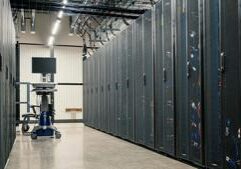
Data centers can benefit taxpayers, group says
Data centers can help lower taxes and generate revenue for local governments, according to speakers at a National Taxpayers Union discussion Tuesday.
The discussion focused on two reports released in May saying data centers benefit taxpayers through property tax revenue, business investment and tax policies that encourage development. National Taxpayers Union President Pete Sepp joined National Taxpayers Union Foundation Senior Policy Manager Debbie Jennings and Policy Manager Matthew Putnam to discuss the findings.
Sepp said the discussion extended beyond artificial intelligence because data centers support much of the digital economy.
“Everything in our economy depends upon information,” Sepp said.
Virginia and its more than 600 data centers was a recurring example, with speakers pointing to Loudoun County as evidence that data centers can strengthen local finances.
According to Loudoun County, the real property tax rate has fallen from $1.145 per $100 of assessed value in 2016 to $0.805 in 2025. The county also cut its vehicle personal property tax rate from $4.15 to $3.09 per $100 in tax year 2026 and eliminated its $25 vehicle license fee, citing revenue generated by data centers.
County data show data centers generate 38% of Loudoun’s General Fund revenue and nearly half of its property tax revenue while occupying about 4% of the county’s commercial land. County officials also say the county receives about $26 in tax revenue for every $1 spent providing services to data centers.
Putnam said the industry’s biggest long-term benefit is the local tax revenue it generates.
“The biggest impact those data centers have had is on reducing property taxes for the residents of that county,” Putnam said.
He said permanent employment at individual facilities is relatively modest, but data centers also create construction work, support local contractors and maintenance companies, and generate tax revenue that communities can use for public services.
Jennings said sales tax exemptions for data center equipment are often misunderstood because they apply to business inputs in the same way they do for manufacturers and other industries.
“Sales taxes are meant to fall on the final consumer,” Jennings said. “They’re not meant to be baked into every single step” of production.
Virginia created a sales and use tax exemption for qualifying data center equipment in 2008. Under the program, most projects must invest at least $150 million and create at least 50 jobs paying at least 150% of the area’s average wage. The exemption is scheduled to expire in 2035.
The conference budget approved by the General Assembly leaves the exemption in place while adding a new electricity consumption tax on data center operators. The budget, as of Wednesday morning, was still awaiting Gov. Abigail Spanberger’s signature.
Jennings said changing tax policy for one industry can send a broader message to businesses considering future investment.
“If you decide to take those advantages away from one particular industry, say data centers, you’re sending a signal to every other business – your time can come,” Jennings said.
The discussion comes as Virginia continues to debate the rapid growth of data centers, with lawmakers, local officials and community groups raising concerns about electricity demand, water use and land use, while industry supporters say the facilities generate tax revenue and economic investment.
During the discussion, speakers said data centers can support infrastructure improvements, expand local tax bases without comparable population growth and attract additional private investment. They said policymakers should weigh those benefits alongside concerns about electricity demand, water use and land use as states consider future data center development.





Chance Rain Showers
Latest News Stories
Access Will County Dial-a-Ride on Track for Full County-Wide Service in 2026

Trump says new 100% tariff on China as trade war escalates

Arizona congressman calls for end to government shutdown

WATCH: Pritzker continues encouraging ICE protests after Guard blocked

Illinois quick hits: Ag incentives announced; Cook County announces increased budget
Senator urges Rubio to move forward designating Antifa a foreign terror organization
Divided Will County Board Authorizes Condemnation for 143rd Street Widening

Former board member expressed concerns about indicted DeKalb superintendent

Trump administration begins axing positions of furloughed federal workers
Fiscal Fallout: Illinois has among highest-paid state employees

Report: State reliance on federal funds up significantly since 1990s

Southwest low on list of safest states; Northeast at the top

Washington state attorney general agrees to protect seal of confession