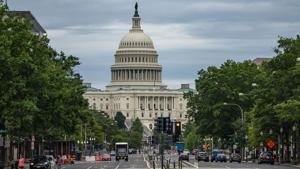
Wisconsin Supreme Court rules against race-based scholarships
A Wisconsin college grant program that sent financial aid to students based on specific race, national origin and ancestry cannot legally operate because it violates the Equal Protection Clause of the 14th Amendment, the Wisconsin Supreme Court ruled Thursday.
The ruling came after a Wisconsin Court of Appeals ruling that attaining diversity in higher education is no longer a compelling interest that allowed for an exception to the Equal Protection Clause. The case was filed by filed by six taxpayers against the Wisconsin Higher Educational Aids Board and Executive Secretary Connie Hutchinson, who was in charge of administering the grants.
The grans program began in 1985 for students attending private and technical colleges in the state who were a minority undergraduate who was a “Black American,” “American Indian,” “Hispanic” or a former citizen of Laos, Vietnam or Cambodia who entered the country in 1976 or later.
Justice Jill Karofsky concurred with the opinion of the court but wrote separately in her opinion, joined by Susan Crawford, on the benefits of the scholarship program.
“Despite this documented success, the grant program’s explicit reliance on race is fatal to its constitutionality for the reasons explained in Justice Dallet’s concurring opinion,” Karofsky wrote. “A suggested alternative means of maintaining a grant program to improve retention would be to target individuals who are economically disadvantaged, since there is also a statistical correlation between economic disadvantage and low retention rates.
“While this alternative aligns with the Supreme Court’s ruling in SFFA, it falls short because it does not acknowledge the racial inequality underlying the problem.”





Slight Chance Rain Showers then Mostly Sunny
Latest News Stories

Amended scooter, e-bike bill heads to governor

Washington insiders: Social media more influential than traditional media, but few trust it

Ceasefire being tested as U.S., Iran continue to exchange fire

Supreme Court declines to hear COVID-19 vaccine case

Supreme Court agrees to hear prisoner release case

New Jersey city faces curfew after violent anti-ICE demonstrations

Property tax-free Bears deal fails to pass

Illinois Quick Hits: Loyola student’s alleged killer charged with new felony
$55.9 billion budget includes new taxes, ‘no property tax relief’

Illinois to require bell-to-bell student phone ban in public schools
Election 2026: Stumps heavy with economy, crime in U.S. Senate race

Quintuple fatal in Virginia renews focus on English language in CDL licensures