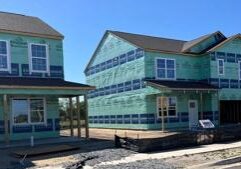
U.S. lawmakers reach deal on key housing affordability bill
In a rare instance of congressional unity, the House and Senate reached a bipartisan, bicameral agreement over legislation to boost housing supply and home ownership across the country.
The Senate overwhelmingly voted to advance the updated 21st Century ROAD to Housing Act Tuesday night. Congressional leaders hope to vote on final passage by the week’s end
“I’m pleased that after months of back and forth that we have reached an agreement on a comprehensive housing package that will finally get America back to building affordable housing,” House Financial Services Committee Ranking Member Maxine Waters, D-Calif., who helped iron out differences between the House and Senate versions, stated.
The revamped legislation includes key sweeteners to appease both chambers.
It keeps a swath of banking provisions from the House’s version, including multiple deregulation bills meant to expand community banks’ access to funding sources for mortgages and home construction loans.
Sourced from the Senate version, the final bill includes a four-year ban on the Federal Reserve issuing a Central Bank Digital Currency, though it exempts “any dollar-denominated currency that is open, permissionless, and private, and fully preserves the privacy protections of United States coins and physical currency.”
Lawmakers were able to strike a bicameral compromise over proposed restrictions to corporate home ownership, the greatest contributor to the bill’s delay.
The bill contains the Senate’s 15-year ban on large institutional investors, defined as entities that own more than 350 housing units, from buying single-family homes for the next 15 years. Manufactured housing, multifamily homes, and build-to-rent properties are exempted from the ban.
At the same time, the final product excludes a Senate provision requiring large institutional investors to sell rental homes they build to individuals within seven years of construction, which multiple industry stakeholders, including the National Association of Homebuilders, had objected to.
“NAHB congratulates congressional leaders for reaching a bicameral and bipartisan agreement to move forward a final version of the 21st Century Road to Housing Act,” NAHB Chairman Bill Owens said in a statement Tuesday.
“This landmark legislation would expand housing opportunities for buyers and renters, strengthen homeownership, and help tackle the affordability challenges facing communities nationwide.”
The vast majority of provisions within the 21st Century ROAD to Housing Act, however, receive widespread bipartisan support.
Among other measures, the bill streamlines environmental reviews for new housing construction, lifts the 15% cap on banks’ private investments in affordable housing to 20%, and establishes a pilot program to convert vacant and abandoned buildings into livable housing.
It revises the federal definition of “manufactured housing” to include units not built on permanent chassis and authorizes a specialized grant program for areas with manufactured housing communities. It also updates mortgage lending standards through the Federal Housing Administration for manufactured homes.
Dozens of outside organizations support the new version of the 21st Century ROAD to Housing Act, including the National Association of Realtors and the National Housing Conference.
“Housing affordability remains one of the most pressing challenges facing American families, and it deserves the kind of bipartisan cooperation that has characterized this effort from the beginning,” NHC President David Dworkin said. “[T]his bill is a significant down payment on a long-term effort to make housing more affordable for all Americans.”
Home ownership has proven increasingly out of reach for younger and middle-class Americans, particularly since the COVID-19 pandemic, research shows.
The median age of first-time buyers jumped to 40 in 2025, seven years older than the median age just five prior, according to a National Association of Realtors analysis.
Meanwhile, the median home price in the U.S. sits above $405,000 while the median annual household income is below $84,000, according to the most recent federal statistics.






Rain Showers
Latest News Stories
Will County Board Members Question Fairness of New Transit Tax Structure

Meeting Summary and Briefs: Village of Frankfort Board for December 1, 2025

P&Z Commission Advances Plan for Construction Debris Fill Operation on Brandon Road
Regional Transit Agencies Tout New State Funding, Prepare for Shift to ‘NITA’
Bowen Street Home Addition Granted Zoning Variances
New Lenox Used Car Dealership Approved by Land Use & Development Committee
Land Use Committee: Monee Solar Projects Granted Extensions; Battery Storage Plans Dropped

P&Z Commission: New Women’s Recovery Center Proposed for Patterson Road Receives Support

Ogalla Blasts New State Solar Legislation
Committee Postpones Vote on Brandon Road Fill Operation After Tree Clearing Allegations
Meeting Summary and Briefs: Will County Planning and Zoning Commission for December 2, 2025
Metra Announces No Fare Hikes; Highlights Bridge Projects in Joliet and Mokena
Meeting Summary and Briefs: Frankfort Public Library District Board of Trustees for October 23, 2025
Misty Creek Development Approved for Sunroom and Patio Additions