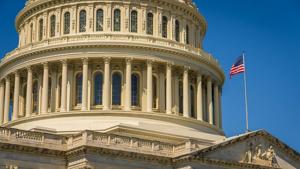
U.S. House fails to renew spy powers authority as World Cup begins
A U.S. House vote to extend the federal government’s authority to conduct mass electronic surveillance failed Thursday.
The three-week extension of Section 702 of the Foreign Intelligence Surveillance Act failed to garner even a majority vote, as 19 Republicans worried about privacy rights joined nearly all Democrats in blocking its advance.
“Congress needs to fix FISA, not kick the can down the road,” Rep. Andrew Clyde, R-Ga., stated on social media after voting no. “Get a warrant. Uphold the Fourth Amendment. End the surveillance state.”
Unless the Senate now approves a dusty three-year extension that passed the House in April – which is unlikely, since Senate leaders had refused to even consider it earlier – FISA Section 702 authority will lapse Friday.
That’s right as millions of international travelers enter the U.S. for the 2026 FIFA World Cup tournament.
FISA Section 702 allows federal intelligence agencies to conduct warrantless electronic surveillance on foreign nationals of suspicion, whether they are abroad or traveling in the U.S.
But the electronic data of ordinary American citizens – including emails, text messages, and phone calls – are routinely swept up as well.
Not only can intelligence agencies store that data for up to five years, but federal agents will routinely search through that data without obtaining a warrant.
Republican privacy hawks had already voiced concerns over that issue, forcing Republican leaders to bet on enough Democratic votes for a clean FISA Section 702 extension to succeed.
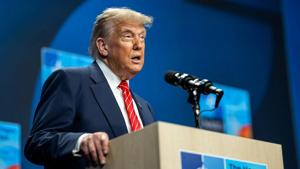
President Donald Trump’s recent appointment of Bill Pulte as the new acting director of National Intelligence, however, killed that possibility. Given Pulte’s complete lack of national security expertise and friendly relations with Trump, Democrats dubbed the former housing regulator an “unqualified” pick.
“Congress cannot entrust FISA powers and our national security to someone who has never held a security clearance and has already proven himself eager to use his public office in pursuit of the President’s political vengeance,” Rep. RosaDeLauro, D-Conn., stated Thursday, echoing her colleagues.
“I believe that national security and the privacy of American citizens must both be protected, and I will continue to demand accountability from the Trump Administration before even considering trusting them with further surveillance powers.”
Republican congressional leaders, including Republican Conference Chair Lisa McClain, R-Mich., lambasted House Democrats after the vote, accusing them of “putting American lives at risk for cheap political games.”
“By blocking the extension, Democrats are shielding terrorists, spies, cartels, and adversaries instead of protecting the American people,” McClain said on social media. “Thanks to Democrats, we are now one step closer to another 9/11.”
McClain’s warning that the government will lose the ability to detect terrorists has little merit, however. Even if Section 702 expires, government surveillance and data collection activities can still continue without interruption through March 2027.
That’s because the FISA Court approves year-long certifications for Section 702, which remain in effect even if the underlying authority has expired.
Regardless of what Congress or the president does within the coming days, communications providers are still legally required to assist the federal government with Section 702 surveillance and turn over targets’ communications.
In order to avoid any potential legal confusion, Trump may also sign an executive order before Friday that officially extends some sections of the surveillance law.




Showers And Thunderstorms Likely then Chance Showers And Thunderstorms
Latest News Stories

WATCH: Let’s Go Washington launching initiative to repeal income tax

Ferguson first WA governor found in violation of ethics laws in over 30 years, state website shows
Court strikes tariff, Trump moves ahead with replacement

North Dakota Supreme Court sides with Energy Transfer in Greenpeace fight over Dutch lawsuit

SNAP cuts, Illinois payment errors spark fierce debate

Op-Ed: Keeping local leaders happy isn’t worth the housing cost

Apollo, Gemini sightings revealed in first UAP file drop

BREAKING: GOP turns to Congress after Minnesota Dems block Omar subpoena

U.S. economy adds 115,000 jobs in April

Illinois weighing a ban on sale of some smoke detectors over safety concerns

Illinois Quick Hits: General Assembly leaders promise budget transparency

Justice Department agrees to appearance waiver for Comey