U.S. lawmakers discuss Social Security, have no plan to prevent insolvency
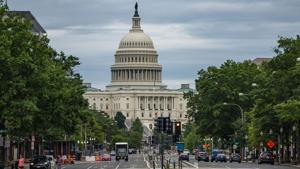
One day after federal trustees warned Congress that Social Security’s retirement trust fund will go insolvent by 2032, a U.S. House subcommittee met to question Social Security Commissioner Frank Bisignano about the program’s future.
The program’s insolvency will automatically trigger a benefit cut of 22% or more, impacting more than 60 million American retirees, 43% of whom rely on Social Security for the majority of their income.
Yet lawmakers barely touched on ways to address the fund’s depletion during the two-hour Wednesday hearing.
Instead, Democrats grilled Bisignano over local office closures and argued that benefits should be expanded, while Republicans praised Bisignano’s efforts to improve customer service, payout efficiency and fraud prevention.
Although subcommittee Chairman Ron Estes, R-Kan., acknowledged the fast-approaching insolvency deadline, his only proposed solution was to focus on preventing improper benefit payments.
“Every single dollar lost to administrative error, inefficiency, or improper payments is a dollar stolen from the benefits of hard-working Americans,” Estes said. “We must continue to deploy advanced automated tools and human common sense to prevent these errors before they happen, eliminate waste, fraud, and abuse, and protect this vital lifeline for generations to come.”
The billions in erroneous payments made per year constitute only a fraction of the $1.6 trillion spent on Social Security benefits in 2025. Federal spending on seniors’ benefits, which includes both Social Security and Medicare, is projected to make up the majority of the federal budget by 2036.
In order for current benefit levels to remain as they are post-insolvency, a median wage earner making $60,000 annually would need to pay an additional $2,600 in annual taxes, according to a Cato Institute analysis.
Otherwise, if Congress fails to implement program reforms in the near future, seniors could face an average monthly benefit cut of $500 in 2032.
“Congress needs to get their act together to address Social Security and the insolvency that’s coming instead of poking blame at other people whenever it is our duty and our responsibility,” Rep. Jason Smith, R-Mo., who has served on the Social Security subcommittee for 12 years, said.
Congress has avoided any Social Security reforms that would adjust benefits in any direction but upwards, consequently speeding up insolvency rather than slowing it.
The most recent changes lawmakers made to Social Security include the Democrat-led Social Security Fairness Act, which became law in January 2025 and accelerated insolvency by six months. Then Republicans’ “One Big, Beautiful Bill Act,” which became law in July 2025, pushed forward the insolvency date by another six months to a year.
Bisignano offered no suggestions on how Congress could delay insolvency, telling lawmakers that “I always thought my job was to make it perform as well as possible so you all have a set of options and choices to decide on…the idea is to make it perform well so that you all can make the decisions.”
Meanwhile, budget watchdog groups have spent years futilely warning Congress about insolvency.
Organizations like the Committee for a Responsible Federal Budget have suggested dozens of ways to restore solvency and strengthen retirement security, such as transitioning to a flat benefit and slowing benefit growth for higher earners.
“If there’s one thing we need policymakers to learn from the latest pulse-check on Social Security, it’s this: Social Security’s insolvency is no longer the future crisis Washington has been ignoring for decades,” CRFB President Maya MacGuineas said in an email to The Center Square. “This can be avoided with policy changes to benefits, revenues, or a combination.”
Most of the proposals, however, would prove politically unpopular with Americans aged 65 and older, who are the most likely to participate in elections. More than 80% of senior citizens are registered to vote and nearly 75% voted in 2024 – the highest share of any age group.
“We don’t expect those decisions to be easy,” MacGuineas acknowledged. “But the time for excuses and delays is over – lawmakers should address Social Security now. Every member of Congress, and the President, should have an answer about how to make Social Security solvent. No plan, or insisting on not touching the program, is a plan to cut benefits by 22% across the board.”
Notably, the Social Security Administration has not guaranteed future benefits to Americans who are currently paying into the system.
The amount deducted from workers’ paychecks to subsidize the Social Security and Medicare of current retirees is “a pure and simple tax,” Stephen Goss, former chief actuary of SSA, told U.S. lawmakers in 2024.
Without proposing any concrete ways to preserve benefits and delay insolvency, House lawmakers adjourned the committee meeting.
“We’ve got time to make some decisions…changes that could be made without affecting anybody that’s already on the Social Security program,” Rep. Aaron Bean, R-Fla., said.






Patchy Fog then Slight Chance Showers And Thunderstorms
Latest News Stories

Minnesota wins dismissal of federal lawsuit over immigration detainers

PACT launches series giving victims of lawsuit abuse a voice
Bipartisan commission votes to release report on former rep’s misconduct

Shah, Feely to face off in battleground House race

Trump ‘final dealmaker’ on Saudi nuclear deal, Leavitt says

Sherrill pressured to expand probe into New Jersey voting scandal

Appropriations committee examines policies to end government shutdowns

Illinois quick hits: Toll hike hearings conclude Friday

Administration presses law school accreditor over DEI policies

Chicago can force landlords to pay tenants $10K for ‘relocation assistance’

Speaker’s response to staffer assault complaint draws questions on his own conduct

Republicans’ $95B budget resolution passes House