New tariffs could raise nearly $1 trillion over a decade

New tariffs could raise nearly $1 trillion over a decade

Spread the love

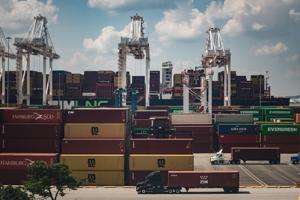
Proposed tariffs on imports from 60 economies could raise nearly $970 billion over the next decade, according to estimates released Monday by the Committee for a Responsible Federal Budget.

The tariffs, proposed under Section 301 of the Trade Act of 1974, represent the broadest use of that authority to date and the Trump administration’s largest effort to rebuild its tariff revenue base after the U.S. Supreme Court struck down tariffs imposed under the International Emergency Economic Powers Act in February.

The Committee for a Responsible Federal Budget estimated the new Section 301 tariffs would generate about $980 billion in revenue over 10 years. After accounting for an estimated $10 billion reduction tied to changes in steel, aluminum and copper tariffs, the net revenue gain would total roughly $970 billion on a conventional basis.

Combined with tariffs already in place, the administration is projected to collect about $1.9 trillion in tariff revenue through fiscal year 2036, down from a projected $2.7 trillion before the Supreme Court’s February ruling.

Despite the additional revenue, federal debt is still projected to reach 122% of gross domestic product by 2036, according to CRFB. Before the court ruling, debt was projected to reach 120% of GDP by that year.

Since losing its authority to impose tariffs under the International Emergency Economic Powers Act, the administration has relied on multiple trade statutes to pursue its tariff agenda. Courts also struck down a 10% global tariff imposed under Section 122 of the Trade Act in May.

A pending Supreme Court case, HMTX Industries v. United States, could limit the federal government’s ability to expand Section 301 tariffs.

Economists generally conclude that tariffs are paid largely by American consumers and businesses rather than foreign governments. Research from the Kiel Institute for the World Economy and the Federal Reserve Bank of New York found that the costs of tariffs are primarily borne domestically.

The Yale Budget Lab, a nonpartisan policy research center, estimates the existing tariffs cost the average U.S. household between $600 and $800 annually, a figure that does not include the proposed Section 301 tariffs.

The White House disputes that assessment.

“The cost of tariffs will ultimately be borne by foreign exporters who rely on access to the American economy,” White House spokesman Kush Desai previously told The Center Square.

Public comments on the proposed tariffs are due by July 6. Hearings are scheduled for July 7.

Leave a Comment


Latest News Stories

Everyday Economics: CPI takes center stage as tariff-driven price pressures mount

Everyday Economics: CPI takes center stage as tariff-driven price pressures mount

By Orphe DivounguyThe Center Square The economy was already slowing, and that was before higher tariffs kicked in last week, raising import taxes to the highest level since the Great...
Net negative migration is harmful to the economy, economists say
Net negative migration is harmful to the economy, economists say

By Morgan SweeneyThe Center Square Though the economy and immigration were issues that helped President Donald Trump secure the White House, some economists have said that too steep a decline...
Details pending on billions in foreign investments coming from trade deals
Details pending on billions in foreign investments coming from trade deals

By Brett RowlandThe Center Square When President Donald Trump announced a string of trade deals with key U.S. trading partners recently, he touted pledges for billions of dollars in U.S....
WCO-Finance-Aug-5.1

Will County Health Department Seeks $1 Million to Avert ‘Drastic’ Service Cuts from Expiring Grants
ARTICLE SUMMARY: The Will County Health Department is requesting an additional $1 million in county funding for its 2026 budget to prevent the elimination of 11 critical staff positions, warning...
WCO-Cap-Imp-8.5.1

Will County’s “First-in-Nation” Veterans Center to House Workforce Services, Sparking Debate
ARTICLE SUMMARY: The new Will County Veteran's Assistance & Support Center will also become the home for the county's Workforce Services department, a move officials say will save approximately $250,000 in...
WCO-Finance-Aug-5.2

Improved Vendor Service Creates $1.2 Million Shortfall in Sheriff’s Medical Budget
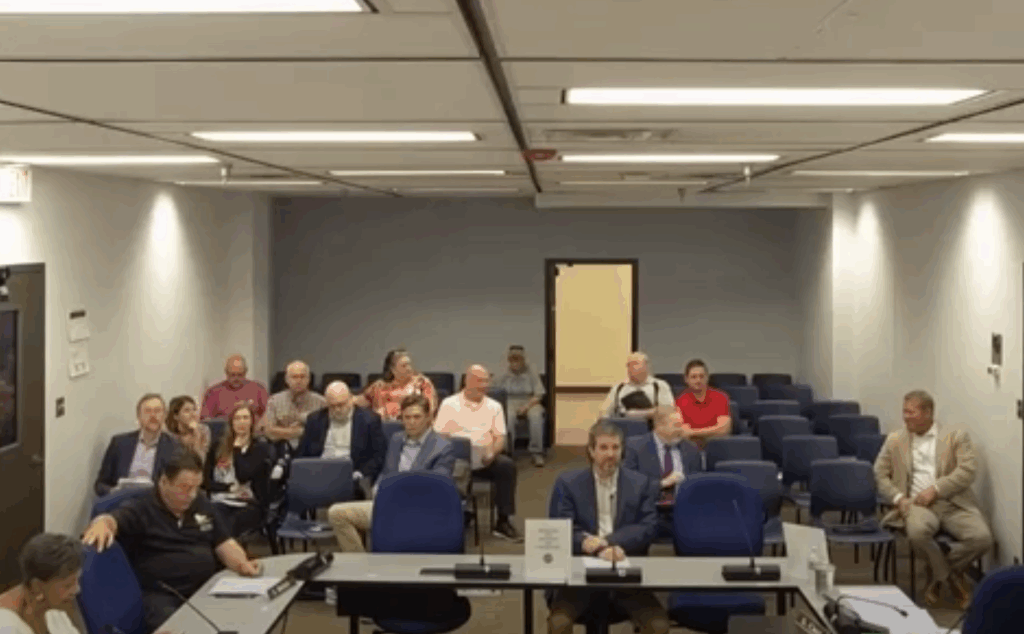
ARTICLE SUMMARY: The Will County Sheriff’s Office is facing a more than $1.2 million shortfall in its budget for inmate medical services, a problem officials attribute to an ironic cause:...
WCO-PZ-Aug-5.1

Will County Public Works Committee Unveils 25-Year Transportation Plan, Projects $258 Million Gap
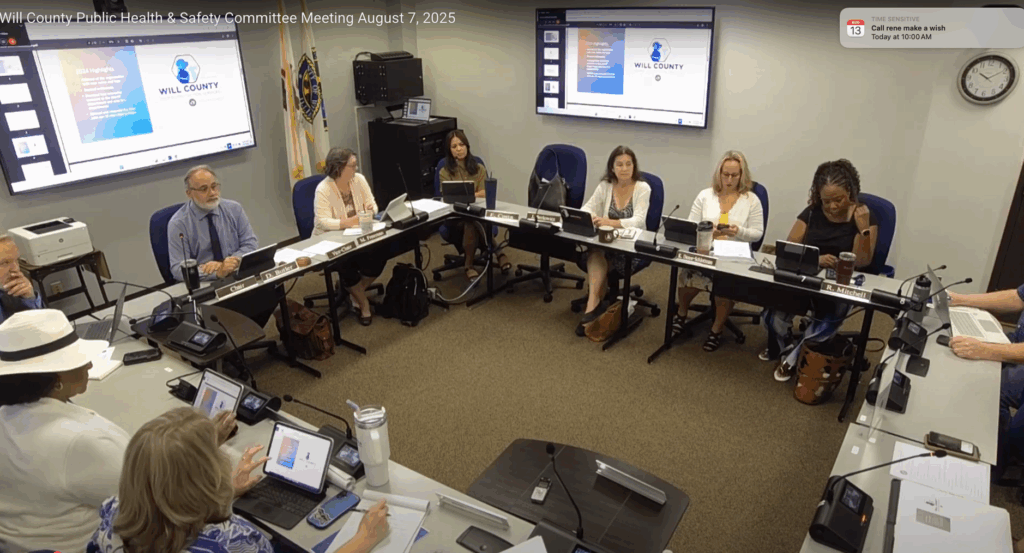
ARTICLE SUMMARY: Will County officials have presented "Our Way Forward 2050," a new long-range transportation plan that provides a 25-year vision for infrastructure projects while forecasting a $258 million shortfall in...
WCO-Public-Safety.4

Will County Animal Protection Services Seeks New Facility Amid “Gaping Wound” of Space Crisis
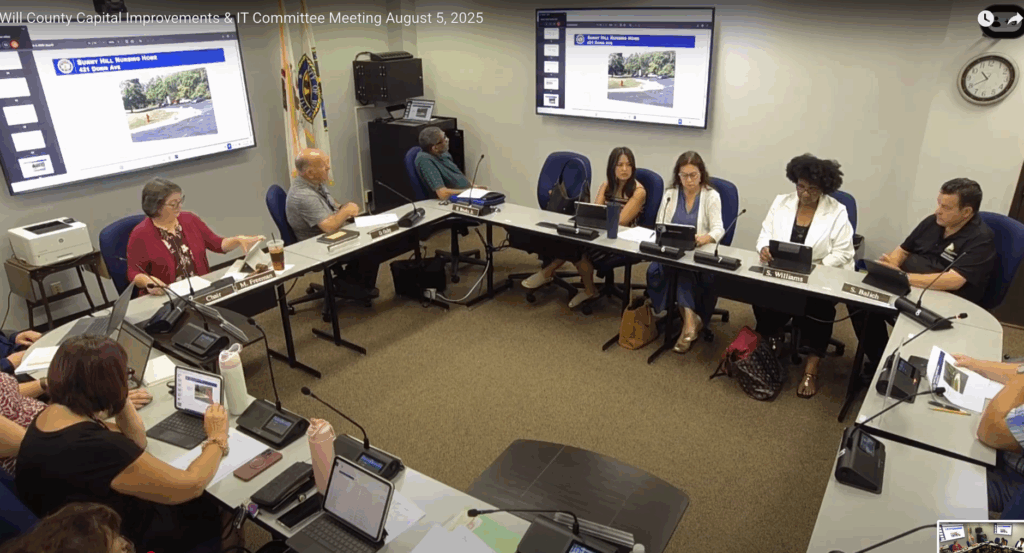
Article Summary: Will County Animal Protection Services is seeking approval for a new facility, telling a county committee that its current building is critically inadequate for housing animals, leading to...
WCO-Cap-Imp-8.5.2

Board Confronts Animal Services Crowding, Explores Future Facility Options
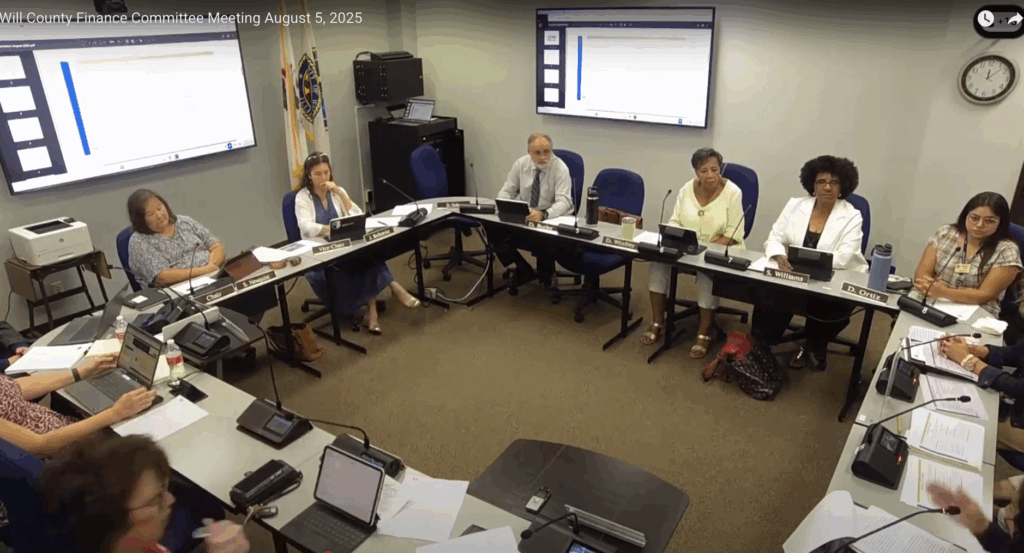
ARTICLE SUMMARY: Will County officials are grappling with an ongoing animal housing crisis that has overwhelmed the county’s Animal Protective Services facility, prompting discussions about expansion, new construction, or even repurposing...
WCO-Finance-Aug-5.3

Will County Board Members Demand Transparency in Cannabis Tax Fund Allocation
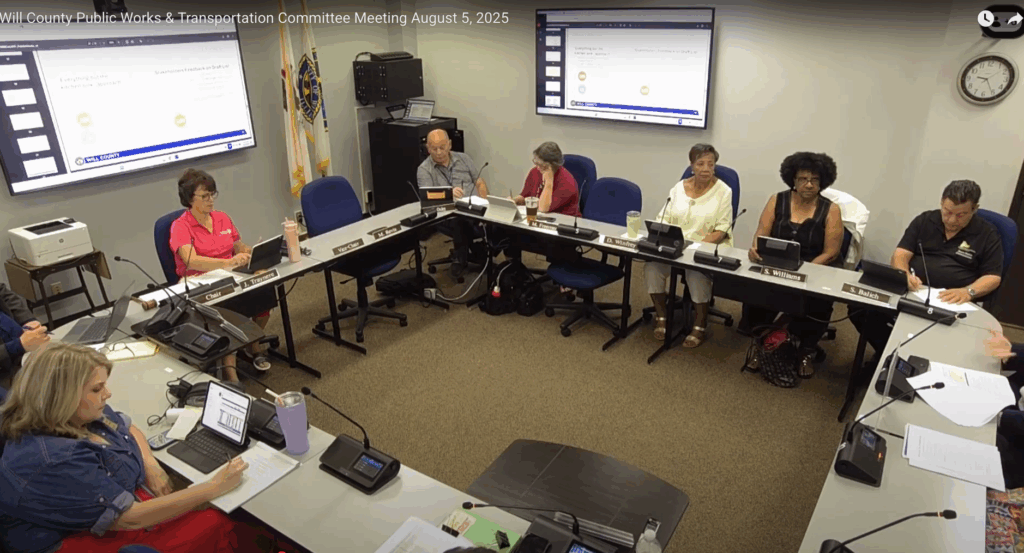
ARTICLE SUMMARY: A debate over transparency and process erupted at the Will County Board’s Finance Committee meeting regarding the distribution of local cannabis tax revenue. Board members called for more...
WCO-PZ-Aug-5.2

Homer Glenn Residents Push Back on 143rd Street Widening as Officials Signal “Tentative Agreement”
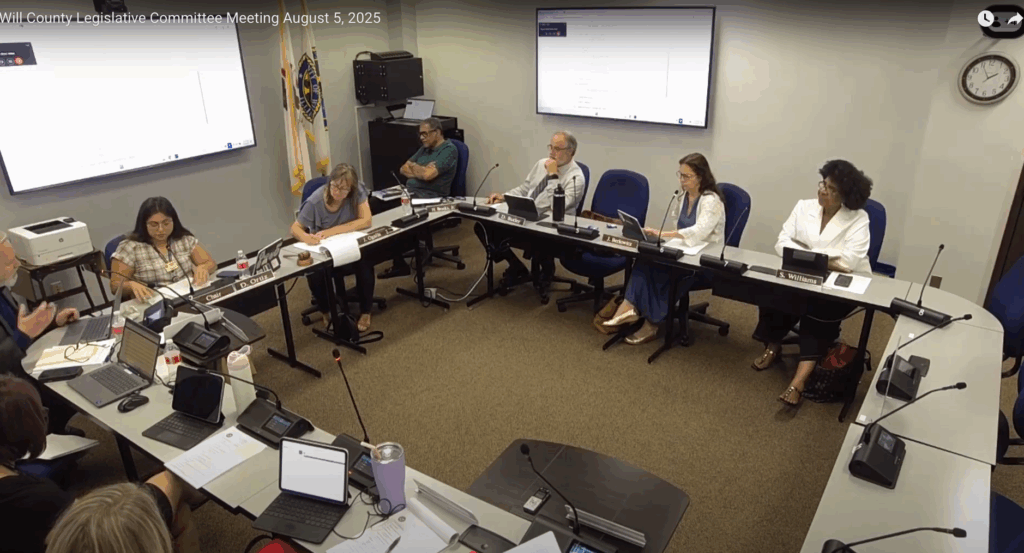
ARTICLE SUMMARY: A Homer Glenn farm owner voiced strong opposition to the planned widening of 143rd Street during a county meeting, while committee members indicated a "tentative agreement" is in the...
WCO-LEG-8.5.1

Will County Forges 2026 Federal Agenda Amid D.C. Policy Shifts, ‘Big Beautiful Bill’ Impacts
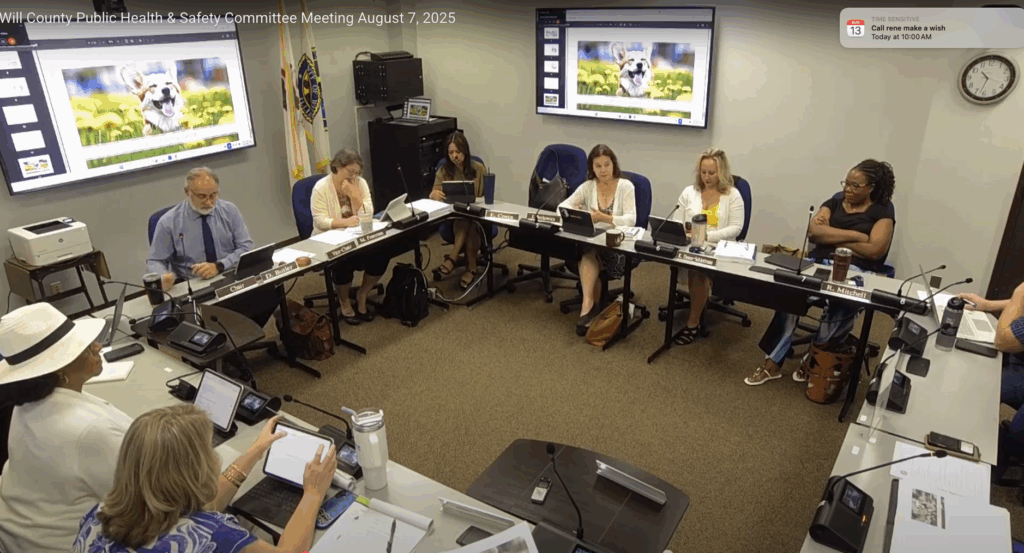
ARTICLE SUMMARY: The Will County Board's Legislative Committee is reshaping its federal priorities for 2026, adding new language on environmental justice and LGBTQIA+ rights while creating a more transparent process for...
WCO-Public-Safety.3

Health Department Seeks $1 Million Levy Increase to Prevent “Weakened System”

Article Summary: The Will County Health Department is asking for a $1 million increase to its property tax levy to save 11 critical jobs that are at risk as post-pandemic...
WCO-Cap-Imp-8.5.3

County Rolls Out New “OneMeeting” Software to Improve Public Access

ARTICLE SUMMARY: Will County has officially launched a new agenda and meeting management software called "OneMeeting," aimed at improving transparency and making it easier for the public and officials to access...
Meeting-Briefs

Meeting Summary and Briefs: Will County Board Finance Committee for August 5, 2025

The Will County Board’s Finance Committee confronted major budget challenges during its Tuesday meeting, led by a stark presentation from the Will County Health Department. Health officials are requesting an...