Nearly 100,000 Illinois Uber, Lyft drivers may soon be able to unionize
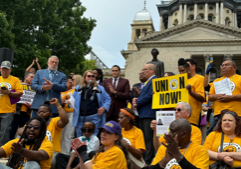
(The Center Square) – A proposal that would allow many Uber and Lyft drivers to form a sector-wide union and engage in collective bargaining passed the Illinois’ legislature last weekend.
Illinois is one of only three states to pass a law that allows such contract workers in on labor organizing.
State Sen. Ram Villivalam, D-Chicago, brought the legislation in the Senate after many of his constituents who work as drivers shared issues of unwarranted deactivation, poor pay and difficult or dangerous working conditions.
“I represent a district that actually has the most number of ride share drivers out of any Senate district in the state, so this was truly an issue that came to me from constituents that were facing challenges with the wages and the vehicle costs and working conditions,” Villivalam said.
According to the Illinois Drivers Alliance, the measure will give nearly 100,000 regularly-working drivers the ability to be covered under collective bargaining.
The law, if signed by the governor, will also require every rideshare company to begin depositing 4 cents per ride that originates in the state into a Rideshare Workers Support Fund, overseen by the secretary of state.
Details in the statute note that rideshare companies may not impose the cost of the fee onto consumers – though an increase for consumers would have to be discovered and proven by the secretary of state’s office or the Illinois attorney general through an audit of the companies.
In the week before the law passed both Illinois chambers, the App Drivers Union was certified in Massachusetts, creating the first union of its kind in the nation.
Marc Avelar, a retired 1099 independent contractor who also works on policy surrounding contract workers, said he’s not sure that unionization is the right direction for drivers at the moment.
“My concern is it brings a lot of things that have never been done before, and even Massachusetts’ is still untested. There’s been no collective bargaining yet. All you have is the union has been certified,” Avelar said.
Avelar said he worries the law could be challenged in court because federal labor laws don’t include contract laborers under unionization laws.
He also contends that there are faster and more direct ways of bettering conditions for a wider group of gig-workers.
“Washington state did not go the route of sectoral organizing and sectorial bargaining, what they did is they passed something called their independent plus benefits model,” Avelar said. “They basically use state government to facilitate what is best for the drivers. As long as you stay on what’s best for the drivers opposed to what’s best for the union, you’re going to help more drivers.”
Villivalam, however, told The Center Square he has no concerns regarding the legality of the measure, and the process of passing the law has already helped improve conditions for drivers.
“The organizations that are doing this work have already created a website for any drivers that are facing deactivations, from which they are able to communicate with the company about these different situations and address anomalies, address the challenges,” Villivalam said.
The law passed both the House and Senate with near-unanimous support on the Democrat side of the aisle, though some Republicans voted against the measure on the grounds that independent contractors are considered their own employers.




Mostly Sunny then Showers And Thunderstorms Likely
Latest News Stories
WATCH: Pritzker looks for 4% ‘efficiencies’ after increasing spending 43% since 2019

IL bans PFAS in firefighter gear by 2027, raising safety, market questions
WATCH: Pritzker blames Trump for budget cut EO; Chicago public safety on Trump’s mind
Louisiana joins four states in complaint against electricity grid operator
Illinois quick hits: State rep. appointed circuit judge; Bailey to seek rematch with Pritzker
WATCH: IL governor on photo with wanted suspect: ‘No way to vet everybody’

Illinois quick hits: Constitutional amendment would guarantee parental rights
WATCH: Republican leader: says Pritzker budget cut EO a ploy for IL tax increases

Judge’s questions during IL gun ban arguments gives rights advocates ‘hope’
Illinois agencies to post monthly investment reports, lawmaker calls symbolic
JJC Board Approves Contract with Adjunct Faculty Union

JJC Board Approves Student Trustee Quorum Policy Amid Heated Debate