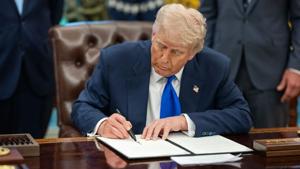
Trump rolls back tariffs on farm equipment, HVAC systems
President Donald Trump reduced tariffs on certain agricultural equipment, residential air conditioning systems and industrial machinery, marking the second rollback of import taxes since returning to office.
The proclamation, which takes effect Monday, reduces certain Section 232 tariffs on agricultural equipment – including combines and harvesters – and certain residential heating, ventilation and air conditioning systems from 25% to 15%. It also temporarily reduces tariffs on certain mobile industrial equipment, including bulldozers and forklifts, imported from countries with U.S. trade agreements.
More broadly, the Tax Foundation estimates Section 232 tariffs on steel, aluminum and copper will cost the average U.S. household $600 in 2026 and reduce long-run GDP by 0.1% before accounting for foreign retaliation. The tariffs are projected to raise $380 billion in federal revenue over the next decade on a conventional basis.
Those estimates were published before Monday’s targeted tariff reductions.
The move follows a November 2025 decision that exempted more than 200 food and agricultural products from tariffs, which the administration said reflected progress in trade negotiations.
Equipment manufacturers welcomed the move but said broader tariff relief is still needed.
“The proclamation is a turning point and an important first step towards additional adjustments to Section 232 tariffs,” Kip Eideberg, senior vice president of government and industry relations at the Association of Equipment Manufacturers, told The Center Square.
The proclamation’s relief is limited in scope. The reduced 15% rate applies only to residential HVAC systems, leaving commercial systems still subject to the 25% rate.
The Air-Conditioning, Heating, and Refrigeration Institute, the industry’s primary trade association, declined to comment.
The reduced rates are temporary, expiring Dec. 31, 2027.
The White House said the sunset is intended “to spur near-term investments that will rebuild the Nation’s industrial base.”
Eideberg said manufacturers need “the certainty they need to continue to invest in America.”
Separately, a federal trade court in May struck down a 10% global tariff imposed under Section 122 of the Trade Act of 1974 – which gives the president authority to address balance-of-payments deficits – although that ruling remains on hold pending appeal. The global entry tariff is set to expire July 24. The administration has signaled it may impose a new round of tariffs under a third statute, Section 301 of the Trade Act of 1974, as early as July.
The White House pointed to manufacturing data as evidence its trade policies are supporting domestic industry, noting that the Institute for Supply Management’s Manufacturing PMI expanded for a fifth consecutive month in May, its highest reading since May 2022.
The survey also found manufacturing employment remained in contraction, and nearly 70% of respondent comments were negative, with tariffs and the U.S.-Iran conflict among the concerns cited by manufacturers.
Unless extended or made permanent, the tariff reductions will expire at the end of 2027, restoring the 25% rate on affected equipment and setting up another policy decision for the administration.




Sunny
Latest News Stories
Illinois Quick Hits: Equity and Inclusion Commission launches mentorship program

Sheridan Gorman’s mother to Congress: ‘Choose us’

Cops can’t skip woman’s suit over ecstasy overdose from pills stuck in body

Illinois politicians claim cautious win in birthright citizenship ruling
Illinois Quick Hits: Man accused in White House terror plot ordered detained

Officials: Trans athlete bans won’t change Illinois school sports

Advocates worry new law will raise drug prices, harm self-insured businesses

Illinois Quick Hits: Toll burden 5th in U.S.

Complaint: District used tax dollars for referendum campaign

Supreme Court to hear Chicago assault weapons ban challenge

Illinois Quick Hits: Chicago TV crew attacked near lakefront

California Assembly passes $350 billion budget