HUD shifts $4B homelessness program from ‘Housing First’ to treatment
The U.S. Department of Housing and Urban Development announced a $4 billion funding opportunity for homelessness services on Monday, shifting away from the Housing First model.
The notice of funding opportunity, or NOFO, for HUD’s Continuum of Care program, represents a major turning point in federal funding for homelessness services. The overhaul prioritizes funding for services focused on treatment and recovery over broad renewals of Tier 1 projects, such as permanent housing.
The courts blocked a NOFO last year that would’ve dropped the funding cap for Tier 1 renewal projects from about 90% to 30% midway through the existing grant cycle.
The new NOFO includes a 60% cap on those projects, offering CoCs a compromise, while also directing funds toward transitional housing.
“The ‘housing first’ experiment failed Americans by warehousing the vulnerable without results,” HUD Secretary Scott Turner wrote in a press release Monday when announcing the shift in federal priorities.
Housing First prioritizes taxpayer-subsidized permanent housing for homeless individuals without any preconditions such as sobriety, participation in addiction treatment or employment.
Supporters argue that it’s supposed to be paired with support services, such as treatment, but participation is voluntary.
Critics say Housing First results in a revolving door, subsidized by everyday citizens with their taxes.
Dr. Sam Tsemberis developed Housing First in the 1990s, and HUD has used the model for 15 years.
“This ideology promised to end homelessness. Instead, billions of taxpayer dollars were spent while homelessness increased to record levels,” Turner wrote, referencing federal data from January 2024.
While recent data shows a 3.4% decline in estimated homelessness nationwide from 2024 to 2025, HUD’s annual point-in-time count in January 2025 still represents about a 27% increase from 2013.
Taxpayer-subsidized beds also increased 151% from 2013 to 2025, according to HUD’s press release.
In an interview last year, Tsemberis said the fentanyl crisis facing the nation today is different than the crack epidemic in the 1990s; however, he told The Center Square that the solution for homelessness is housing and argued that abandoning Housing First will result in more people ending up on the streets.
“What I’m very concerned about is that they want to move everything back to where people need to be in treatment and be sober before they get housing,” Tsemberis told The Center Square last fall in an interview about his model. “It’s going to increase homelessness, and it doesn’t make sense to me.”
The Trump administration is ready to move on from Housing First and tie funding to a provider’s results.
Since 2007, permanent supportive housing has increased by 111% nationwide, rising to 188% when rapid rehousing projects are included; meanwhile, HUD says transitional housing has fallen nearly 60%.
In 2024, 88% of CoC funding went toward permanent housing, while 1% went to transitional housing.
HUD says the new NOFO is intended to address the “root causes of homelessness” and ties funding to performance to ensure the federal spending moves the needle rather than maintaining the status quo.
The federal government says it will direct $1.3 billion from the NOFO toward investing in new projects.
According to the NOFO, applicants can set themselves apart when competing for funding by requiring homeless individuals to engage in support services to receive housing, partnering with mental health and treatment providers and employment programs, and coordinating outreach with law enforcement.
Quickly clearing encampments on public property and reducing public drug use also earn them points.
The NOFO requires funding applicants to certify that they will not operate drug-injection sites, or “safe consumption sites,” distribute drug paraphernalia, known as harm reduction, or permit illicit drug use.
The provision explicitly states that it’s not intended to require sobriety to receive housing. Still, another guideline in the NOFO does award points to applicants competing for funding who do require sobriety.
“Housing alone will not solve a crisis driven by addiction and mental illness. Under President Trump’s leadership, HUD is making necessary reforms to put recovery first,” Turner wrote in Monday’s release.






Showers And Thunderstorms
Latest News Stories

Net negative migration is harmful to the economy, economists say

Details pending on billions in foreign investments coming from trade deals
Will County Health Department Seeks $1 Million to Avert ‘Drastic’ Service Cuts from Expiring Grants
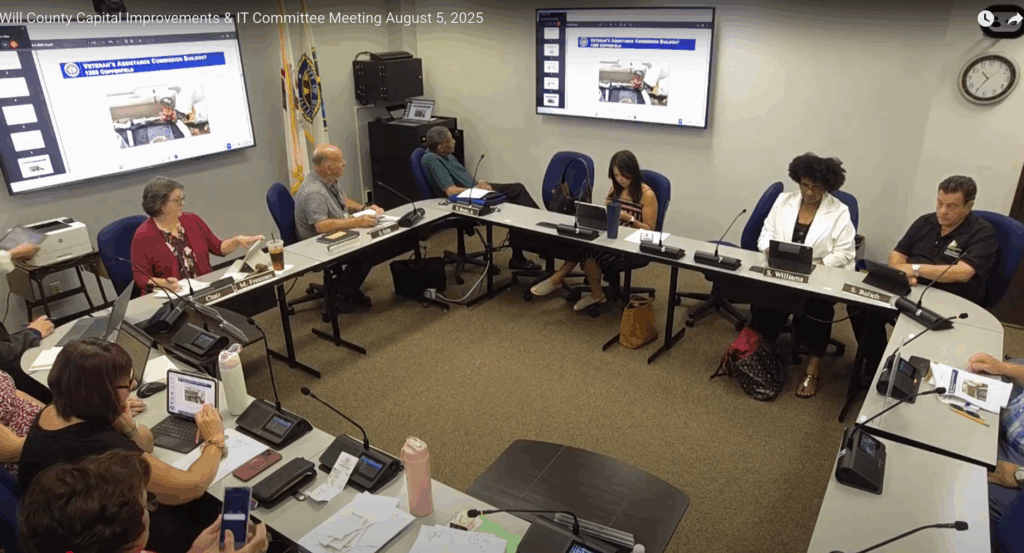
Will County’s “First-in-Nation” Veterans Center to House Workforce Services, Sparking Debate
Improved Vendor Service Creates $1.2 Million Shortfall in Sheriff’s Medical Budget
Will County Public Works Committee Unveils 25-Year Transportation Plan, Projects $258 Million Gap
Will County Animal Protection Services Seeks New Facility Amid “Gaping Wound” of Space Crisis
Board Confronts Animal Services Crowding, Explores Future Facility Options
Will County Board Members Demand Transparency in Cannabis Tax Fund Allocation

Homer Glenn Residents Push Back on 143rd Street Widening as Officials Signal “Tentative Agreement”
Will County Forges 2026 Federal Agenda Amid D.C. Policy Shifts, ‘Big Beautiful Bill’ Impacts

Health Department Seeks $1 Million Levy Increase to Prevent “Weakened System”