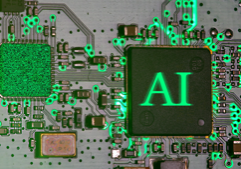
Human capabilities focused in student, teacher artificial intelligence guide
Teacher’s guide learning modules and self-assessment tools for students are part of the third annual Student Guide to Artificial Intelligence, a production of Elon University, the American Association of Colleges and Universities, and The Princeton Review.
“Capacities such as critical inquiry, ethical reasoning, creativity and communication are more important than ever because they enable students to engage AI thoughtfully, question its outputs and apply knowledge with judgment and purpose,” said President Lynn Pasquerella of the AAC&U.
Authors say, “The guide draws on 10 voices across centuries and cultures – from Aristotle, Cicero and Descartes to Mencius and Ptahhotep – whose enduring insights into human judgment, creativity, ethics and wisdom take on new urgency as AI reshapes how we learn and work.”
Artificial intelligence is a burgeoning influence on the world. In American, second-term Republican President Donald Trump has reversed a number of Biden era policies inclusive of deregulation, accelerating private-sector innovation and promotion of “ideologically neutral” artificial intelligence. He’s concerned with competition from China.
In April, the Elon University Imagining the Digital Future Center and Elon University Poll found 82% believing artificial intelligence will play “a significantly larger role in shaping people’s lives and key societal functions in the next 10 years or less.” The resilience infrastructure is to “counterbalance the human and systemic challenges posed by widespread AI adoption.”
The sampling Dec. 26 to Feb. 12 invited more than 4,000 experts to weigh in.
“The central risk described by these experts is not a single catastrophic AI event,” said Janna Anderson, professor of communications and senior researcher for the center. “They said accelerated AI use will lead to a cumulative reallocation of human agency until people and institutions find it harder to question, contest or even notice what has changed. That drift can look like ‘progress’ in the short term, but it has a price – the gradual weakening of human judgment, accountability, shared truth and the social fabric that makes self-government possible.”
Rob Franek, editor in chief at The Princeton Review, said students are “both excited by AI and uncertain about how to use it well.”
“What they’re really looking for is guidance,” he said. “This field guide meets that moment by translating big ideas – like critical thinking, creativity and ethical decision-making – into practical habits students can use every day.”
More than 4,000 colleges, universities, schools and organizations access Student Guide to Artificial Intelligence publications. More than 87,000 users in 170 countries have been provided information through the guide’s website.
The American Association of Colleges and Universities, headquartered in Washington, is an international organization billing itself as “a global membership organization dedicated to advancing the democratic purposes of higher education by promoting equity, innovation, and excellence in liberal education.”
The Princeton Review, headquartered in New York City, is not affiliated with Princeton University. The private organization provides test preparation, tutoring and college admission services.






Chance Showers And Thunderstorms
Latest News Stories

Trump tariffs drugs, furniture, heavy trucks to ‘protect’ U.S. markets

WATCH: Trump supports expanding Antifa terror designation internationally
2022 GOP nominee makes second run for governor

Oklahoma to start Turning Point chapters at all high schools
Comey indicted on obstruction charges over Russia-Trump collusion testimony

California education system support efforts to restrict ICE

Tariffs, looming government shutdown fuel fears in Colorado
WATCH: Pritzker creates governors group as IL legislators debate increased energy bills

Attorneys general file amicus brief supporting DEI policies

Illinois lawmaker, physician pushes back on Trump Tylenol announcement

Auto industry’s check engine light flashes as Trump’s tariffs hit
Illinois quick hits: Nearly 10,000 fewer jobs; temporary amnesty for delinquent taxpayers