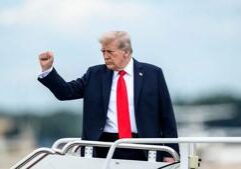
Trump’s Iran objective moves from ‘surrender’ to nuclear deal
In seven weeks, President Donald Trump’s stated objective toward Iran has shifted from “unconditional surrender” to a negotiated nuclear deal.
The administration has not explained the change.
On March 6, six days after attacks against Iran started, Trump posted on Truth Social that there would be “no deal with Iran except UNCONDITIONAL SURRENDER.” On the same day, the U.S. State Department relayed Trump’s message to the Iranian people directly: “When we are finished, take over your government. It will be yours to take.”
On Tuesday, Secretary of War Pete Hegseth described the administration’s objective as ensuring Iran “never has a nuclear weapon” through a deal. When a reporter at a Pentagon briefing asked when Trump decided to “capitulate on his demand for unconditional surrender,” Hegseth said the president “hasn’t capitulated on anything” but did not address the change in stated objectives.
The Pentagon referred questions from The Center Square about the change back to the transcript of Tuesday’s briefing, saying it had nothing additional to share. The White House, in response to questions about the objective shift, pointed to a post on X in which Trump said Iran “can’t have nuclear weapons” and that the U.S. must “get what we have to get.”
On April 1, Trump offered a ceasefire conditioned solely on reopening the Strait of Hormuz, with no mention of surrender or regime change. Six days later, Trump announced a two-week ceasefire brokered by Pakistan, describing a 10-point Iranian proposal as “a workable basis on which to negotiate” and saying “almost all of the various points of past contention have been agreed to.”
By late April, Trump said the Iranian government had become increasingly unstable.
“There is tremendous infighting and confusion within their leadership,” Trump wrote on April 25. “Nobody knows who is in charge, including them.”
The war has cost an estimated $25 billion, according to testimony before the House Armed Services Committee by Jules Hurst III, acting undersecretary of war for finances. The national average price for a gallon of regular gasoline stood at $4.54 on Wednesday, up from $3.16 a year earlier, before the conflict began, according to AAA.
Project Freedom, launched Monday at Trump’s direction, involves more than 15,000 American service members, more than 100 fighters, attack aircraft and other manned and unmanned platforms and guided-missile destroyers in the Strait of Hormuz.
Iran’s government has rejected the call for surrender. Iranian President Masoud Pezeshkian, the ninth president of the Islamic Republic of Iran, wrote on his official X account on May 6 that “no one will be able to make Muslims surrender.” In an April 1 open letter posted to his X account, Pezeshkian said Iran “pursued negotiations, reached an agreement, and fulfilled all its commitments,” and that the U.S. chose to withdraw.
As of Wednesday, negotiations remain unresolved. Trump said Iran wants a deal but the U.S. has not yet agreed to terms.
“They can’t have nuclear weapons. It’s very simple … We have to get what we have to get. If we don’t do that, we’ll have to go a big step further – but with that being said, they want to make a deal,” Trump said.
Hegseth defended the administration’s approach, saying the goal was to get Iran “to the point where they’re at the table and giving it up.”
The ceasefire Trump announced April 7 conditioned the suspension of bombing on the “complete, immediate, and safe opening” of the Strait of Hormuz. Iran has not fully reopened the strait. The Trump administration has maintained the ceasefire remains intact despite Iranian forces firing on U.S. warships and commercial vessels since the truce took effect.
Iran disputes the U.S. characterization of who is violating the ceasefire. Iran’s state news agency IRNA reported that the U.S. imposed a naval blockade on Iranian ports on April 9 – one day after the ceasefire took effect – and that Iran considers the blockade a breach of truce terms.
About 20% of the world’s oil supply moves through the Strait of Hormuz. The closure since late February has left more than 1,550 commercial vessels carrying 22,500 mariners trapped in the Arabian Gulf, unable to transit, according to Gen. Dan Caine, chairman of the Joint Chiefs of Staff.
The terms of any final agreement, and how they compare to the objectives Trump declared at the outset, remain unknown.






Sunny
Latest News Stories

New Lenox Used Car Dealership Approved by Land Use & Development Committee

Land Use Committee: Monee Solar Projects Granted Extensions; Battery Storage Plans Dropped

P&Z Commission: New Women’s Recovery Center Proposed for Patterson Road Receives Support

Ogalla Blasts New State Solar Legislation

Committee Postpones Vote on Brandon Road Fill Operation After Tree Clearing Allegations
Meeting Summary and Briefs: Will County Planning and Zoning Commission for December 2, 2025
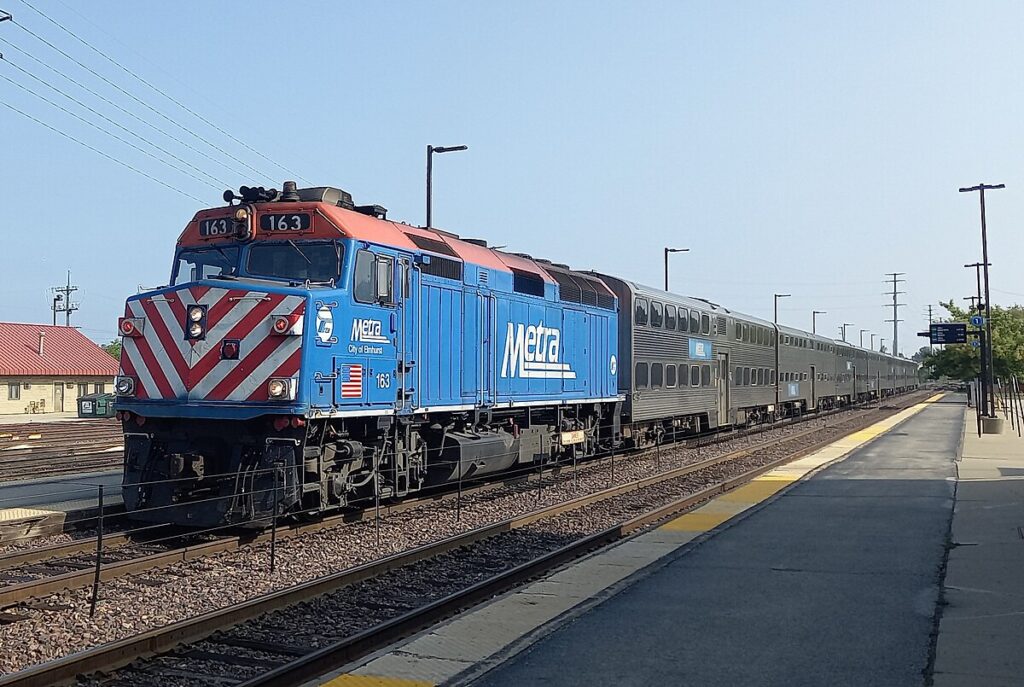
Metra Announces No Fare Hikes; Highlights Bridge Projects in Joliet and Mokena
Meeting Summary and Briefs: Frankfort Public Library District Board of Trustees for October 23, 2025

Misty Creek Development Approved for Sunroom and Patio Additions

Public Works Committee: Will County Consolidates Paratransit Services Amid Funding Debates
Frankfort Fire Trustees Hold Four-Hour Closed Session on Chief Search

Library Anticipates Purchasing Delays as Major Distributor Closes