
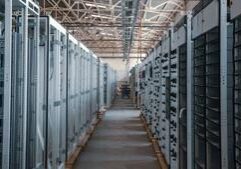
States pushing back on data center sales tax breaks as Wisconsin forgoes $1.5B
While those supporting sales tax breaks for data center projects say they believe the breaks are necessary to compete for projects amongst the 38 states that currently offer the incentives, a growing number of state Legislatures are considering whether the tax breaks are worth the benefits.
Wisconsin congressman and candidate for governor Tom Tiffany has declared that he intends to end data center tax breaks if elected. A recent report from Wisconsin’s Legislative Audit Bureau shows that the state will forego $1.5 billion in sales tax to four data center projects in initially construction and then $369 million more annually once the projects are completed.
Wisconsin’s exemption, enacted in the 2023-25 budget, applies to everything from property purchases to computer servers and energy systems at the site to electricity and cooling systems.
The exemptions apply to Microsoft’s $20.6 billion in data centers in Wisconsin along with OpenAI, Oracle and Vantage Data Centers’ $15 billion in data center investments in Port Washington. Epic Hosting’s $347 million project in Verona and Meta’s $1 billion project in Beaver Dam are also included.
Virginia sales tax breaks, estimated to be worth $1.6 billion and $1.9 billion annually, are currently at the center of budget discussions in the state while a new Pennsylvania bill would end the sales tax breaks in the state, expected to reach $517.2 million annually in 2030-31.
Minnesota ended its sales tax exemption on electricity for data centers last year while other states, such as North Carolina, are considering an end to the exemptions.
“If all planned data centers in North Carolina are built, developers would receive an estimated $450 million in sales tax exemptions each and every year,” Gov. Josh Stern wrote on social media last month. “And with the state’s impending fiscal cliff and the federal government retreating on longstanding commitments, state revenue is especially precious.
“We should spend taxpayer dollars only when it adds value to our people. And do we really want to subsidize energy consumption by data centers when they are making everyone else’s power bills go up? It doesn’t make much sense to me.”
Metro Milwaukee Association of Commerce President Dale Kooyenga has advocated for the continued use of data center sales tax exemptions in Wisconsin, saying that construction workers on the projects are paying income and property taxes that exceed the value of the sales tax exemptions and the projects would not come to the state without the sales tax break.
“As a CPA, it is not a ‘cost’ if you never had the revenue or expense,” Kooyenga wrote. “There is no hole in the budget; in fact, there are more state resources because the policy brought economic activity to WI, and an existing funding stream or expenditure didn’t have to be cut.
“Ratepayers will not subsidize electrical rates, property taxpayers do not subsidize TIFs and a sales tax exemption does not mean that this is ‘costing’ WI taxpayers.”





Partly Sunny
Latest News Stories

Illinois, Chicago residents rank high taxes as state’s top issue

Illinois quick hits: Illinois House members vote along party lines; More than 40% of CPS teachers missed 10 or more school days; State Treasurer says Bright Start earns gold
Meeting Summary and Briefs: Will County Capital Improvements & IT Committee for November 4, 2025

Glock: Judge’s OK of Chicago’s anti-gun lawsuit questionable, at best

Illinois quick hits: DHS responds to migrant release order
Pritzker disagrees with Durbin on vote to end shutdown

Pritzker open to conversation with Trump on alderman’s immigration proposal

Expert: Illinois’ outdated tax law leaves homeowners, taxpayers on the hook

Illinois quick hits: Midway Blitz nabs nine drunk drivers; Madigan prosecutor to depart
Meeting Summary and Briefs: Frankfort School District 157-C for September 2025
Meeting Summary and Briefs: Frankfort Fire Protection District for September 2025
Lawmakers divided after federal complaint targets student mental health screening law

Normal, IL fire and EMS challenges highlight need for statewide task force

Analysis: Chicago among worst cities to drive in