Rubio confirms Epic Fury over; U.S. responding defensively in Strait of Hormuz
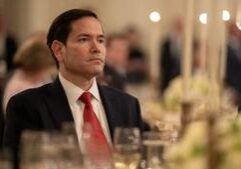
Secretary of State Marco Rubio said Tuesday afternoon that Operation Epic Fury was concluded – similar to what the president has said in his communications with Congress – and that the U.S. is in a defensive phase in the Strait of Hormuz.
“The operation is over,” Rubio said. “We’re done with that stage of it.”
President Donald Trump had communicated with Congress days earlier that the ceasefire initiated by the U.S. in early April had effectively ended the operation, according to reports.
Epic Fury’s main objectives, according to the administration, were to destroy Iran’s military infrastructure and sever its path to a nuclear weapon. Its objectives did not include ensuring that the Strait of Hormuz was operating normally and freely, but Iran began conducting strategic countermeasures in the strait from the start. Roughly 20% of the world’s oil is transported through the strait.
At Trump’s direction, the U.S. began Project Freedom, what the administration says is an entirely separate operation and wholly defensive in nature, on Monday. Even though one of the conditions for the ceasefire was the full reopening of the strait, Iran has continued making the strait difficult to traverse. Through Project Freedom, the U.S. aims to at least temporarily stabilize the Strait of Hormuz so countries who normally use it to retrieve and transport oil can do so.
Secretary of War Pete Hegseth underscored Tuesday morning at a Pentagon press briefing that Project Freedom was a defensive mission, and Rubio emphasized that again Tuesday afternoon.
“What’s really important for… everyone to understand is this is not an offensive operation. This is a defensive operation,” Rubio said. “And what that means is very simple: There’s no shooting unless we’re shot at first.”
Iran fired on U.S. war ships in the strait on Monday and the U.S. retaliated and sunk seven Iranian fast boats.
Rubio also stressed that U.S. involvement at this point was to help other countries and their people.
“Many nations, privately, and some publicly, have asked the United States to help free their ships and to restore freedom of navigation in the Straits of Hormuz, in this critical artery of global trade,” Rubio said. “And so President Trump, as he always does, stepped up and answered the calls for their help.”
He also added, however, that American action was still “in the service of our national interest above all else,” and that it was necessary because Iran was violating international law.
“It is an international waterway, and international law is very clear,” Rubio said. “No country can control them….. It’s completely illegal, completely illegitimate and completely unacceptable, and that’s why the United States military is guiding stranded commercial ships safely through the strait and is working to restore freedom of navigation and putting an end to these efforts to hold the global economy hostage.”
Rubio spoke and took questions from reporters at the White House on Tuesday as White House Press Secretary Karoline Leavitt is out on maternity leave awaiting the arrival her second child.


Sunny
Latest News Stories

Plastics industry one of ‘most powerful economic engines’ thanks to nation’s shale gas, ingenuity

Congressional candidate defends ‘dark humor’ video about Kirk assassination
Trump tells parents to get vaccines not available in U.S.

Grocery tax stalls in Chicago council, measure approved in Bloomington

GOP leader argues against Democrats’ descriptions of ICE

Illinois quick hits: Guatemalan national guilty of illegal presence; ‘peacekeeper’ arrested for battery

Frankfort Board Denies Greenhouse and Pool Variances, Citing Zoning Intent and Setback Impact
Joliet Junior College Honors Seven Long-Serving Employees Upon Retirement

Trump tariffs drugs, furniture, heavy trucks to ‘protect’ U.S. markets

WATCH: Trump supports expanding Antifa terror designation internationally
2022 GOP nominee makes second run for governor
Oklahoma to start Turning Point chapters at all high schools