Colorado House votes for credit card fee reduction
Legislation to reduce credit card fees on purchases is a step closer to final passage in Colorado with proponents saying it will help small businesses and opponents arguing it will hurt rewards and cash back programs.
The bill was passed by the state House of Representatives on its second reading Tuesday. It will need a third reading and a final vote in the House before it heads to Gov. Jared Polis’ desk. The Legislature, which is scheduled to end its regular session on May 13, hasn’t announced the date of the final vote.
Business groups, such as the National Federation of Independent Business, have voiced support for the Democratic majority’s bill and argued it would save small businesses unfair costs. Credit card and consumer groups have expressed opposition, saying credit card rewards would be reduced at a loss to consumers.
Colorado’s Payment Card Networks’ Fees legislation, Senate Bill 26-134, would prohibit a 1.5-3.5% credit card fee, which businesses pay when shoppers use a credit card, from including sales tax. Currently the fee paid to the card-issuing bank is based on the total sales price, which includes the sales tax.
In Colorado, the average sales tax is nearly 11% according to the Tax Foundation. Proponents for the bill argue the credit card fee including sales tax is unfair to businesses, which are passing along the tax and not directly benefiting from it. A report by business research group CMPSI found that credit card fees on sales tax totaled $217 million in Colorado in 2024.
“They [businesses] should not have to pay fees on the local or state taxes that they are collecting from the customer,” House Speaker Julie McCluskie, the Democrat who sponsored the bill, told the House on Tuesday while presenting SB26-134 on the floor.
“They are simply acting as a pass-through, a collector of those taxes to push those on to local or state governments,” said McCluskie, whose legislative district consists of six rural counties in central Colorado.
Opponents have argued that benefits to businesses would be at the loss of consumers by smaller credit card rewards.
“Consumers actively choose co-branded credit cards for the real value they provide, from travel rewards to everyday savings that help stretch household budgets,” Will Hild, president of the business advocacy group Consumers Defense, said in a statement to The Center Square. “This bill undermines that system, taking away rewards many families rely on. It also creates new costs and complexity for small businesses that depend on efficient, seamless payment systems.”
Hild was not available Tuesday for a Center Square interview.
It is not confirmed by how much or if credit card rewards would be directly impacted by the bill. Alleigh Marré, executive director of the American Parents Coalition Action group, opposed the bill and said that any limit to the credit card processing fee cuts down on the bank’s “wiggle room” from which it can offer rewards.
“That’s one of the first things that stand to be cut – those reward incentives that get passed back to the consumer,” Marré told The Center Square. She added that the loss of credit card rewards would affect families who use them for cash-back or travel benefits.
Colorado Chamber of Commerce spokesperson Teresa Busk on Tuesday told The Center Square that the chamber did not yet have a position on the issue.
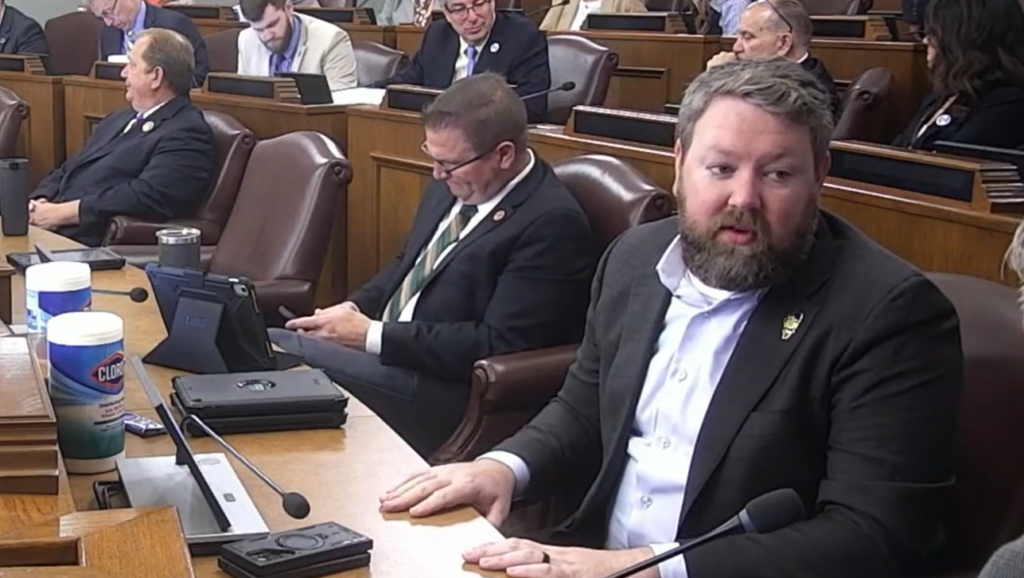
Rep. Ken DeGraaf, R-El Paso County, spoke in opposition to the bill at the Tuesday House vote, calling the argument over the issue, “A Goliath versus Goliath, and then with the emotional bait of saying that we are going to be helping small business.”
Colorado Politics reported that 175 lobbyists and firms had signed up to work on the bill, with a roughly equal split between those in support and opposition.






Partly Sunny
Latest News Stories

Trump hits 60 nations with forced-labor tariffs

Illinois news in brief: Year-over-year unemployment rates rise; Judge gives Rockford woman six months for stealing from booster club; Chicago Fed’s National Activity index rises

Voters say economy rigged for wealthy as Trump earns low marks

Parents challenge special ed regulation for private schools, seek SCOTUS review

Trump: Data center boom will lower Americans’ energy costs
Election 2026: Third day of filing for Graham’s seat remains quiet

White House has extra asks for stalled federal highway bill

Carolina, Virginia Tech chosen for fellowship program by War Department

Future regional power supply down, but not out

Exclusive: USDA distributing loans to Oregon, Nevada sawmills to expand timber production
Lawsuit claims digital asset tax is unconstitutional

Minnesotan will spend life in prison for deaths of House speaker, husband