
Appeals court splits over ICE detention of illegal immigrants without bond
A panel of federal appeals court judges continues to agree that a Chicago federal judge overstepped his authority in ordering the en masse release of hundreds of illegal immigrants detained by federal agents in and around Chicago.
However, the panel sharply disagreed over whether federal law gives federal immigration enforcement agencies the power to detain illegal immigrants without bond, if those immigrants are found anywhere in the country other than at the border itself.
On May 5, a three-judge panel of the U.S. Seventh Circuit Court of Appeals essentially split 1-1-1 on that question in a decision addressing potentially illegal and unconstitutional orders from U.S. District Judge Jeffrey Cummings amid the heat of the 2025 enhanced immigration raids in Chicago, generally known as Operation Midway Blitz.
The case had landed before the Seventh Circuit late last fall, following controversial rulings by Cummings concerning the detention of more than 600 illegal immigrants detained by U.S. Immigration and Customs Enforcement (ICE) and Border Patrol under the agencies’ Operation Midway Blitz immigration enforcement initiative.
In the headline-grabbing ruling, Cummings had ordered the release of hundreds of those detainees into a different program, called “Alternatives to Detention,” which allows illegal immigrants to remain free in local communities, while they wait on their immigration proceedings to play out.
Cummings justified his ruling by agreeing with pro-immigrant activists that the Trump administration had allegedly violated a deal struck between those activists and the administration of former President Joe Biden, whose lax immigration policies have been blamed for an unprecedented surge of millions of illegal immigrants from 2021 to 2024.
The deal was formalized in a so-called consent decree, which was filed with the federal court and is enforceable under the powers of the federal court.
That deal had ended a class action lawsuit brought first in 2018, during President Donald Trump’s first term in office, on behalf of illegal immigrants who activists and their attorneys claimed had been wrongfully detained and deported by ICE without first securing proper “targeted warrants” clearly identifying the individuals ICE wished to arrest and deport.
The first Trump administration fought the lawsuit, and it continued after Trump was replaced by Biden in 2021. After he took office, Biden promptly reversed a wide range of Trump administration policies, notably including Trump’s more stringent approach to immigration enforcement.
In Chicago federal court in 2022, the Biden administration then struck the deal with their political allies, further curtailing enforcement actions to locate, arrest and deport illegal immigrants inside the U.S., away from the borders.
Among other terms, the settlement agreement essentially forbade ICE from conducting “raids,” but rather generally limited ICE to making arrests and deportations only in cases in which the agency first obtained targeted warrants against specific individuals the agency believes may be in the U.S. illegally or when officers can document probable cause for making a stop and detention.
That agreement further included a provision which would allow the so-called “consent decree” to be reactivated whenever immigration rights activists believe ICE may no longer be following the procedures required in the decree.
Amid ramped up immigration enforcement actions in Chicago and elsewhere, immigration activists, including the National Immigrant Justice Center and the American Civil Liberties Union (ACLU), then used that provision to reopen the case and persuade Cummings to again order ICE, now once again under Trump, to comply with the agreement reached by his predecessor.
In the challenge, the immigration activists further argued federal law prohibited federal immigration agencies from locking up arrested illegal immigrants, rather than releasing them on bond, if they are caught in the nation’s interior.
They argued federal law establishes that only those who are caught attempting to illegally enter the country at the border or at a port can be detained without bond, pending the outcome of their deportation proceedings.
In the early days of Trump’s second term, the administration asserted that interpretation was incorrect, and the same detention rules should apply to an arrested illegal alien, whether they may be found at the border or in places like Chicago, hundreds of miles from a border.
Essentially, the Trump administration said there should be no special status afforded to illegal aliens who manage to elude federal officers for years and come to reside in the Midwest or anywhere else in the country.
Cummings, however, said the manner in which the immigration enforcement raids were conducted violated the Biden-era consent decree and the Trump administration should be forced to abide by the policy choices of his political opponent.
However, Cummings then declared he would provide relief on a “class wide” basis, and ordered the mass release of hundreds of detainees.
On immediate appeal, a three-judge panel put Cummings’ ruling on hold in December, saying they believed the mass release was a misinterpretation of federal law. They said the judge could not order the detainees released as a group without individually determining each had been arrested and detained in violation of federal law and the consent decree.
Nearly six months later, that same three judge panel returned with a ruling on the merits of the appeal.
In the ruling, Seventh Circuit Judge John Z. Lee, an appointee of former President Joe Biden, wrote what was styled as the majority opinion in the case. He was joined in the judgment only, by his fellow Biden-appointee, Seventh Circuit Judge Doris Pryor.
Lee and Pryor, together with Trump-appointee Seventh Circuit Judge Thomas Kirsch, continued to agree that Cummings overreached by ordering the mass release of illegal immigrant detainees.
However, in the majority opinion, Lee said the Biden consent decree should remain binding on the Trump administration and all future presidents, until and unless a court agrees to modify the arrangement.
The majority opinion further said Cummings acted within his power to reopen the consent decree to cover a 118 day enforcement period.
Lee and Pryor, however, differed slightly on the question of whether federal law empowers the Trump administration to hold detainees without bond if they are arrested away from the borders.
That question has roiled federal appeals courts in recent months. Two appeals courts that have ruled on the matter have sided with the Trump administration; one has sided with immigration activists.
Every other U.S. federal appeals court is also preparing to hear cases centered on that question of federal and constitutional law.
However, as federal appeals courts continue to split on the question, the matter ultimately appears ticketed for the U.S. Supreme Court to receive a final answer.
The dispute over Cummings’ orders represented the first time the question has landed at the Seventh Circuit, which handles appeals from the federal courts of Illinois, Indiana and Wisconsin.
In his opinion, Lee sided with the immigration activists, saying he believed the law could only be interpreted properly if read to prohibit the detention of illegal immigrants, who Lee calls “unadmitted noncitizens,” unless they are apprehended while “seeking lawful entry at our country’s border and ports of entry.” He said that interpretation is the only one that “faithfully adheres to each word in the statute, its grammatical structure, and statutory context, while accurately reflecting the statute’s historical background, consistent with the government’s long-standing understanding and application of it.”
While concurring with Lee in the “judgment,” Pryor filed a concurring opinion that did not address directly her opinion on the proper way to approach that provision of federal immigration law.
Rather, she said the Biden consent decree should decide the detention question in this case and should be sufficient to prevent the Trump administration from detaining the arrested illegal aliens, subject to individual determinations concerning the lawfulness of their arrest.
Kirsch, however, dissented again, and blasted his colleagues’ interpretation of the law and of the lawfulness of the Biden consent decree.
While the Biden administration and other past presidential administrations have interpreted federal immigration law as the activists now demand, Kirsch said nothing in the Constitution or the law demands all future presidents be subject to that interpretation.
“… The government’s past practice did not convey rights to those who benefitted or forever bind future administrations to an incorrect interpretation of the law,” Kirsch wrote. “For nearly three decades, the government used this statute in the way plaintiffs urge is the only way it can be used.
“But the present administration is now invoking broader authority under (the law), and it is our task to give that provision its fairest reading, regardless of past practice.
“… The fairest reading of (the law) is that all applicants for admission not entitled to be admitted or falling into the exceptions must be detained.”




Showers And Thunderstorms Likely
Latest News Stories

Contractor Selected for Sharon’s Bay Park Redevelopment

Handbook Changes at D122 Include Swapping PSAT for PreACT
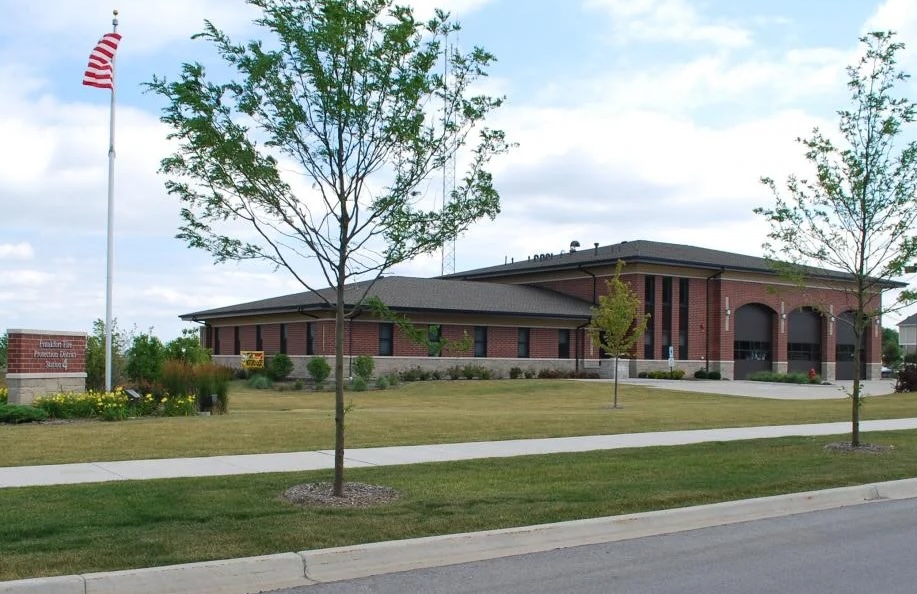
Frankfort Fire District Explores Hiring Consultant for Community Outreach, Potential Referendum

New Dining Options Coming as Village Approves Hot Dog Stand, Restaurant Patio

Meeting Summary: New Lenox Park District for June 18, 2025

Monee Board Sets Spending Plan with 2025-2026 Appropriations Ordinance
New Lenox School District 122 Honors State Track and Field Athletes
Frankfort Fire District Updates Sick Leave Policy for Non-Union Employees

Fiber Optic Internet Competition Coming to New Lenox
Monee Officials Issue Pool Safety Alert Amid Summer Heat

Village Board Approves Millions in Spending on Roads, Parks, and Museum
Meeting Summary: New Lenox School District 122 Board of Education for June 17, 2025