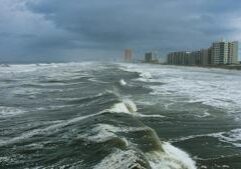
Hurricane season month away; forecast modest
Six to nine hurricanes have been forecast in the Atlantic Basin hurricane season from June 1 to Nov. 30 by the two leading authorities.
At N.C. State University, the Department of Marine, Earth and Atmospheric Sciences teamed with the Department of Computer Science projected six to nine from 12 to 15 named storms, with two to three deemed major. At Colorado State University, the Department of Atmospheric Science predicts six hurricanes from 13 named storms, with two likely major.
The 2025 Atlantic hurricane season was remarkable as the first since 2015 with none making landfall. Erin in August brought significant coastal damage along the East Coast, and Tropical Storm Chantal was the lone system making landfall when it damaged the Carolinas in July.
Erin, Gabrielle, Humberto and Melissa were major hurricanes, and Imelda was the fifth hurricane of the season. Thirteen storms earned names.
Dr. Lian Xie, professor at N.C. State, predicts two to five named storms forming in the gulf and one or two of them becoming a hurricane with one major. The Caribbean Sea is predicted to be the origin for one to two hurricanes, of which one would be major.
Xie said he uses more than 100 years of historical data on the Atlantic Ocean, weather patterns and sea-surface temperatures to arrive at his forecast.
At Colorado State, the summary forecast says in part, “We anticipate that the 2026 Atlantic basin hurricane season will have somewhat below-normal activity. Current weak La Niña conditions are likely to transition to El Niño in the next few months, with the potential for a moderate/strong El Niño for the peak of hurricane season.”
Hurricanes are generally described using the wind scale known as Saffir-Simpson. It doesn’t take into account storm surge or rainfall, two factors that contribute heavily to death totals and property damage estimates.
The scale is Category 1 for maximum sustained winds of 74-95 mph; Category 2 for maximum sustained winds of 96-110 mph; Category 3 for maximum sustained winds of 111-129 mph; Category 4 for maximum sustained winds of 130-156 mph; and Category 5 for maximum sustained winds of 157 mph or greater.
Categories 3, 4 and 5 are deemed major.
The National Weather Center earlier released names to be used this year as maintained and updated through a strict procedure by an international committee of the World Meteorological Organization. They will be Arthur, Bertha, Cristobal, Dolly, Edouard, Fay, Gonzalo, Hanna, Isaias, Josephine, Kyle, Leah, Marco, Nana, Omar, Paulette, Rene, Sally, Teddy, Vicky and Wilfred.
The list rotates and is recycled every six years, sans a change because of retirement of a name due to storm fatalities or cost. These names are next up in 2032.






Sunny
Latest News Stories

Lawmaker responds to IL’s push for adult COVID shots against CDC guidance

Immigration advocates sue Trump administration over ‘unlawful’ ICE arrests

18% of med schools receive F when judged by academic excellence, DEI rejection
Plastics industry one of ‘most powerful economic engines’ thanks to nation’s shale gas, ingenuity

Congressional candidate defends ‘dark humor’ video about Kirk assassination

Trump tells parents to get vaccines not available in U.S.

Grocery tax stalls in Chicago council, measure approved in Bloomington

GOP leader argues against Democrats’ descriptions of ICE

Illinois quick hits: Guatemalan national guilty of illegal presence; ‘peacekeeper’ arrested for battery

Frankfort Board Denies Greenhouse and Pool Variances, Citing Zoning Intent and Setback Impact
Joliet Junior College Honors Seven Long-Serving Employees Upon Retirement

Trump tariffs drugs, furniture, heavy trucks to ‘protect’ U.S. markets