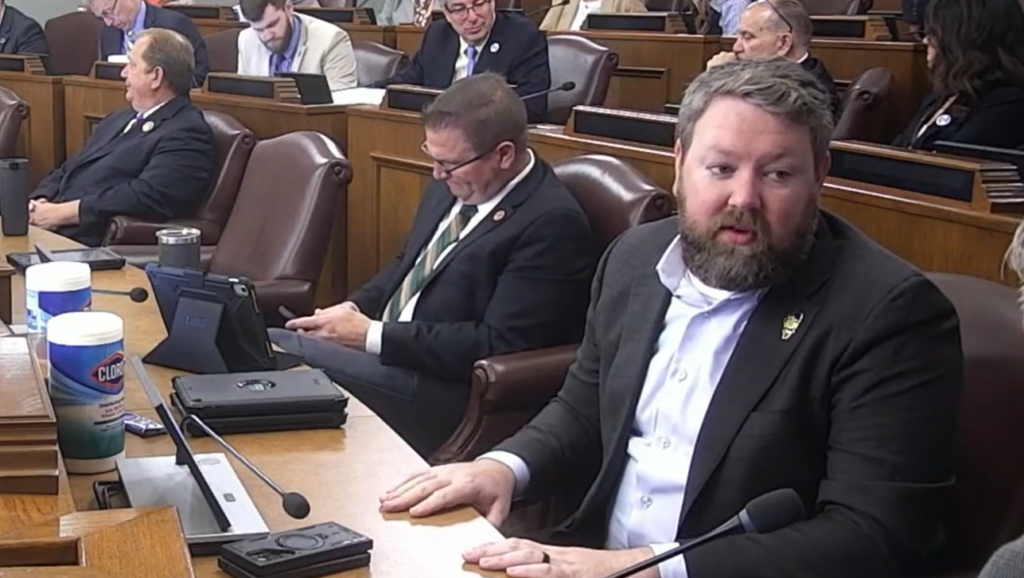
Supreme Court limits Voting Rights Act in Louisiana redistricting battle
The U.S. Supreme Court struck down Louisiana’s congressional map Wednesday, ruling that the state relied too heavily on race when it created a second majority-Black district.
The 6-3 ruling means Louisiana’s current map, known as SB8, cannot be used as drawn. The decision sends the case back to a lower court and sets the stage for yet another round of congressional redistricting in a state that has spent years fighting over its political boundaries.
At the center of the case was Louisiana’s 6th Congressional District, which lawmakers redrew to connect Black voters from Baton Rouge, Lafayette, Alexandria and Shreveport. The district stretched across much of the state and was designed to have a Black voting-age population above 50%.
According to the opinion, there are only two “compelling interests” that allow a state to discriminate based on race: avoiding imminent and serious threats to safety in prisons and remedying specific, identified instances of past discrimination that violated the Constitution or a statute.
The court said compliance with Section 2 of the Voting Rights Act can also provide a compelling interest in some redistricting cases. But the majority said that applies only when the law actually requires the state to use race to fix a voting-rights violation.
Lawmakers created the district after a separate federal court found that Louisiana’s previous map likely violated the Voting Rights Act because it included only one majority-Black district, even though about one-third of the state’s population is Black.
But the new map quickly drew another lawsuit. Opponents argued the state had gone too far in the other direction by using race as the main factor in drawing the district.
The Supreme Court agreed, meaning Louisiana will again have to redraw its congressional lines, likely closer to the map lawmakers approved in 2022, which included one majority-Black district centered around New Orleans.
Writing for the majority, Justice Samuel Alito said Louisiana’s effort to comply with the earlier Voting Rights Act ruling was “understandable,” but still unconstitutional.
The court said the Voting Rights Act did not require Louisiana to create a second majority-Black district, so the state had no strong enough legal reason to use race in that way. This is where the Supreme Court disagreed with the earlier federal court ruling in the Robinson case, which had found that Louisiana’s previous map likely violated Section 2 of the Voting Rights Act.
“In sum, because the Voting Rights Act did not require Louisiana to create an additional majority-minority district, no compelling interest justified the State’s use of race in creating SB8,” Alito wrote.
That part of the decision could make it harder to bring successful Voting Rights Act challenges in redistricting cases.
Justice Elena Kagan, joined by Justices Sonia Sotomayor and Ketanji Brown Jackson, dissented. Kagan argued the majority had weakened one of the central protections of the Voting Rights Act and made it easier for states to dilute minority voting power.
“The Supreme Court has ended Louisiana’s long-running nightmare of federal courts coercing the state to draw a racially discriminatory map,” Louisiana Attorney General Liz Murill said in a statement. “That was always unconstitutional—and this is a seismic decision reaffirming equal protection under our nation’s laws.”





Chance Rain Showers
Latest News Stories

Trump hits 60 nations with forced-labor tariffs
Illinois news in brief: Year-over-year unemployment rates rise; Judge gives Rockford woman six months for stealing from booster club; Chicago Fed’s National Activity index rises

Voters say economy rigged for wealthy as Trump earns low marks

Parents challenge special ed regulation for private schools, seek SCOTUS review

Trump: Data center boom will lower Americans’ energy costs
Election 2026: Third day of filing for Graham’s seat remains quiet

White House has extra asks for stalled federal highway bill

Carolina, Virginia Tech chosen for fellowship program by War Department
Future regional power supply down, but not out

Exclusive: USDA distributing loans to Oregon, Nevada sawmills to expand timber production
Lawsuit claims digital asset tax is unconstitutional

Minnesotan will spend life in prison for deaths of House speaker, husband