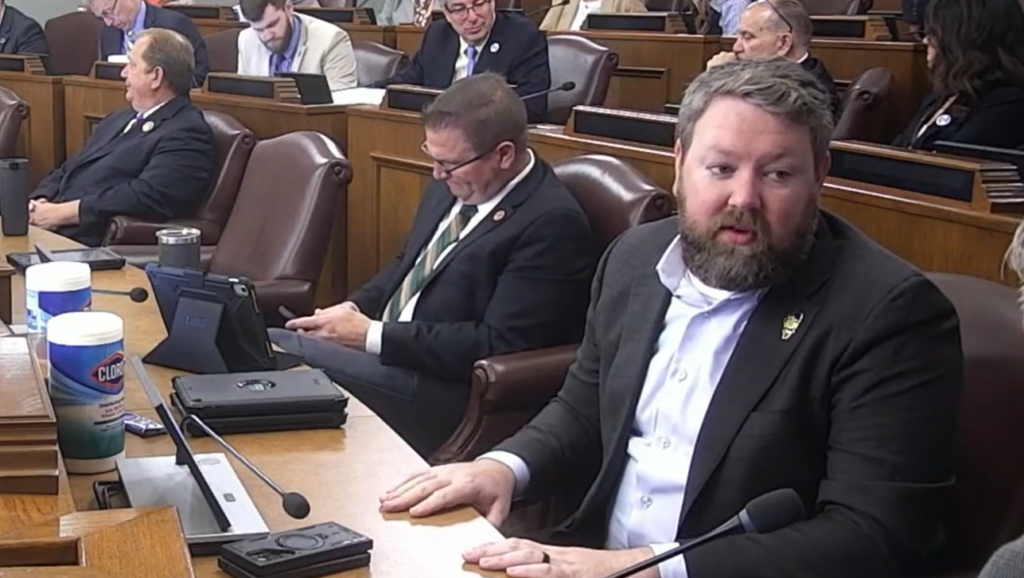
U.S. House to vote on five-year Farm Bill this week
The House Rules Committee debated long into Monday night to prepare the five-year farm bill for a floor vote this week.
Lawmakers have filed over 360 amendments to the 802-page Farm, Food, and National Security Act of 2026, which is currently scheduled to hit the House floor Thursday.
Congress is under immense pressure to pass a farm bill, which it is supposed to do every five years but has not since 2018.
The proposed bipartisan “skinny” farm bill renews and enhances crop insurance and price support, disaster assistance, risk management programs, operation and marketing loans, and federal agricultural research.
It also outlines investments in rural broadband connectivity, forest management, water infrastructure, and hospital assistance, as well as the Rural Energy for America Program (REAP).
House Agriculture Committee Chairman Glenn Thompson, R-Pa., testified Monday afternoon in support of the bill, which cleared his committee weeks ago.
“Producers have operated under an extension of 2018 policy since 2023. This cannot continue,” Thompson said. “We are not playing political games with the future of rural America. We are focused on policy that threads the needle of responsible spending and meaningful impact back home.”
Though more than 500 stakeholders support the legislation, it still contains a number of controversial provisions that Democrats in particular object to.
During the hours-long Rules committee hearing, Democratic lawmakers objected to the $1 billion cut to the farm conservation program EQIP, the solidification of cost-cutting reforms to SNAP implemented by the “One Big Beautiful Bill,” and deregulatory provisions Democrats believe are harmful.
“The Republicans call this a ‘skinny farm bill,’ and maybe that’s because they know there’s not enough meat on the bone, nor is it a real farm bill,” House Agriculture Committee Ranking Member Angie Craig, D-Minn., said.
“Farm country needs a full, five-year, 12-title, robust farm bill that helps solve their biggest problems. Not a ‘skinny’ farm bill that leaves so many questions unanswered and so many problems unsolved. And we will be right back here in a year if the administration continues the bad policies that are impacting farm country.”
Multiple lawmakers also opposed a provision that would shield pesticide manufacturers from state-level “failure-to-warn” lawsuits. Rep. Nancy Mace, R-S.C., filed an amendment to strip that provision, though it will likely fail.
“Weakening pesticide oversight moves in the wrong direction,” Mace lamented Monday. “These provisions preempt state and local authority, shut down judicial review, and hand EPA bureaucrats unchecked power to define what is safe.”
The U.S. Supreme Court is currently considering whether such personal injury lawsuits are constitutional when companies follow federal labeling requirements.






Slight Chance Rain Showers then Mostly Cloudy
Latest News Stories

Trump hits 60 nations with forced-labor tariffs

Illinois news in brief: Year-over-year unemployment rates rise; Judge gives Rockford woman six months for stealing from booster club; Chicago Fed’s National Activity index rises

Voters say economy rigged for wealthy as Trump earns low marks

Parents challenge special ed regulation for private schools, seek SCOTUS review

Trump: Data center boom will lower Americans’ energy costs

Election 2026: Third day of filing for Graham’s seat remains quiet

White House has extra asks for stalled federal highway bill

Carolina, Virginia Tech chosen for fellowship program by War Department

Future regional power supply down, but not out

Exclusive: USDA distributing loans to Oregon, Nevada sawmills to expand timber production

Lawsuit claims digital asset tax is unconstitutional

Minnesotan will spend life in prison for deaths of House speaker, husband