Trump moves medical marijuana to Schedule III in historic shift
The Trump administration on Thursday moved medical marijuana from one of the most restricted drug classifications to a less regulated category, a historic shift that delivers a tax break to cannabis businesses but stops short of federal legalization.
Acting Attorney General Todd Blanche issued an order immediately placing both FDA-approved marijuana products and marijuana regulated by state medical licenses in Schedule III of the Controlled Substances Act. A new administrative hearing will begin June 29 to consider broader rescheduling of marijuana overall.
“The Department of Justice is delivering on President Trump’s promise to expand Americans’ access to medical treatment options,” Blanche said. “This rescheduling action allows for research on the safety and efficacy of this substance, ultimately providing patients with better care and doctors with more reliable information.”
The action follows a December 2025 executive order in which Trump directed the Justice Department to complete the rescheduling process as quickly as possible. The Biden administration had proposed the same move in May 2024 and initiated a hearing process, but the Trump administration withdrew that proceeding and launched a new one, saying it would move more efficiently toward completion. The administration was able to act immediately because Blanche invoked a treaty-based authority under the Controlled Substances Act that allows the attorney general to bypass the normal scientific review process and notice-and-comment rulemaking when acting to fulfill U.S. obligations under international drug treaties.
Marijuana has been classified as a Schedule I drug – alongside heroin, LSD and ecstasy – since 1970, a designation defined as drugs with no accepted medical use and a high potential for abuse. Schedule III drugs, which include ketamine and products containing low doses of codeine, are defined as having moderate to low potential for physical and psychological dependence.
The most immediate financial impact falls on cannabis businesses. Under federal tax code Section 280E, companies selling Schedule I substances cannot deduct ordinary business expenses such as rent and payroll, resulting in effective tax rates that industry researchers estimate exceed 70% for some operators. That changes under Schedule III for state-licensed medical marijuana businesses.
The order also encourages the Treasury secretary to consider providing retroactive relief from 280E liability for past tax years, a potentially significant windfall for an industry that has operated under punitive tax treatment for decades.
According to a letter led by U.S. Sen. Ted Budd, R-N.C., sent in December 2025, the marijuana industry’s own researchers put the value of the 280E tax break at $2.3 billion.
American Trade Association for Cannabis and Hemp President Michael Bronstein said ditching 280E was overdue.
“The removal of 280E is one of the most consequential and long-overdue outcomes of rescheduling. For years, cannabis businesses operating legally under state law have been subjected to punitive tax treatment that no other industry faces – paying effective rates that have crushed margins, stifled growth, and disadvantaged small operators,” he told The Center Square.
He said the group supports “tax parity for all cannabis businesses and we will work to secure much needed 280E relief for state licensed adult-use and medical marijuana businesses”
Not all Republicans welcomed the move. Budd led 22 Senate Republican colleagues in opposing rescheduling, arguing it would send a confusing message about the drug’s health risks.
“We should not be handing tax breaks to bad actors and foreign drug cartels to advertise a drug that will harm Americans,” Budd said in December.
Smart Approaches to Marijuana, which opposes marijuana legalization, had previously said it plans to challenge the order in court, retaining former Attorney General Bill Barr as its attorney.
“We are now confronted with the most pro-drug administration in our history,” SAM President Kevin Sabet said on Thursday. “Policy is now being dictated by marijuana CEOs, psychedelics investors, and podcasters in active addiction – it is a travesty and injustice to the American people of unprecedented proportions.”
The action drew an important distinction within the cannabis world. Ryan Hunter, chief revenue officer at Spherex, noted that the federal government now effectively recognizes three categories for the same plant: hemp, medical marijuana and all other marijuana – the last of which remains Schedule I.
“Though this is all the same plant, categories one and two are now considered Schedule III substances under the Controlled Substances Act, but category three is still considered Schedule I, along with heroin,” Hunter said. “My mind boggles at these arbitrary and artificial distinctions.”
Mark Lewis, president of specialty payments at Lüt, a payments platform built for cannabis businesses, cautioned that rescheduling alone won’t resolve the banking problems that have long challenged the industry.
“The financial system doesn’t move at the speed of a headline,” Lewis said. “Banks, card networks and regulators are still reacting to risk, and when risk is unclear, their default is to pull back, not lean in.”
The rescheduling stops well short of what a growing share of Americans say they want. An Economist/YouGov poll conducted earlier this month found that 53% of Americans support legalizing marijuana outright, while 31% oppose it. Any marijuana not sold through a state medical program or approved by the FDA remains Schedule I. Forty states have adopted medical marijuana programs, while 24 states and Washington, D.C., have legalized adult recreational use.
Still, Bronstein said it was a win.
“Businesses will see real, tangible financial benefits as rescheduling takes effect,” he told The Center Square. “But today’s most significant win belongs to consumers and patients. For the first time, the federal government has formally recognized that cannabis can be medicine – and that recognition carries profound implications for reduced stigma and more research.”






Sunny
Latest News Stories

Net negative migration is harmful to the economy, economists say

Details pending on billions in foreign investments coming from trade deals

Will County Health Department Seeks $1 Million to Avert ‘Drastic’ Service Cuts from Expiring Grants
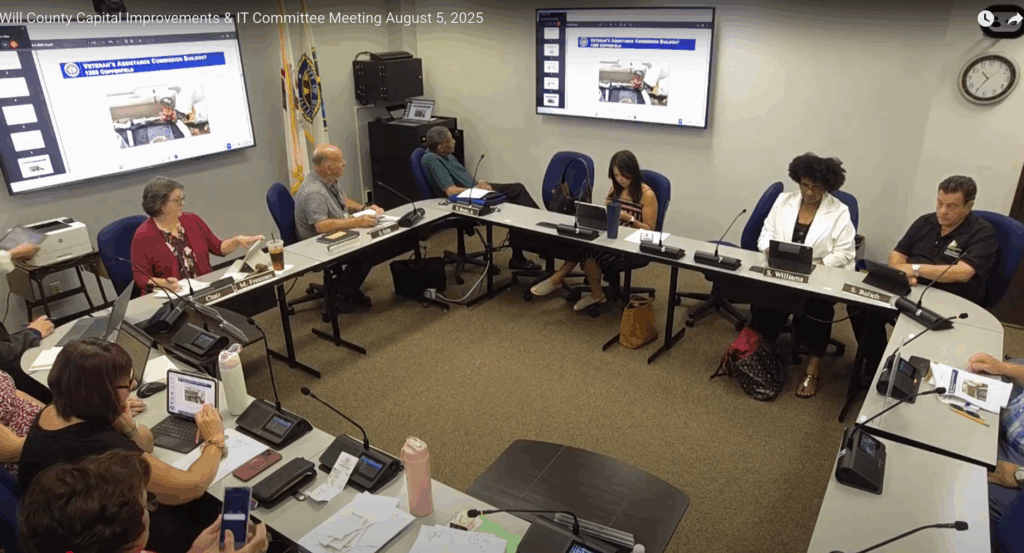
Will County’s “First-in-Nation” Veterans Center to House Workforce Services, Sparking Debate

Improved Vendor Service Creates $1.2 Million Shortfall in Sheriff’s Medical Budget
Will County Public Works Committee Unveils 25-Year Transportation Plan, Projects $258 Million Gap

Will County Animal Protection Services Seeks New Facility Amid “Gaping Wound” of Space Crisis
Board Confronts Animal Services Crowding, Explores Future Facility Options

Will County Board Members Demand Transparency in Cannabis Tax Fund Allocation
Homer Glenn Residents Push Back on 143rd Street Widening as Officials Signal “Tentative Agreement”
Will County Forges 2026 Federal Agenda Amid D.C. Policy Shifts, ‘Big Beautiful Bill’ Impacts

Health Department Seeks $1 Million Levy Increase to Prevent “Weakened System”