Minnesota updates lawsuit, cites $840M toll from Operation Metro Surge
New data filed in Minnesota’s lawsuit over Operation Metro Surge estimates more than $240 million in lost wages and more than $600 million in business losses.
The amended federal complaint, filed by Minnesota Attorney General Keith Ellison and the cities of Minneapolis and St. Paul, incorporates a report from the University of California San Diego’s U.S. Immigration Policy Center.
That data includes what officials describe as the “lasting impact” of the federal immigration enforcement surge earlier this year.
“More and more data on exactly how harmful the surge was to Minnesota residents, workers, and businesses keeps coming in,” Ellison said. “We are fighting to have Operation Metro Surge declared unlawful to protect Minnesota from ever having to endure another violent, painful, and destructive federal occupation again.”
According to the survey, respondents who encountered Department of Homeland Security agents were significantly more likely to miss work. Researchers estimate those disruptions resulted in roughly $189.2 million in lost wages in Minneapolis and $54.6 million in Saint Paul.
The findings build on earlier economic concerns raised by state officials. Minnesota State Auditor Julie Blaha previously warned that the enforcement surge could send ripple effects through local economies, as exclusively reported by The Center Square.
“Chaos is costly. So this chaos is going to ripple through our entire economy,” she said.
Beyond missed wages, the new data suggests broader disruptions to daily life. Survey respondents who reported encounters with federal agents were far more likely to miss medical appointments or avoid seeking care altogether, raising concerns about longer-term health consequences.
The complaint also alleges disparities in enforcement.
According to the survey, in Minneapolis, people of color were more likely than white residents to be questioned about their race or immigration status, stopped by agents, or distrusted even after providing identification.
“Many businesses, especially in communities of color, are still grappling with the lasting impacts of the Trump administration’s actions,” said St. Paul Mayor Kaohly Her. “No community should have to endure what ours has faced. This new information brings sharper clarity to the scale of the damage and strengthens our resolve to move forward.”
The economic effects extended to local businesses as well. Researchers estimate businesses lost about $444.8 million in Minneapolis and $165.4 million in St. Paul, with majorities reporting declines in customer traffic and workforce disruptions.
Those figures align with earlier city estimates. Minneapolis previously reported a $203.1 million hit to its economy in January alone, including $47 million in lost wages and $81 million in lost revenue to restaurants and small businesses.
Officials say those disruptions highlight how closely tied federal actions are to local economic stability.
“These systems are deeply interconnected,” Blaha previously explained.
The operation is seeking the courts declare Operation Metro Surge “unconstitutional and unlawful” under the 1st and 10th Amendments.
“The lawsuit seeks to have Operation Metro Surge declared unlawful to ensure similar violence and harm are not inflicted on another state or on Minnesota once again,” a press release from Ellison’s office said.
At the same time, tensions between state and federal officials over the operation continue to escalate.
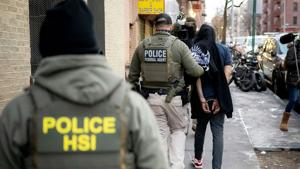
Just last week, Minnesota prosecutors filed criminal charges against a federal immigration agent tied to conduct during the surge, part of a broader effort to investigate law enforcement actions.
“Our work continues on all fronts,” Hennepin County Attorney Mary Moriarty said at the time of the announcement. “We will not rest until we get the answers we seek about federal agent conduct . . . and accountability is delivered wherever appropriate.”
Federal officials, including White House border czar Tom Homan, have broadly defended Operation Metro Surge, saying agents apprehended more than 4,000 individuals, including violent offenders and gang members.




Showers And Thunderstorms
Latest News Stories

Frankfort Village Board Adopts $61.8 Million Budget for Fiscal Year 2027

Illinois bill would force employers to pay employees regular wages for jury duty

VA suicide screening doubles after watchdog found mass failures
Trump says Iran agrees to no nuclear weapon, claims deal is close

Democrats call on Lutnick to resign over Epstein ties

Texas congressional delegation calls for federal investigation into H-1B visa fraud
Foxx: Prosecutors’ ‘silence’ on murder exonerations doesn’t mean ‘innocent’

Illinois Quick Hits: ISU union workers reach deal, return to work
Trump’s Iran objective moves from ‘surrender’ to nuclear deal

Democrats demand answers from Trump on consumer costs of Iran conflict

Illinois Dems eye $7B from new tax proposals, push ‘Billionaire Wealth Tax’
Plan would have state taxpayers provide $50M for ICE-impacted businesses