Republican lawmakers press Trump trade rep on tariff relief
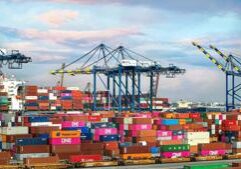
Republican lawmakers pushed back Wednesday against the Trump administration’s tariff policies during a House Ways and Means Committee hearing.
They raised concerns about the impact on small businesses, farmers and manufacturers in their districts, even as U.S. Trade Representative Jamieson Greer defended the program as a success.
Greer told the committee that President Donald Trump inherited the largest trade deficit in American history, $1.2 trillion annually, and argued that a combination of tariffs and new trade deals has started to reverse that trend.
“Since the introduction of the President’s reciprocal trade program in April 2025 through February 2026, the U.S. trade deficit in goods decreased by 24% compared with the same period a year earlier,” Greer said in his opening statement.
He also cited record export numbers, with U.S. exports reaching $315 billion in February 2026. Manufacturing wages increased by 4.7% and productivity rose 2.4% in the last quarter of 2025, according to Greer.
Several Republican members countered that the administration’s positive economic data does not align with what they are hearing from constituents.
U.S. Rep. Max Miller, R-Ohio, who represents a district of about 800,000 people across Cuyahoga, Medina, Wayne and Holmes counties, said the tariff policy is hurting small and medium-sized businesses that can’t pass costs on to consumers.
“This tariff policy, it isn’t working for them, and it is not a net positive. It is a net negative,” Miller said. “These are people, regardless of political affiliation.”
Miller asked Greer to commit to opening a waiver and exclusion office to provide relief to struggling businesses.
Greer declined Miller’s request, saying the president “personally has been very direct. He doesn’t want to do this,” adding that exclusions give companies “an excuse not to reshore.”
Greer pointed to federal register notices and ongoing tariff investigations as opportunities for public comment but stopped short of committing to formal relief. He said he was open to working with Congress to codify tariff policy.
U.S. Rep. Ray LaHood, R-Ill., raised concerns from his state’s agricultural community, noting that about 40% of the corn and soybeans grown in his district are exported. He said a recent meeting with his 40-member agricultural advisory committee revealed significant anxiety.
“I just want to stress the anxiety and the uncertainty in the ag community right now,” LaHood said, citing concerns about prices, diesel costs and fertilizer, as well as competition from Brazil and Argentina for global soybean markets.
The National Corn Growers Association has also raised alarms, urging the administration to shield farmers from higher tariff costs. “Farmers must have relief from additional cost pressures on inputs,” the group wrote in a public comment.
Greer responded that agriculture is a priority in every trade deal the administration negotiates, citing purchase commitments from Bangladesh, India, Indonesia, Japan, Taiwan and Thailand, among others. He also noted corn exports rose by double digits last year.
LaHood also pressed Greer on the upcoming July 1 deadline for the United States-Mexico-Canada Agreement review, asking for assurances that agricultural market access would be protected. Greer acknowledged that the deal cannot simply be rubber-stamped.
“We don’t think we’re in a position to rubber-stamp the deal,” Greer said. “We now have six years of data, and we see problems. We also see good areas. We think [agriculture] is a great place, so we want to maintain that, but we do have other areas we need to fix.”
U.S. Rep. David Kustoff, R-Tenn., raised concerns about manufacturers in his state who followed the administration’s call to reshore production, making long-term capital investments to build integrated North American supply chains, only to now face tariffs on imported inputs they cannot source domestically.
“They rely on inputs, machinery, components and raw materials that may not be produced in the United States, and in many cases can’t be,” Kustoff said.
Greer pointed to accommodations the Commerce Department has made for USMCA-compliant parts in the automotive sector and suggested manufacturers engage directly with Commerce on their concerns. He also offered a broader argument for certainty.
“If you build in America, you don’t pay a tariff on what you build in America,” Greer said. “That’s the most certain.”
Kustoff pressed for more concrete assurances for manufacturers who have already reshored. Greer did not offer specific commitments beyond redirecting to Commerce.
The hearing came as the Trump administration began processing refunds of $166 billion in tariff revenue collected under the International Emergency Economic Powers Act, after the Supreme Court ruled in February that Trump exceeded his authority in imposing the tariffs. Hours after that ruling, Trump imposed a 10% global tariff under Section 122 of the Trade Act of 1974, which now faces its own legal challenge.
Multiple economic studies have found that U.S. businesses and consumers are bearing the brunt of Trump’s tariffs.
A March Center Square Voters’ Voice Poll found that 42% of voters say American consumers primarily bear the cost of tariffs, while just 12% think foreign countries pay.




Partly Sunny
Latest News Stories

Baseball commissioner admits mistake; no discipline for players

Frankfort OKs Shared Patio for Grounded Coffee and The Loft Downtown
U.S. Senate passes landmark bipartisan housing bill, sends to House
POLL: Majority of voters believe U.S. should stay in NATO

Nonprofits: Los Angeles schools need to do better following Carvalho’s resignation

Chicago anti-violence department proposed; activist dismisses Trump post
Pritzker plans to sign social media law despite criticisms

Illinois Quick Hits: IDOT says all 102 counties to have transit

Poll: Taxes, economy top voter concerns

Murphy, Dhillon go to bat for players in baseball’s Pride Night black eye
Republicans compete to face Neguse in congressional race

Vance says ‘progress’ made in talks with Iran