Advocacy groups respond to new executive order on psychedelics
Some say President Donald Trump’s new executive order on psychedelics goes too far, while others say it’s a good first step, but more action is needed.
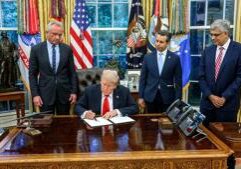
The president signed an executive order over the weekend aimed at making psychedelic treatments for mental illness accessible to those who may need them. The order directs the Food and Drug Administration to expedite the review time for psychedelic drugs that have shown promise over existing treatments for mental health conditions such as depression, post-traumatic stress disorder and substance abuse disorder. It also directs $50 million in existing federal funding toward state programs looking to advance psychedelic treatments for mental illness.
The battle over behavioral and emotional health affects many Americans, but veterans in particular “often suffer in greater measure” than other demographic groups, according to the order. More than 6,000 veterans commit suicide each year.
The executive director of Reason for Hope and policy counsel for the Veterans for Mental Health Leadership Coalition Brett Waters spoke to The Center Square on the impact of the executive order, calling it an “historic moment.” For decades, federal support for medical research on psychedelics has remained stagnant, and most psychedelics are classified as Schedule I drugs, meaning they are highly regulated and are considered to have no currently accepted medical use.
“Getting to this point really is pretty monumental,” Waters said. “Even if it was just a generic statement of support, I think it would have gone a long way in terms of setting direction and getting certain elements of the bureaucracy moving.”
But in expediting review times and pushing for rescheduling substances that have successfully completed Phase 3 clinical trials, the order does more than that.
“It’s definitely a lot more than rhetoric. There’s a lot of substance here that reflects several policy goals that many of us considered to be important…. but it really exceeds what we expected to make it over the finish line.”
The Controlled Substances Act already requires the Drug Enforcement Administration to reschedule a drug within 90 days after the FDA approves it for medical use and sends its scheduling recommendation to the DEA, but the order directs the DEA to begin its review process even earlier, after Phase 3 clinical trials have been completed.
At least nine psychedelics have been designated as breakthrough therapies, and the administration announced three that have already been chosen for expedited review.
The idea behind psychedelic treatment of behavioral health illnesses is that these drugs – like esketamine, which has already been approved for medical use – are administered under supervision in a controlled clinical setting. It’s hypothesized that the drugs may increase or more rapidly enhance neuroplasticity than common anti-depressant or anti-anxiety medications, which can be helpful in processing trauma. For some patients, these drugs can lead to meaningful improvement in just a handful of treatments, reducing the need for long-term, daily medications.
While Waters welcomed the executive order, he does think that more should be done at the federal level to expedite the safe use of psychedelics for mental health treatment. The coalition has advocated for a bill called the Freedom to Heal Act, which would enable specially trained, qualifying physicians to use Schedule I investigational drugs that have completed Phase 1 safety trials to treat serious, persisting illnesses under federal Right to Try laws. Otherwise, promising drugs may still be relatively inaccessible due to existing regulatory barriers.
The legislation, if signed into law, “reduces barriers for physicians to provide compassionate use of several innovative and potentially lifesaving treatments, including MDMA and psilocybin,” according to Rep. Madeleine Dean, D-Pa. “Our loved ones, including our veterans who served and sacrificed, deserve to heal — Congress must work to make that recovery possible for more people.”
The bill was introduced in December and has bipartisan support.
The Multidisciplinary Association for Psychedelic Studies has also “long worked to lay the groundwork for implementing psychedelics into medicine,” and while it also welcomes federal action to make these substances more accessible, it urged caution as the government moves forward.
“As federal agencies move to reduce longstanding barriers to research, it is essential that progress across this broader class of compounds remains grounded in rigorous science, careful evaluation, and a commitment to patient safety,” the group said in a statement.
The executive order moves to advance the medical use of relevant psychedelics as a whole but it stipulates that this should include ibogaine compounds. Ibogaine is a psychedelic made from a plant in Central Africa, and multiple states are considering legislation supporting ibogaine research and development.
A nonprofit advocacy organization called Smart Approaches to Marijuana, which works to decrease marijuana use, opposes the order.
“The data around [ibogaine’s] alleged therapeutic effects is weak and in many cases comes from industry-linked researchers with serious conflicts of interest,” said Sam Munson, a spokesperson for the group, in a statement to The Center Square. “We support rigorous research for treatment discovery, but this is a terrible way to go about advancing that goal – this EO will fan the flames of interest and use and, quite literally, endanger Americans across the country.”





Patchy Fog then Partly Sunny
Latest News Stories
Trump endorsements score wins for Arizona candidates

Republicans advance bill to make Trump border policy permanent

Trump admin investigates five medical schools over DEI

Ethics complaint alleges District 214 used tax dollars for poll polling

Lawyer: Billionaire tax could cost California $1 trillion
Trump gives boost to Lebanese relations; puts squeeze on Iran in the process

Illinois news in brief: State police use grant money to recover 342 stolen vehicles; State launches Blue Envelope program; Treasurer: State returned $307.8 million in I-CASH
Biden recordings case could head to U.S. Supreme Court

Pritzker touts climate, green energy record as capacity leaves, rates rise

Warren will campaign this weekend for El-Sayed in Michigan

Trump hits Canada with new tariffs Congress may be powerless to stop
Abbott directs healthcare, regulatory agencies to target birth tourism in Texas

Fugitive accused in $547 million Medicare fraud scheme captured