Dems sue over Trump’s executive order on mail-in ballots
Democratic officials from 23 states and the District of Columbia announced Friday they’re suing to block President Donald Trump’s recent executive order regulating mail-in and absentee ballots.
The suit was slated to be filed in the U.S. District Court for the District of Massachusetts. A copy of the lawsuit wasn’t available as of press time.
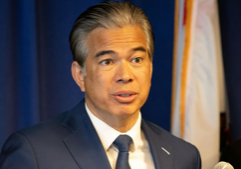
Trump doesn’t have the constitutional authority to control elections, California Attorney General Rob Bonta told reporters during a news conference Friday morning. Bonta, a Democrat who’s co-leading the coalition of plaintiffs, noted the authority rests with states and Congress, not the federal executive branch.
“The framers of our Constitution made sure that how we choose our leaders is not put in the hands of a single leader” such as Trump, Bonta said.
Others co-leading the coalition of plaintiffs are Attorneys General Andrea Joy Campbell of Massachusetts, Aaron Ford of Nevada and Nick Brown of Washington state.
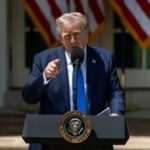
The Center Square reached out Friday morning to the White House, which noted the Republican president’s order was designed to secure elections.
“Only Democrat politicians and operatives would be upset about lawful efforts to secure American elections and ensure only eligible American citizens are casting ballots,” White House spokeswoman Abigail Jackson said, answering The Center Square’s questions by email. “President Trump campaigned on securing our elections, and the American people sent him back to the White House to get the job done.”
Trump’s executive order, which was issued on March 31, is titled “Ensuring Citizenship Verification and Integrity in Federal Elections.” It cites the Help America Vote Act of 2002, the National Voter Registration Act of 1993 and the federal government’s obligation to ensure a republican form of government in every state under Article IV, Section 4, of the U.S. Constitution. The order also refers to federal laws prohibiting non-citizens from registering to vote or voting in federal elections and the executive branch’s duty to enforce federal laws under Article II of the Constitution.
The executive order directs the secretary of homeland security to compile lists of U.S. citizens who are 18 or older and send them to the chief election official of each state. The order says the list would be based on federal citizenship and naturalization records, Social Security records, SAVE data (used to verify citizenship) and other federal databases.
The order says states must notify the U.S. Postal Service no fewer than 90 days before a federal election if they are using the postal service to deliver mail-in or absentee ballots. The order also says states must send a list of eligible voters to the postal service no fewer than 60 days before a federal election.
Bonta noted the order threatens states with loss of federal funding for failure to comply.
And he contended Trump’s executive order would disrupt the process in which every registered voter in California automatically gets a ballot in the mail.
“Protecting elections is not partisan. Every eligible voter should be able to vote,” Bonta said. “That is foundational to our democracy.”
Bonta said he doesn’t believe the executive order came soon enough to impact California’s June 2 primary, but said it could interfere with the Nov. 3 general election. He added Trump is concerned about Republicans losing congressional seats.
In addition to officials in California, Massachusetts, Washington state, Nevada and the District of Columbia, the lawsuit against Trump’s executive order is being filed by Democratic attorneys general from Arizona, Colorado, Connecticut, Delaware, Illinois, Maine, Maryland, Michigan, Minnesota, New Jersey, New Mexico, New York, North Carolina, Oregon, Rhode Island, Vermont, Virginia and Wisconsin. Democratic Pennsylvania Gov. Josh Shapiro is also among the plaintiffs.




Patchy Fog then Partly Sunny
Latest News Stories
Pritzker signs AI regulation critics say harms innovation, ‘picks winners’

Microsoft cuts over 600 Washington jobs, 4,800 globally amid corporate restructuring
Report: Modernization of central bank intertwined with regulations, security

500-plus fugitives arrested across two states

WalletHub study examines the financial independence of US states
Michigan’s Democrat primary in U.S. Senate race narrows

DOJ, states could secure 53 million eggs in price manipulation settlement

WATCH: State fails to investigate daycares with no children despite media reports
Illinois Quick Hits: Woman sentenced for voting twice
Embattled state lawmaker resigns after investigation into ‘unethical’ behavior
Everyday Economics: What jobs data actually show and why Fed is changing how it talks

Watchdog; Bill mandating more reporting from tax-exempt hospitals ‘common sense’

New statewide tenant law signed; Chicago seeks to push further

Illinois Quick Hits: 179 charged in ‘badgeless’ federal enforcement