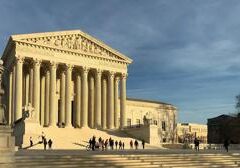
Illinois voices weigh in on birthright citizenship case
(The Center Square) – As the U.S. Supreme Court considers a high-stakes challenge to birthright citizenship, a constitutional law expert is pushing back on claims from U.S. Rep. Eric Sorensen, arguing the issue hinges not on presidential overreach – but on the original meaning of the 14th Amendment.
Sorensen, in a social media video released ahead of oral arguments Wednesday, warned that former President Donald Trump is attempting to unilaterally alter constitutional protections.
“No president has the power to change the Constitution just because he wants to,” Sorensen said. “Trump is dividing the nation and striking fear in entire segments of our population.”
But constitutional attorney David Shestokas disputes that characterization, calling Sorensen’s remarks lacking in legal substance and clarity.
“There is no argument in his statement,” Shestokas said. “He talks about ‘our community,’ but the real legal question is – what defines that community? The Constitution answers that through citizenship.”
At the center of the debate is the 14th Amendment’s Citizenship Clause, particularly the phrase “subject to the jurisdiction thereof.” Shestokas argues that historical context – especially the Civil Rights Act of 1866 – makes the original intent clear.
“The amendment was meant to constitutionalize the Civil Rights Act of 1866 and clarify citizenship for newly freed slaves and their children,” he said. “It was not intended as a blanket guarantee of citizenship for anyone born on U.S. soil, regardless of parental allegiance.”
Shestokas pointed to arguments raised during Supreme Court proceedings, noting that Justice Samuel Alito emphasized the historical linkage between the amendment and earlier legislation.
“Alito made the strongest case – this was about overturning the Dred Scott decision and ensuring citizenship for a specific class of people,” Shestokas said.
Sorensen, however, framed the issue as a defense of constitutional stability, warning against executive action.
“Trump tried to get rid of birthright citizenship, a right that’s laid out in the Constitution,” he said. “I will always fight to protect the rights promised to every American.”
Shestokas countered that the executive order in question does not rewrite the Constitution but instead directs federal agencies to interpret it according to its original meaning.
“The president’s order is essentially: follow the Constitution as it was understood when it was written,” he said. “That includes recognizing jurisdiction as more than just being born here – it involves allegiance.”
As the Court deliberates, uncertainty remains over how justices – including Chief Justice John Roberts– will ultimately rule. Shestokas suggested some members of the Court appeared divided, with legal reasoning potentially competing against broader policy considerations.
“They’re complicating something that’s actually straightforward,” he said. “The danger is when policy preferences start driving constitutional interpretation.”






Clear
Latest News Stories

Will County Grants Extensions to Five Solar Projects Sold to New Developers
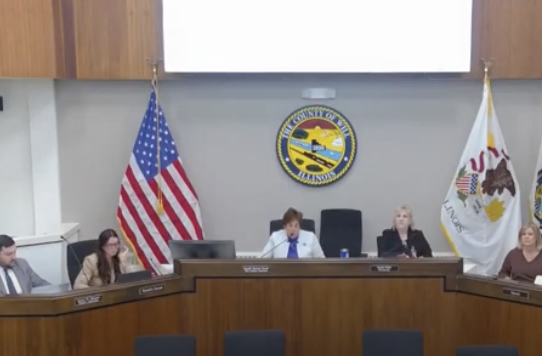
Will County Board Approves Controversial Drug Recovery Retreat in Crete Township
Trump says he won’t back down on Antifa terrorism designation

Exclusive: DOJ ‘weaponization’ victim still in jail, asking for Trump pardon

Champaign stabbing raises concerns over Illinois mental-health law

Frankfort 157-C Approves Tentative Budget, Projects $47.8 Million in Revenue for FY26
Frankfort Police Department Welcomes New Officer Brendan Huffman

Colorado tops nation for millennial migration, report finds
Congress unmoved by imminent government shutdown threat

Illinois quick hits: DHS apprehends ICE protester with firearm; bill allows campaign funds for security

Exclusive: BlackRock pressured ‘woke’ ideology on companies

Trump’s tariffs on imported drugs could raise prices

Lawmaker responds to IL’s push for adult COVID shots against CDC guidance