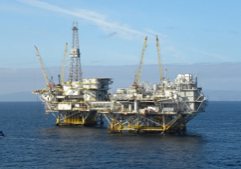
ESA exemption draws immediate court challenge
Environmental groups moved almost immediately to challenge the Trump administration’s sweeping exemption of Gulf oil and gas operations from key Endangered Species Act requirements, filing suit Thursday to block the order from taking effect.
The lawsuit, filed by four longtime environmental litigants including Healthy Gulf and the Sierra Club, targets the administration’s claim that endangered-species protections had to give way to national security concerns. The groups say the exemption was rushed through unlawfully and rests on a flimsy justification from Defense Secretary Pete Hegseth.
“The committee’s unprecedented exemption is founded entirely on an arbitrary national security finding,” the complaint states. “The Defense secretary’s finding provided no evidence of an irreconcilable conflict between ESA protections and oil and gas activities in the Gulf.”
The suit says the exemption puts more than two dozen protected species at risk, including the critically endangered Rice’s whale, whose population is estimated at roughly 50 animals.
The Trump administration announced the exemption on Tuesday, saying Endangered Species Act litigation and regulatory uncertainty were threatening a major source of domestic energy.
During the brief committee meeting approving the order, Hegseth said, “These legal battles waste critical government resources and make it impossible for energy companies to plan and invest in new projects.”
He added that when Gulf development is “chilled,” the U.S. is prevented from producing “the energy we need as a country and as a department.”
Administration officials cast the issue not just as an environmental or economic dispute, but as a matter of military readiness and foreign policy. They warned the Gulf supplies roughly 15% of the nation’s crude oil and said threats to production weaken domestic supply chains and aid adversaries abroad.
“Disruptions to Gulf oil production doesn’t just hurt us, it benefits our adversaries,” Hegseth said. “We cannot let our own rules weaken our standing and strengthen those who wish to harm us.”
EPA Administrator Lee Zeldin echoed that argument, saying environmental groups were “leveraging existing litigation and actively threatening new lawsuits to block planned development,” forcing operators into “costly, multi-million dollar projects” to shield themselves from legal risk.
The lawsuit comes from groups well known in Louisiana and across the Gulf, where they have repeatedly challenged oil and gas activity, offshore leasing and permitting decisions in federal court.
The clash also taps into a long-running argument in Louisiana over the economic costs of litigation. Industry groups and oil-and-gas advocates have said for years that repeated lawsuits can deter investment and weaken one of the state’s signature industries.
In a March statement responding to a reported coastal lawsuit settlement, the Grow Louisiana Coalition said “Louisiana has a lawsuit problem,” warning that dependence on “lawsuits and settlements instead of investment and innovation” sends a message to companies looking to do business in the state to “think again.”
In an earlier joint letter tied to Louisiana’s coastal litigation, the Louisiana Oil and Gas Association, the Louisiana Mid-Continent Oil and Gas Association and Grow Louisiana Coalition similarly said the legal fights were harming jobs and long-term economic stability in south Louisiana.
The exemption was approved by the Endangered Species Committee, convened for the first time in 30 years and made up of top federal officials including the heads of Interior, EPA, NOAA, Agriculture, the Army and the Council of Economic Advisers.





Mostly Sunny
Latest News Stories
IL Dems blast Trump refusal to sign housing bill

Op-Ed: Illinois manufacturers are in dire need of legal reform

Chicago officials pick apart parking meter deal, buyer’s ICE deportation ties

Central Ohio data center will have its own power plant

Supreme Court allows Trump to fire FTC members

Supreme Court blocks Trump’s firing of Lisa Cook

America 250: Freedom Trucks travel across U.S. celebrating American history

U.S. Supreme Court allows late mail-in ballots to be counted

Illinois Quick Hits: Gas prices fall, remain higher than a year ago

White teacher gets new life for race discrimination suit

Poll: About half of Americans confident in democracy’s future

Pennsylvania will be at the ‘Great American State Fair’ after all

Everyday Economics: The consumer is still spending, but not out of the woods