Illinois business leaders press lawmakers as child care costs face scrutiny
(The Center Square) – Illinois business leaders pressured Illinois lawmakers Tuesday to approve billions of dollars in taxpayer‑funded child care investments, arguing that without more public spending, families and small businesses will continue to shoulder the burden of a system they say is already stretched thin.
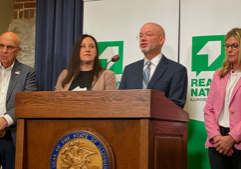
Ready Nation Illinois, a nonpartisan network of roughly 300 businesses across the state, released a report Tuesday that found a lack of access to and unaffordable costs of child care for working families.
According to a survey of 403 working parents in Illinois, commissioned for the report, parents without sufficient child care lose an average of $6,640 per year, primarily in lost wages. The survey approximated that this average totals $4.83 billion when applied across the state.
Speakers at the conference called on the state’s legislature to pass public funding initiatives included in the proposed state budget for the coming fiscal year.
When asked if there is more businesses can do to support employees with young children, Sean Noble with the organization said there is more that could be done on the private side, but public funding is necessary to address root causes of the issue.
“The economies of scale are such that we’re going to need much greater investments than any one particular business, for example, can put into things.,” Noble said. “We also applaud those businesses that are able to, that have the wherewithal and commitment to want to, for example, either open in-house child care or contract with a third-party child care.”
The group called for a $55 million increase in child care assistance for low-income families in the coming year’s budget, something the governor’s proposed 2027 budget would do, with funding coming from the state’s general revenue fund.
Other leaders echoed calls for expanding public investment. Amanda Wike, executive director of the Dixon chamber of commerce, said small businesses especially need the support for their employees.
“Ninety-nine percent of our businesses are small businesses and – especially in our rural communities – sometimes they’re 10 employees or less, and those businesses are just not able [to invest more into their employees]. We need the public support to help sustain those small businesses as well,” Wike said.
Among other initiatives the group wants funded is a new state agency created by Gov. J.B. Pritzker in 2024, the Department of Early Childhood. The department’s $4.4 billion budget request – which is for its first operating year – faced scrutiny from Republican state legislators last week.
State Rep. Blaine Wilhour, R-Beecher City, questioned why the department has requested expanded funds for existing programs the department is taking over from other state agencies.
“I mean should we expect to see a minus 4.4 billion from these organizations collectively that you’re taking this workload off of,” Wilhour asked.
The department’s leader testified, saying there would not be a one-to-one shift in the funding requested, but an increase due to new costs associated with making services more effective.





Mostly Sunny
Latest News Stories
Frankfort Fire District Adopts Updated Fire Codes to Address Solar Power, New Technologies

Illinois quick hits: $20 million for Alton housing project; alleged migrant assaults reported

WATCH: Illinois DCFS can’t locate documents showing number of missing children

Will County Committee Advances Phased Takeover of Central Will Dial-A-Ride Service

Frankfort Board Denies 24-Hour Drive-Thru Permits for McDonald’s
Frankfort Library Board Approves 2025 Tax Levies

Meeting Summary and Briefs: Frankfort Park District Committee for September 23, 2025

Hunter Prairie Park Redevelopment on Track, Four-Year Journey Detailed

Frankfort 157-C Board Approves $47 Million Budget for 2025-2026 School Year

Park District Gathers Sports Group Input for State-Funded Master Plan

Frankfort Square Park District Issues $136,000 in Bonds, Abates Taxes for Residents

Lawmakers introduce bills to slash their own pay during government shutdowns