Judge orders tariff refunds, but Friday’s hearing could set course
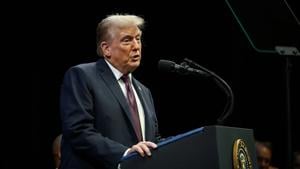
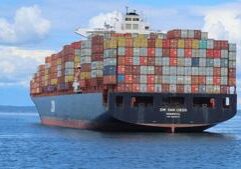
The government must refund more than $130 billion in tariffs imposed under President Donald Trump’s unconstitutional tariff regime, even to those who did not file a refund suit.
Judge Richard Eaton at the Court of International Trade ordered the administration on Wednesday to begin refunding importers. Eaton set a hearing for Friday with questions about the refund process still unanswered.
Justin Angotti, an associate in Reed Smith’s international trade group, said he expects the government to challenge the order.
“The government is expected to seek an appeal and a stay of Judge Eaton’s order,” he said. “If a refund process comes to be, importers will still need to jump through at least some hoops, and Customs will move slowly, or at least try to.”
Angotti said the judge “won’t take well to needless delays.”
More than 2,000 companies, including major firms like Costco and FedEx, have filed lawsuits to recover the tariffs they paid.
Zack Hadzismajlovic, a partner with McCarter & English and leader of the firm’s global trade practice, said Friday’s hearing could help determine the course of the refund process.
“Tomorrow is a watershed day with regard to the path ahead,” he told The Center Square. “We will know a lot more with regard to how quick the process of refunds will be, or whether or not the government is going to try in every possible way to delay, deny and so on.”
Earlier this week, attorneys for the federal government asked a federal appeals court to delay a step toward refunds for 90 days “to allow the political branches an opportunity to consider options.” The appeals court denied that request and moved ahead.
The tariffs, initially imposed in 2025 as part of the Trump administration’s efforts to address trade imbalances and protect U.S. industries, increased costs for American importers and consumers. The Supreme Court’s decision to invalidate the tariffs left thousands of businesses seeking refunds.
On Thursday, the attorneys behind a class action suit seeking tariff refunds asked to attend Friday’s hearing. The attorneys representing importer Freestyle World Inc. said that a class-action suit is the best way forward for refunds, especially for small businesses.
“Absent a class action, most Class Members would likely find the cost of litigating their claims prohibitively high and would therefore have no effective remedy,” attorneys from Lieff Cabraser Heimann & Bernstein LLP wrote. “The cost of retaining counsel and filing and litigating complaints is likely to near or exceed the potential recoveries for most Class Members.”
The firm also said some of the companies that want tariff refunds are afraid to ask for them.
“Many small business owners … are reluctant to assert their rights in individual actions, or to participate publicly in challenges to those policies, because they reasonably fear retaliation by the Trump Administration,” attorney Daniel Hutchinson wrote in the motion to intervene.
He said businesses worry federal officials may subject them to heightened scrutiny in regulatory inspections, audits, licensing and enforcement.
Eaton’s order comes after the U.S. Supreme Court invalidated President Donald Trump’s tariffs under the 1977 International Emergency Economic Powers Act in February. After the high court’s ruling, Trump used a different law to impose a 10% global tariff on U.S. imports, with exceptions.
On Thursday, several states challenged the legality of Trump’s newest 10% global tariff under Section 122 of the Trade Act of 1974. The import duty can remain in place for up to 150 days.
The Penn Wharton Budget Model projected that the Supreme Court’s tariff ruling would generate up to $175 billion in refunds.
Recent economic research shows that U.S. businesses and consumers paid nearly all of the cost of Trump’s tariffs.
Trump used tariffs to underpin key promises he made since re-taking the White House in 2025, including a proposed $2,000 tariff rebate check for everyone but the wealthy. He has also said tariffs could cover the cost of increased military spending, replace income taxes and pay down the federal government’s $38.7 trillion in debt. Tax watchdogs have said Trump’s tariffs won’t raise enough revenue to cover the cost of those plans.
As the legal and political battles over Trump’s tariffs continue, the outcome of the refund process could have repercussions for American businesses, consumers and future trade policy. With billions of dollars at stake and uncertainty over the implementation of new tariffs, importers and policymakers are watching the high-stakes trade dispute unfold.



Showers And Thunderstorms
Latest News Stories

High schools throughout California stage walkouts over ICE
Pritzker celebrates expansion of French cheese maker in GOP leader’s district

WATCH: WA GOP lawmaker asking Trump administration to investigate fraud allegations

IL Accountability Commission chair: “People need to be prosecuted”
Graham blocks govt. funding vote over policy demands as deadline looms
Trump sues the IRS for $10 billion
Walz, Ellison to appear before House Oversight Committee

BREAKING: Don Lemon arrested for involvement in church attack
Lawmaker calls Pretti shooting an injustice, points to NRA statement as validation

DOJ to release more than 3 million Epstein documents Friday

WATCH: Commission meets as Chicago mayor seeks to prosecute ICE; SNAP changes Sunday

Illinois Quick Hits: Unemployment up over last year