Illinois municipalities push for local fuel tax as gas prices rise
(The Center Square) – Some Illinois municipal leaders are pushing for the ability to impose local fuel taxes at a time when gas prices are rising dramatically.
Mt. Vernon Mayor John Lewis spoke during an Illinois Municipal League press conference at the Illinois Capitol on Wednesday.
Lewis said, under current state law, only non-home rule communities in Cook County or those with a population more than 100,000 can impose a local motor fuel tax without a referendum.
“This creates an uneven system that limits financial flexibility for many, many of our small communities,” Lewis said.
State Rep. Chris DeLuca, D-Chicago Heights, introduced House Bill 1283 last year.
The measure provides that all municipalities may impose a motor fuel tax in 1-cent increments, capped at 3 cents a gallon.
“This legislation preserves local control by allowing municipal officials who are accountable to their residents to determine whether to adopt the tax, at what level and for what purpose,” Lewis said.
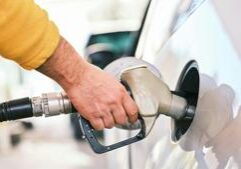
According to AAA, the average regular gas price per gallon in Illinois increased more than 30 cents in the last week to $3.32.
A AAA spokesperson said oil is part of a global market, which means when there’s a disruption or shortfall in one part of the world, it affects other parts too.
“The Strait of Hormuz is a vital connector between the Persian Gulf and open waters. Iran has reportedly closed the strait and many oil tankers have been hesitant to enter it with military operations happening nearby, which means that oil deliveries are being slowed,” the spokesperson said in a statement to The Center Square.
AAA said the longer the U.S. conflict with Iran continues, the more impact and the longer the impact we’re likely to see on gas prices.
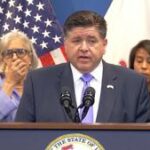
The municipal leaders’ call for new taxing power comes after Gov. J.B. Pritzker proposed reducing the percentage of state revenues to be shared with local governments.
Matteson Mayor Sheila Chalmers-Currin said cutting the Local Government Distributive Fund from 6.47% to 6.28% of individual income tax revenues as Pritzker proposed would eliminate natural revenue growth that municipalities rely on.
“These are local dollars generated by our residents and businesses that are shared back to communities to fund police protection, fire service, road maintenance, infrastructure and other essential services,” Chalmers-Curtin said.
Lewis supports the local gas tax proposal even though Mt. Vernon is a home rule community.
“The transportation networks that connect our communities do not stop at our municipal boundaries, and the funding challenges faced by neighboring non-home rule communities directly affect the region as a whole,” Lewis said.


Chance Showers And Thunderstorms then Showers And Thunderstorms Likely
Latest News Stories
Analyst warns Bears megaproject bill could raise taxes
Chicago proposes funding tax rebates with salaries from vacant city jobs

Ceasefire remains in effect as U.S., Iran exchange fire
Illinois news in brief: Prosecutors charge man with using care in attempt to kill cops; Military higher education bill goes to governor; Burrito chain closes locations in Chicago area
Frankfort Board Weighs Higher Substitute Pay Amid Staffing Shortages
Lincoln-Way North to Host TV Pilot Filming Under $210,000 Rental Deal
Frankfort Township Closes Fiscal Year With $2.48 Million General Fund Balance
Analysts: Redistricting to cost taxpayers, while slowly shifting election outcomes

Trump honors fallen service members, vows Iran will not obtain nuclear weapon
Stephen Colbert returns to community show after final ‘Late Show’ appearance
Illinois dual office holding debate intensifies amid Calumet funding, ethics concerns

School choice Yass Prize awards continue, $20M worth of grants awarded nationwide
U.S. sees progress in Iran talks, Tehran says no deal yet