
Whitmer criticizes tariffs; Republicans cite study showing economic gains
Gov. Gretchen Whitmer used her State of the State address Wednesday to renew criticism of President Donald Trump’s tariff policy, while Michigan Republicans are pointing to a recent study which shows the tariffs are boosting Michigan auto production and jobs.
Whitmer, who has met with the president multiple times to discuss trade, said uncertainty in the national economy is weighing on Michigan families and businesses. She also blamed tariffs for rising prices.
“People are nervous about the national economy, and, while your paycheck may have grown, the cost of everything else has too,” she said. “Many middle class families tread water, struggle to pay the bills, find good jobs and get ahead . . . Tariffs have jacked up prices.”
Whitmer added that she is hopeful in the wake of the recent Supreme Court ruling which struck down some of the tariffs.
“Businesses of all sizes are facing higher costs and massive uncertainty,” she said. “I’m hopeful that last week’s Supreme Court decision will force Congress and the president to work out a more strategic trade policy.”
That ruling has not led to an end to tariffs though, just a shift from the Trump administration in how they are set.
Michigan House Republicans countered Whitmer’s criticisms by highlighting findings from the University of Michigan that suggest the long-term impact of tariffs could be positive for the state’s automotive industry.
In a statement, House Republicans said, “Shortly after University of Michigan found that tariffs are growing Michigan’s economy and boosting jobs, Gov. Whitmer and Michigan Dems are saying POTUS should change his trade policy.”
Michigan House Speaker Matt Hall, R-Richland Township, pointed out that tariff policy is working as intended.
“When you have tariffs, you are trying to disincentivize the purchase of foreign cars and foreign components, and you’re trying to incentivize the purchase of domestic cars in Michigan and domestic manufacturing. That’s exactly what’s happening,” Hall said in a recent press conference. “Tariffs are creating jobs in the Michigan automotive manufacturing industry, and so that’s a good thing. The tariffs are working.”
The University of Michigan study, released late last year, noted that earlier projections showed tariffs would reduce employment in Michigan’s auto sector.
However, researchers revised those projections, writing that “recent changes such as the extension of rebates on parts tariffs for domestically assembled vehicles have shifted our estimate of the tariffs’ eventual impact on domestic auto production from a small negative to a small positive.”
The study now estimates that current trade policy will increase U.S. light vehicle production by 2.7% in the medium run, instead of reducing it by 3.1% as previously forecast.
Researchers added that they “believe they will eventually provide net support for employment and economic activity in Michigan.”
While they admitted that “tariffs are expected to provide a strong protective effect,” researchers still cautioned that the state’s economy is “highly exposed to trade.”
“Although we believe the Trump Administration is approaching a more settled trade policy,” they said, “Michigan’s economy has recently been navigating choppy waters.”




Showers And Thunderstorms
Latest News Stories

Behavioral Health Division Drops Wait Times, Reports Zero Opioid Deaths in February

Frankfort Advances Downtown Urban Design Study, Solicits Resident Input

Harris Drive Residents Plead for County Intervention Amid Failing Septic Systems and Flooding

Will County Sheriff’s Office Investigates Fatal Hit-and-Run in Homer Glen

Federal Funding Freezes Threaten Will County Public Health Programs Amid Ongoing Lawsuits
Frankfort Mayor, Trustees Blast Proposed State Legislation Threatening Local Zoning Control
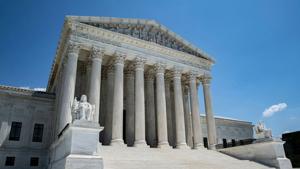
Legal experts anticipate SCOTUS will overturn drug user gun ban
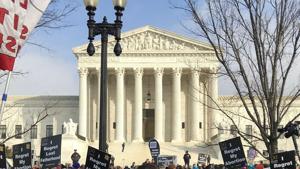
Parents’ rights advocates hail SCOTUS ruling against secret gender transitions

Critics warn Illinois bill could lead to government overreach in newborn care

Veteran suicide rate remains high despite spending millions
BlackRock summit to focus on workforce needed for U.S. infrastructure boom

Debate grows as states consider teacher strike bans