IL can gag charter school operators over teacher unionization, judge says
Illinois Democratic state lawmakers can constitutionally force charter school operators into silence when Democratic-allied teachers unions attempt to organize their workforces, under threat of losing the charter they need to remain in business, a federal judge has ruled.
On Feb. 24, U.S. District Judge John Robert Blakey rejected a bid by the operators of Illinois charter schools for an injunction blocking the state of Illinois from enforcing a law which demands “neutrality” from charter school operators concerning union activity in their schools.
In the ruling, Blakey agreed the law carried potential First Amendment applications, as it could “chill” or “suppress” the speech of charter school operators.
But the judge said the state law is still constitutionally acceptable because the state has the constitutional authority to set the rules for how it will choose to fund or authorize charter schools.
“… Illinois does not seek to generally suppress speech related to unions, rather, the charter schools’ funding remains conditioned upon the acceptance of the union neutrality clause,” Blakey wrote in the ruling. ” In this way, the State ‘has simply chosen not to subsidize’ speech by the charter schools related to unions.”
The ruling comes a little less than two years since three charter school networks, including the Illinois Network of Charter Schools, the Montessori Network and Intrinsic Schools, filed suit in Chicago federal court.
The lawsuit seeks to strike down an Illinois state law, enacted in 2023, which state lawmakers passed at the behest of teachers unions, ostensibly to promote labor peace in charter schools.
According to the Illinois Network of Charter Schools, there are currently about 140 charter schools operating in the state. The bulk of those schools — about 125 — operate within the city of Chicago.
Charter schools occupy a unique space within the educational sphere, straddling a line between public and private education. The schools are administered by a private board, granting them greater flexibility to set curriculum and academic methods, among other liberties.
However, charter schools get their name from the so-called “charters” granted them by the state and funding to operate, as part of an effort to improve educational outcomes for certain students.
Charter schools, however, have come under fire from critics, and particularly teachers unions, like the Chicago Teachers Union, in large part because they claim charter school expansion comes at the expense of spending more money on the traditional public schools, dominated by teachers unions.
Teachers unions have also come into conflict with charter school operators over the attempt to unionize charter school workforces.
Charter school operators have opposed unionization efforts.
Union allies in the Illinois General Assembly responded with the 2023 legislation, forcing charter school operators to remain “neutral” on the subject of unionization, as a condition of maintaining their licenses and funding.
In enacting the measure, one of the prime sponsors, State Rep. Will Guzzardi, D-Chicago, said the law was needed to ensure charter school teachers had the same “protections” given to traditional public school teachers under the Illinois Educational Labor Relations Act, the law that sets the rules governing public school teacher collective bargaining and other school labor matters.
The charter school operators, however, said the law was essentially a sop to teachers unions, muzzling charter school administrators in the debate over unionization and trampling their First Amendment rights as employers.
They also claimed the law violated their rights as employers under the federal National Labor Relations Act, meaning the state law should be blocked under federal preemption.
Judge Blakey, however, rejected all of their claims.
He turned down their federal NLRA preemption arguments by agreeing with the state that the new pro-union law amounts to contractual restrictions which give the state the ability to set rules it otherwise could not under the NLRA.
And the judge also rejected their contentions on First Amendment grounds.
He acknowledged the charter schools had standing to sue under the First Amendment, as the law clearly stifles their ability to speak on unionization.
But the judge again sided with the state, finding that the muzzle is still not unconstitutional, essentially because charter schools do not have a constitutional right to receive government funds, or “subsidies.”
Blakey said the state has the right to decide how it will spend those funds.
Further, the judge said the law does not amount to unconstitutional compelled speech, because the law merely requires silence, or “neutrality,” and does not force charter school administrators to speak in favor of unions.
The judge noted individuals associated with the charter schools maintain their rights to speak outside of their official capacities.
“… The Illinois law does not require the schools to express the government’s view on unions; charter schools simply cannot express a view on the issue,” Blakey wrote.
The charter schools have been represented by attorneys with the firm of Goldberg Kohn, of Chicago.




Sunny
Latest News Stories
WATCH: Illinois In Focus Daily | Tuesday Aug. 12th, 2025

About Us

Everyday Economics: CPI takes center stage as tariff-driven price pressures mount

Net negative migration is harmful to the economy, economists say
Details pending on billions in foreign investments coming from trade deals
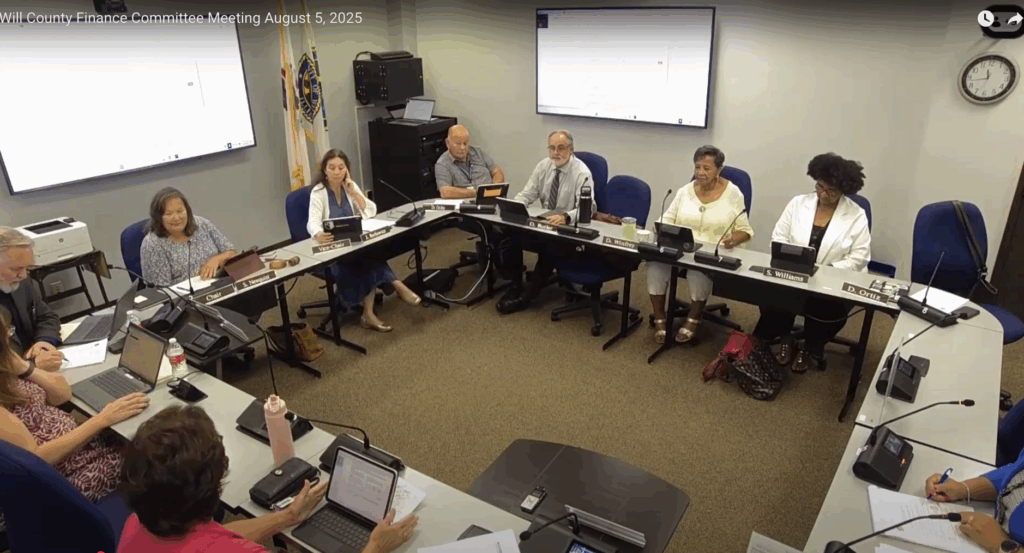
Will County Health Department Seeks $1 Million to Avert ‘Drastic’ Service Cuts from Expiring Grants
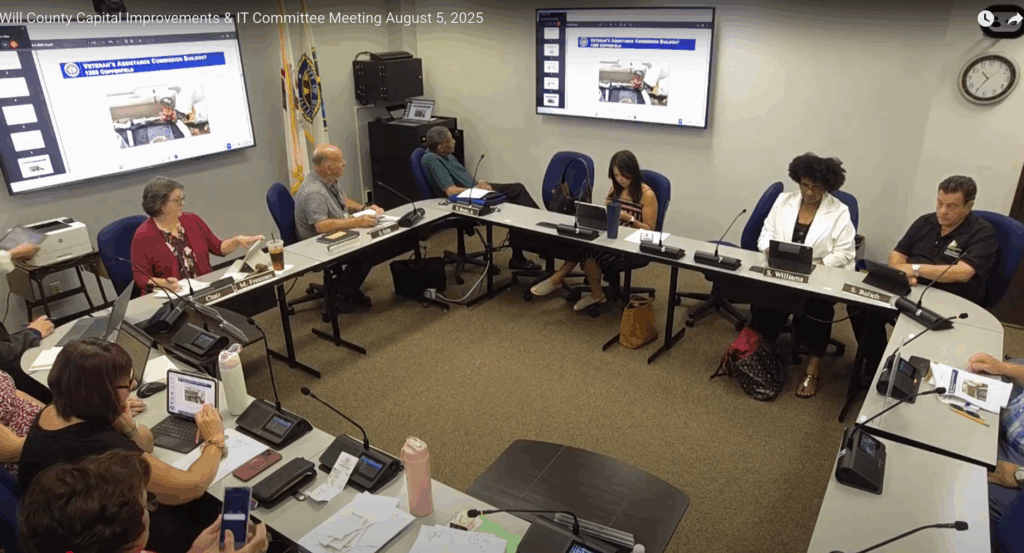
Will County’s “First-in-Nation” Veterans Center to House Workforce Services, Sparking Debate
Improved Vendor Service Creates $1.2 Million Shortfall in Sheriff’s Medical Budget
Will County Public Works Committee Unveils 25-Year Transportation Plan, Projects $258 Million Gap
Will County Animal Protection Services Seeks New Facility Amid “Gaping Wound” of Space Crisis
Board Confronts Animal Services Crowding, Explores Future Facility Options
Will County Board Members Demand Transparency in Cannabis Tax Fund Allocation
Homer Glenn Residents Push Back on 143rd Street Widening as Officials Signal “Tentative Agreement”