Federal debt expected to climb, but how much debt can U.S. carry?
The latest projections show U.S. debt will continue to grow over the next decade, hitting 120% of gross domestic product by 2036, raising questions about how much debt the world’s largest economy can support.
The Congressional Budget Office projects the federal government will borrow $26 trillion from late 2025 to 2036, raising public debt to $56 trillion, or 120% of GDP.
“Measured in relation to the size of the economy, that amount of debt would be the greatest in the nation’s history – more than double the 50-year average of 51% of GDP,” the CBO report noted.
Those CBO projections prompted fresh warnings for Congress about the federal debt.
Maya MacGuineas, president of the Committee for a Responsible Federal Budget, urged Congress to take action “before it is too late.”
Carolyn Bourdeaux, executive director of Concord Action, said federal lawmakers’ “continued fiscal irresponsibility constrains America’s ability to invest in national priorities and shakes investor confidence in our national financial footing.”
Michael Peterson, CEO of the Peter G. Peterson Foundation, called the CBO report “an urgent warning to our leaders about America’s costly fiscal path.”
Pinpointing just how much is too much has been difficult, but some guidelines exist. The International Monetary Fund has estimated that the U.S. debt could put the nation at risk of default when it climbs above 160% of GDP. Vanguard previously suggested 225%. The Penn Wharton Budget Model has suggested a limit of 200%.
“This 200% value is computed as an outer bound using various favorable assumptions: a more plausible value is closer to 175%, and, even then, it assumes that financial markets believe that the government will eventually implement an efficient closure rule,” according to PWBM. “Once financial markets believe otherwise, financial markets can unravel at smaller debt-GDP ratios.”
Treasury Secretary Scott Bessent told Congress last year that while it’s difficult to pinpoint a point of no return, the path ahead is clear.
“A tipping point in debt sustainability is very difficult to pinpoint, but what is not difficult to pinpoint is a trajectory and the trajectory is unsustainable when and if the markets were to rebel,” Bessent told the Subcommittee on Financial Services and General Government in May.
The CBO report said that growing debt could limit lawmakers’ policy options and lead to other serious consequences. The main risk is that a larger debt increases the likelihood of fiscal problems.
“The risk of a fiscal crisis – that is, a situation in which investors lose confidence in the value of the U.S. government’s debt – would increase,” it noted.






Slight Chance Showers And Thunderstorms
Latest News Stories
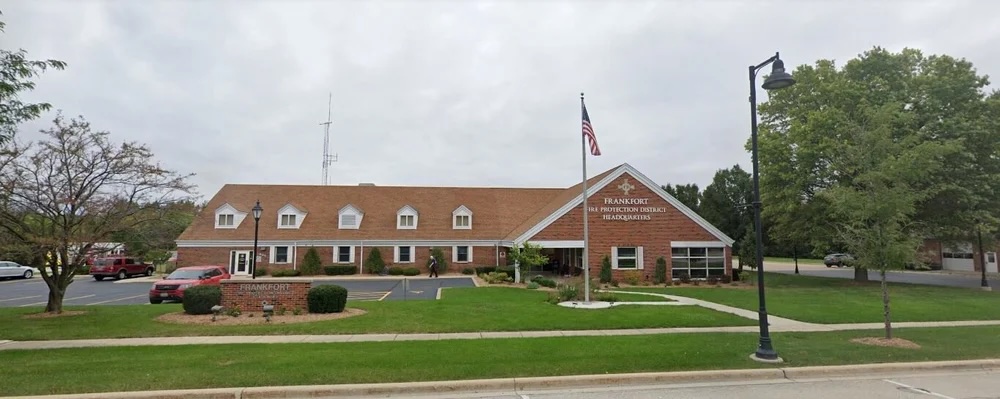
Frankfort Fire Trustees Hold Four-Hour Closed Session on Chief Search

Library Anticipates Purchasing Delays as Major Distributor Closes

P&Z Commission: Peotone Area Variances Forwarded for Garage and Pole Barn

Peotone License Plate Camera Renewal Sparks Privacy Debate in Public Works Committee
Village Secures $1.6 Million Grant for Laraway and Pfeiffer Road Multi-Use Path

Library Board Updates Materials Selection Policy and Reconsideration Process
Joliet Unity Movement Criticizes Board’s Handling of Cannabis Tax Revenue
Safety Upgrades Planned for Wilmington-Peotone Road; Gas Line Proposal Rejected

Online Luxury Car Dealership Approved for Center Road
Tensions Flare as Board Members Clash Over Budget Process and Protocol
Will County Board Approves $2.7 Million Reserve Draw to Finalize 0% Tax Levy

Frankfort Library Reading Room Project Moves to Permitting Phase; Native Landscaping Planned