
Siri class action lawsuit greenlit, billions at stake
A judge has cleared the way for as many as 3 million Apple device users in Illinois to be included in a class action lawsuit accusing Apple of violating Illinois’ stringent biometrics privacy law by allegedly recording people using their Siri A.I. assistant, putting potentially hundreds of billions of dollars at stake.
The lawsuit dates to 2019, when attorneys from the firms of Miller Shakman Levine & Feldman, of Chicago; Forde & O’Meara, of Chicago; and Silver Golub & Teitell, of Stamford, Connecticut, filed suit in Cook County Circuit Court against the Cupertino, California-based tech giant.
The lawsuit was filed on behalf of named plaintiffs Deborah Zaluda, Catherine Cooke, David Cooke, James Cooke, Lori Cooke, Savanna Cooke and Paul Darby.
However, from the start, the plaintiffs have sought to expand their action to include a class of potentially millions of other plaintiffs, which could, in turn, generate a potentially massive payday worth many millions of dollars.
The lawsuit targets Apple’s use of its voice-activated A.I., Siri, which is enabled across its spectrum of smart products, including its iPhones and Apple Watches.
First introduced in 2011, Siri fields spoken voice queries, allowing users to interact with Apple’s platforms to answer questions and obtain recommendations in a conversational fashion.
Before using Siri, users are instructed to create a “User Profile” by repeating a set of five phrases, essentially to allow Siri to record a user’s voice and learn to recognize it.
According to the complaint, Siri “also records and analyzes the user’s first 40 requests in the same way and stores the resulting data.”
The complaint said this means Apple, through Siri, creates and stores a “voiceprint” for each user, allowing Apple, through Siri, to identify each user.
However, the lawsuit accuses Apple of creating these voiceprints in violation of an Illinois privacy law. The lawsuit asserts the law, known as the Biometric Information Privacy Act (BIPA), requires companies, like Apple, to obtain written authorization from users before creating and storing biometric identifiers, like voiceprints. The lawsuit said Apple has not done so, and also has not notified users of its policies for storing, sharing and ultimately destroying the voiceprints and other electronically stored biometric data.
The lawsuit seeks damages of $1,000-$5,000 per violation, as spelled out in the BIPA law.
Under the current version of the BIPA law, amended in 2025, Illinois lawmakers have clarified the law should be interpreted to define individual violations as the first time a person’s biometric identifier is scanned, or, in this case, recorded.
However, before that change, the Illinois Supreme Court had ruled the law should be read to allow plaintiffs to collect $1,000 or $5,000 per scan.
To this point, courts have not yet delivered a final ruling on whether the change to the law should apply to lawsuits filed before the law was changed.
So, it is unclear how much money could be at stake in the case against Apple over the alleged Siri “voiceprint” recordings. When multiplied across millions of potential class members, depending on how the law is interpreted in the case, damages could run from the billions up to the hundreds of billions of dollars in potential damages, were the case to proceed to trial and result in a verdict in favor of plaintiffs.
While the lawsuit was the first to target Apple’s use of Siri under BIPA, it is just one of several such class actions plaintiffs’ lawyers have used to target big tech companies, including other companies that have deployed other similar voice assistant artificial intelligences.
Google, for instance, recently agreed to pay $68 million to settle claims that it improperly recorded people’s voices as they interacted with their Google Assistant A.I. installed on Google Home smart speakers and other devices.
Similar lawsuits have been filed against Amazon over its voice-activated Alexa A.I., among others.
In Cook County court, Apple has failed to dismiss the lawsuit against it over the alleged Siri recordings.
Now, Judge Mullen said the company also cannot stop the case from proceeding as a class action.
Apple had attempted to defeat class certification by asserting the ways people interacted with Siri were too different to allow their cases to proceed as if they were the same. Apple had also argued it has not tracked which Apple device users activated and interacted with Siri.
Mullen, however, rejected those arguments, saying he believed later proceedings and investigation could determine whether particular customers were Siri users eligible to potentially collect a share of the payout.
He further said it would be enough for plaintiffs to show Apple had used so-called “feature vectors” to record and log users’ “voiceprints,” as he noted a “uniformity” in the way Apple processes “raw audio” obtained from people interacting with Siri.
The judge certified a class including all Apple device users in Illinois who interacted with Siri since 2014.
Plaintiffs’ attorneys have estimated this could include as many as 3 million people.
The judge also appointed attorneys David Golub and Jennifer Sclar, of Silver Golub & Teitell; Kevin Forde and Brian O’Meara, of Forde & O’Meara; and Zachary Freeman and Rachel Simon, of Miller Shakman Levine & Feldman to serve as class counsel in the case.






Showers And Thunderstorms Likely
Latest News Stories

Frankfort Township Board Adopts Annual Budgets for Township, Highway Departments

New Lenox Fire Board Denies Variance Over Extreme Hydrant Distance, Citing Safety
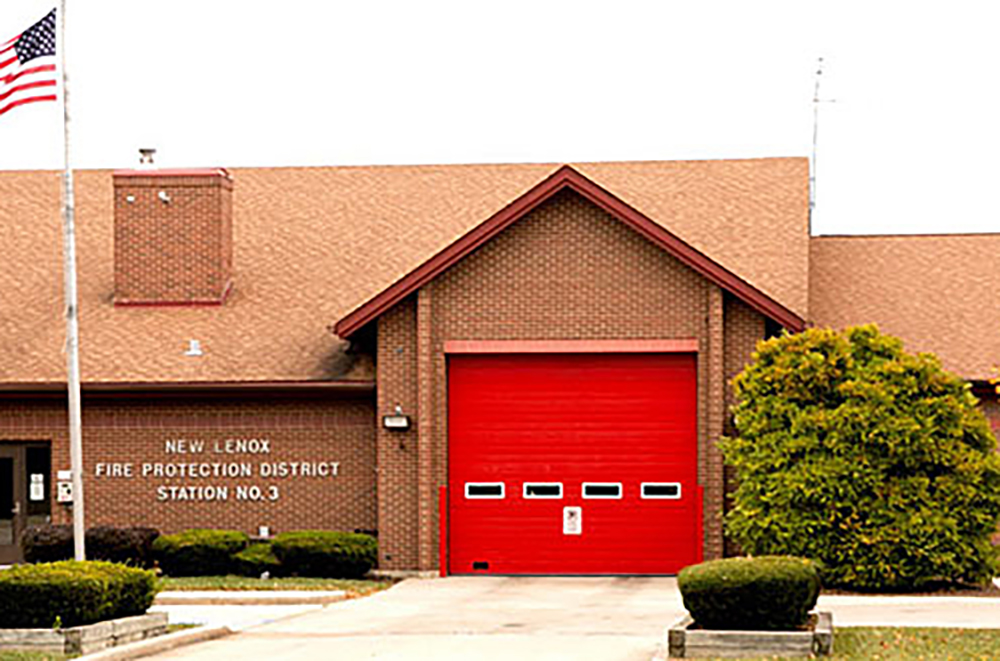
New Lenox Fire District Secures $35,000 Grant for UTV in Solar Farm Agreement
Meeting Summary: New Lenox Fire Protection District for June 16, 2025
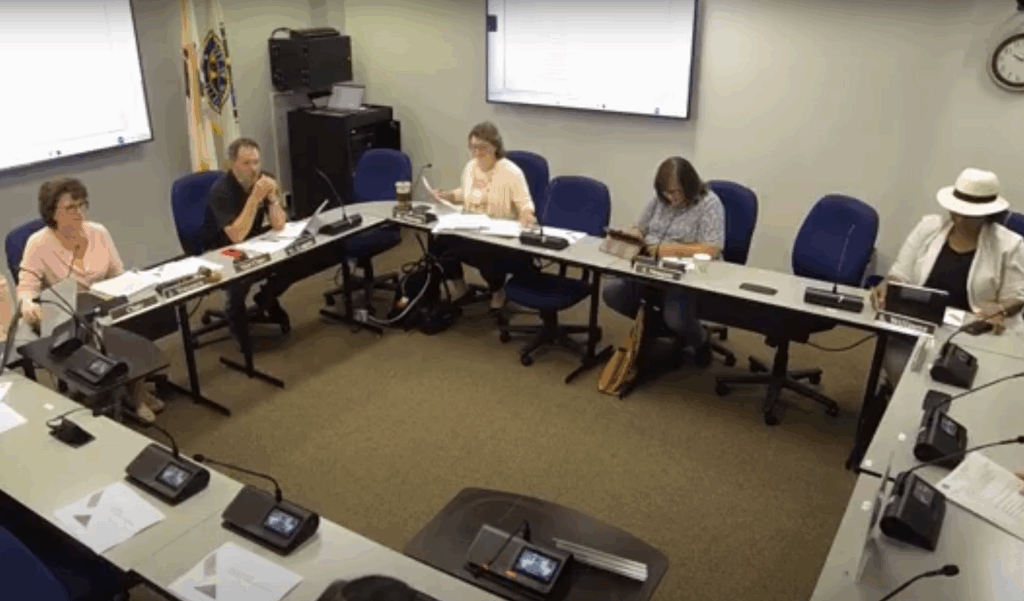
Will County Committee Forwards Overhauled Purchasing Code Amid Debate on Local Contractor Preference
Finance Officials Clarify How Will County Tracks Assets, From Vehicles to Desks
Will County Treasurer Confirms Free Online Tax Payment Option, Warns Against High Credit Card Fees
Committee Highlights ‘Lack of Teeth’ in County Code Enforcement Process
Committee Highlights ‘Lack of Teeth’ in County Code Enforcement Process
Meeting Briefs: Will County Ad-Hoc Ordinance Review Committee for July 22, 2025
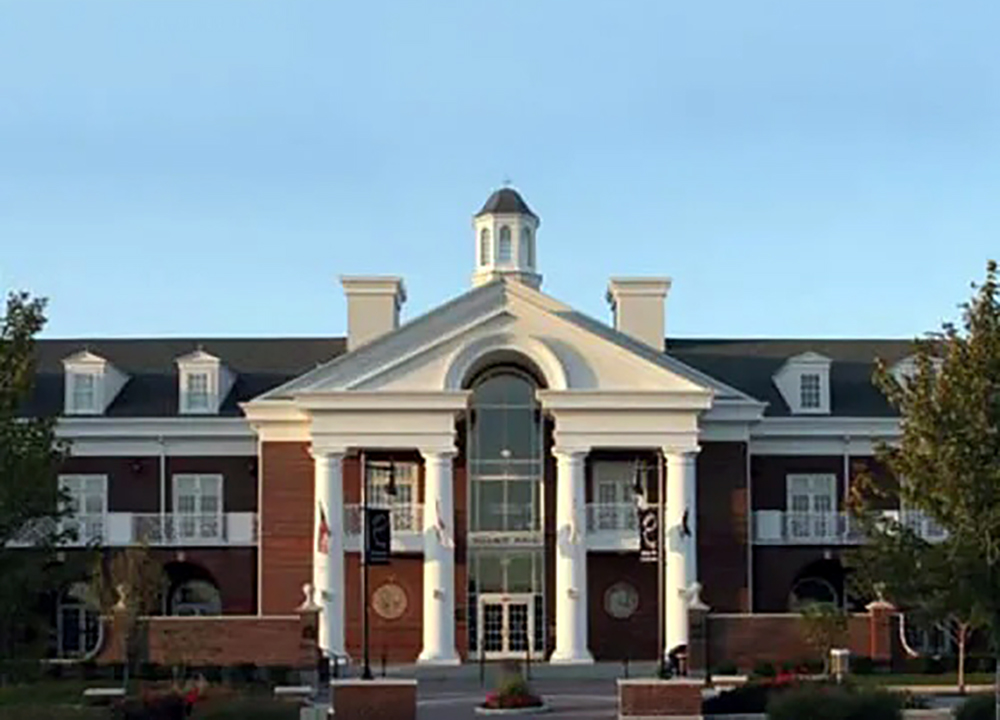
New Lenox’s Crossroads Sports Complex Opens to Rave Reviews, On Time and Under Budget

New Lenox Waives Over $13,000 in Permit Fees for Park District, Church Projects