
Paul introduces legislation to halt welfare funding for non-citizens
With billions of American taxpayer dollars on the line, and funding for over a dozen welfare benefits for refugees set to continue, U.S. Sen. Rand Paul, R-Ky., is taking a stand.
Paul introduced the End Welfare for Non-Citizens Act to end taxpayer benefits for refugees, asylees and illegal immigrants.
As previously reported by The Center Square, nearly $6 billion in continual funding for refugees is poised to be approved.
Funding for the refugee program skyrocketed under the Biden administration as part of the Refugee and Entrant Assistant programs.
The funding rose from less than $2 billion in fiscal year 2021, the last year of President Donald Trump’s first term, to nearly $9 billion the next fiscal year – the first year of former President Joe Biden’s administration.
Despite the government admitting many of the refugees were unvetted, taxpayers could remain on the hook for billions of dollars, as many of these refugees continue to qualify for over a dozen taxpayer-funded benefits.
The benefits refugees are eligible to receive include: Supplemental Security Income (SSI), Supplemental Nutrition Assistance Program (SNAP), Women, Infants and Children (WIC), HUD Public Housing and Section 8 housing vouchers, emergency Medicaid, Affordable Care Act health plans and subsidies, full-scope Medicaid, Children’s Health Insurance Program (CHIP), federal student aid and Pell grants, REAL ID, Workforce Innovation and Opportunity Act services, refugee resettlement programs through the Office of Refugee Resettlement and Temporary Assistance for Needy Families (TANF), according to the National Immigration Law Center.
For those who didn’t qualify for SSI or TANF, refugees were eligible for up to 12 months of Refugee Cash Assistance (RCA) through the ORR.
In addition, many refugees qualified for employment assistance through Refugee Support Services, which included: childcare, transportation, “employability services,” job training and preparation, job search assistance, placement and retention, English language training, translation and interpreter services and case management, according to the Administration for Children and Families Office of Refugee Resettlement.
The ORR also noted that “some clients may be eligible for specialized programs such as health services, technical assistance for small business start-ups and financial savings.”
Many refugees also qualified for “immigration-related legal assistance” to assist them “on their pathway to obtaining a permanent status.”
Congressionally appropriated spending on refugee and migrant assistance programs rose sharply under the Biden administration, totaling roughly $30 billion over those four years.
In particular, lawmakers significantly increased appropriations for the Refugee and Entrant Assistance programs – housed in the U.S. Department of Health and Human Services – which provide benefits to eligible refugees.
In fiscal year 2021, the last year of Trump’s first term, Congress appropriated $1.91 billion for REA programs. That number shot up to $8.92 billion the following year, coinciding with the influx of Afghan refugees and record-high border crossings.
Total federal assistance for refugee programs in fiscal year 2023, however, reached $10 billion, as an OpenTheBooks investigation highlighted.
“With a national debt exceeding $38 trillion, Washington should not be running a welfare system on autopilot,” according to a release from the Rand’s office. “The End Welfare for Non-Citizens Act puts America First by stopping taxpayer dollars from being siphoned into benefits for non-citizens. If we want a sustainable safety net and responsible stewardship of taxpayer dollars, this bill is a must-pass.”
Among his first acts upon his second inauguration in January 2025, Trump suspended the U.S. Refugee Admissions Program, sayng “it would be detrimental to the interests of the United States.”






Showers And Thunderstorms Likely
Latest News Stories

Library’s ‘Studio’ Draws Record Crowds with New Tech and Creative Programs

D122 to Spend $24,950 on Professional Enrollment Forecast

Frankfort Library Secures $83K Grant for Reading Room, Financial Report Shows Strong Position
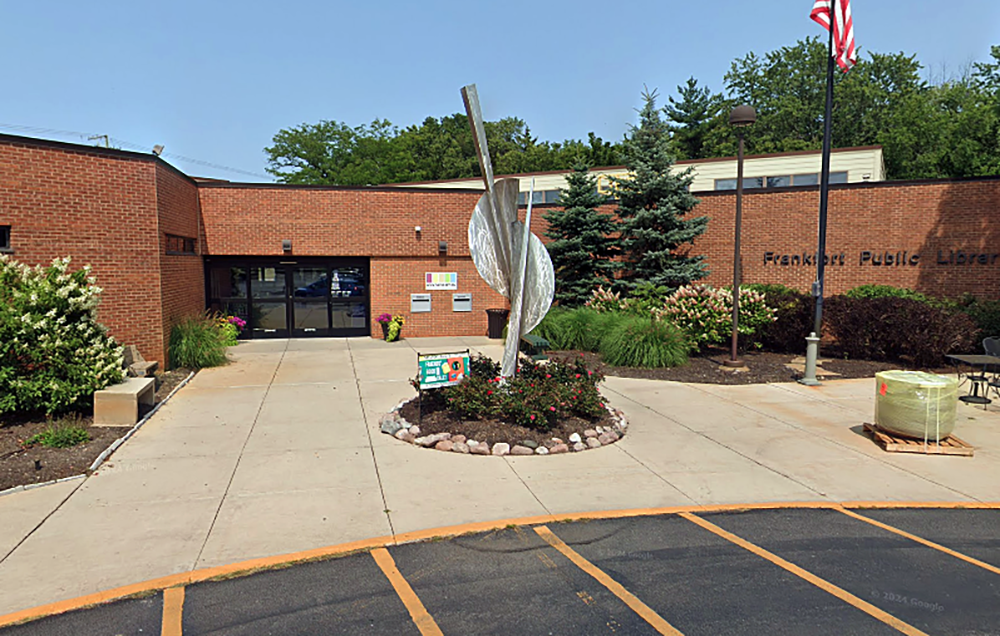
Frankfort Library Considers Limiting Digital Access on Educator Cards to Manage Costs

Newly Appointed Trustee Brooks Stenoish Takes Oath, Finalizing Frankfort Library Board

Meeting Summary: Frankfort Public Library District for June 26, 2025

JJC Trustees Approve Contentious FY26 Budget After Heated Debate, Failed Postponement

Lincoln Way District 210 Approves $2.1 Million Budget Amendment, Maintains Strong Financial Position

JJC’s ‘12x12x12’ Initiative Boosts College Credits, Increases Matriculation Rate

District 210 Approves Administrative Restructuring, Staff Salary Increases

JJC Board Meeting Highlights Tensions Over Legal Bills, Trustee Conduct

Students, Trustees Emphasize Importance of Inclusivity and Flag Raisings at JJC