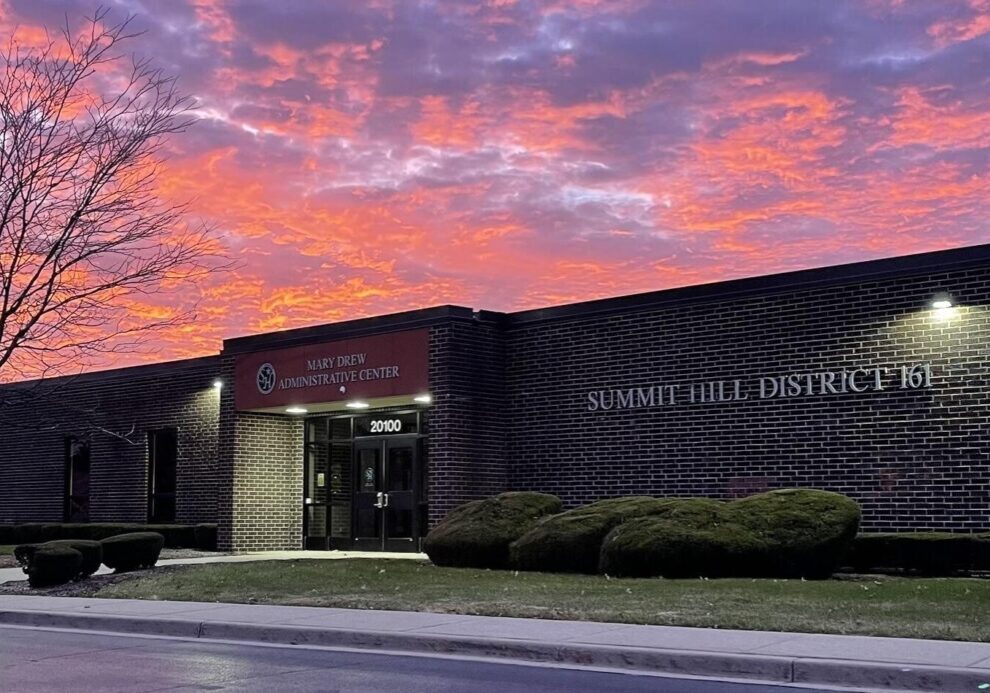
Summit Hill District 161 Board Approves $44.8 Million Tax Levy with Slight Overall Decrease
Summit Hill School District 161 Meeting | December 17, 2025
Article Summary: The Summit Hill School District 161 Board of Education on Tuesday approved a 2025 tax levy that represents a 0.57% decrease in total property taxes compared to the previous year, primarily due to significant reductions in debt service costs.
Summit Hill District 161 Key Points:
-
Total Levy Amount: The board approved a total estimated levy of $44,881,250 for 2025.
-
Operating Increase vs. Debt Decrease: While the district requested a 4.99% increase in the corporate and special purpose extension to capture new property growth, a 36% decrease in debt service extension led to the overall year-over-year decline.
-
Bond Paydown Impact: Officials noted that the district’s efforts to pay down existing bonds are directly resulting in the lower total tax request.
-
Board Philosophy: Members emphasized a “fiscally responsible” approach aimed at avoiding future referendums while capturing local growth to keep funds within the community.
The Summit Hill School District 161 Board of Education on Tuesday, Dec. 17, 2025, formally adopted its 2025 tax levy following a public hearing. The final levy request of $44,881,250 marks a slight decrease from the $45,148,000 extended in 2024.
Business Manager Julie Sluis explained that the levy is composed of two primary parts. The first is the corporate and special purpose property taxes, for which the district is requesting $40,890,000—a 4.99% increase over the prior year’s extension. This “cap” request is a standard practice for school districts to ensure they capture the value of new construction and business growth within their boundaries.
However, the second portion of the levy, Debt Service, saw a substantial drop. The debt extension fell from approximately $6.19 million in 2024 to $3.98 million for 2025.
“As the district pays down the debt, so does it impact the overall levy,” Sluis said. “In total, we’re looking at a 0.57% decrease.”
Board members used the hearing to address community concerns regarding property taxes. Board member Adrian Chavez noted that while the board cannot directly lower the tax rates set by the state or county, their goal is to manage the district’s portion of the bill effectively.
“This is a way for us as a board and as a community to basically collect back our property taxes directly to our community,” Chavez said. “By us asking for the 4.99% [operating increase], it’s a way for us to capture the growth of new businesses and ensure we are being financially responsible.”
Board Secretary Ronnie Petrey added that maintaining a stable levy helps the district avoid the need for future bond referendums.
“We want to keep them on a fiscally responsible budget,” Petrey said. “We do not want to come back and have to ask for more bonds.”
Board Vice President John Winter echoed these sentiments, noting that the board’s recent attendance at a state conference reinforced the importance of capturing the maximum allowable local revenue to remain self-sufficient.
Chance Showers And Thunderstorms then Slight Chance Showers And Thunderstorms
Latest News Stories
Report: Post-election audits in swing states insufficient
U.S. producer prices surge in July as tariffs increase costs

Colorado sued over social media warnings for minors

WATCH: Illinois In Focus Daily | Thursday Aug. 14th, 2025

Chicago’s commercial property taxes spike to twice national city average
Illinois quick hits: Court rejects lawsuit against Texas Democrats; no charges for police
Illinois judge rejects Texas legislature lawsuit over absconding Dems
DOJ settles race-based admissions with military academies

More California voters are liking Trump’s job performance

U.S. national debt tops $37 trillion

Illinois quick hits: Human trafficking law signed; Mercyhealth to pay for COVID vaccine discrimination
Justice Department finds GWU in violation of Title VI