Illinois tax proposals dampen decline in small business uncertainty index
(The Center Square) – Although the National Federation of Independent Business Uncertainty Index reached its lowest point of the year in October, small businesses in Illinois still face the prospect of higher taxes and red tape.
NFIB Illinois State Director Noah Finley said the federal law enacted by President Donald Trump extended the small business tax deduction and fueled a twelve-point decline in the NFIB Uncertainty Index.
“That’s a 20% deduction for small businesses to bring greater parity between a small business and a large corporation. That’s millions of dollars of savings for small businesses. It brought increased certainty, so they can plan, they can invest, they can hire. That’s been huge for small businesses. Nine out of ten small businesses will benefit from that,” Finley explained.
Finley said there is uncertainty for small businesses in Illinois, after Gov. J.B. Pritzker’s office projected future budget deficits.
“There’s just continual talk of tax increases. We’re continuing to see new proposals introduced in the General Assembly to drive increased red tape and bureaucratic requirements for many of these small businesses,” Finley said.
Last week, Pritzker and the Illinois Department of Commerce and Economic Opportunity announced nearly $10 million in state taxpayer funding for 47 small businesses through the Small Business Capital and Infrastructure Grant Program.
The grants are limited to businesses owned by Socially Economically Disadvantaged Individuals with a maximum of 25 full-time permanent employees or Very Small Businesses with less than 10 employees.
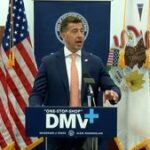
Pritzker recognized Democratic state lawmakers standing behind him when he announced the grants in Skokie last Friday.
“When you send really great leaders to Springfield to represent you, it makes our job so much easier,” the governor said.
The Illinois Senate voted to confirm NFIB Illinois State Director Noah Finley to the state’s Employment Security Advisory Board during the fall veto session, after Pritzker appointed Finley to represent employers on the board for a two-year term.
Finley said Small Business Saturday helps drive economic development in Illinois. The national effort falls on Nov. 29 this year, a day after Black Friday. According to Finley, small businesses are the lifeblood of Illinois communities.
“These small business owners, they invest in our local communities. They support our local charities, our fundraisers. They hire locally, and oftentimes they source locally, too. They’re really drivers of Main Street economies across Illinois,” Finley said, adding that the holiday season is a huge driver of retail sales for small businesses.
“We’re really driving local economic development when we shop local on Small Business Saturday and throughout the year,” Finley added.
According to the Illinois Policy Institute, nearly 99% of net new jobs created since the pandemic have come from businesses with fewer than 20 employees – or about 172,000 jobs total. These businesses created over 19,000 jobs just last year, accounting for 89% of all net new Illinois jobs in 2024.


Mostly Sunny
Latest News Stories

Feds: Chicago is key in trade fraud fight
Vance says Milwaukee mayor protesting ‘too much’ over election probe

Illinois Quick Hits: $63M construction research center completed
Illinois attorney general has paid private attorneys $2 million in recent years
Platner drops campaign for Maine’s U.S. Senate seat

Hundreds of thousands of acres burn as fires spread in West

Feds buy two immigration detention centers for $1.5 billion

Toyota set to construct $3.6 billion expansion in San Antonio
Republicans silent, Democrats irate at Iran ceasefire collapse
Chicago aldermen consider election reforms, cost savings
U.S. launches more strikes against Iran
Trump calls American military operation in Iran a ‘tremendous military success’