Lawmakers introduce bills to slash their own pay during government shutdowns
With the ongoing government shutdown dragging on for a record-breaking period of time, U.S. lawmakers are introducing bills to make shutdowns as painful for Congress as they are for federal workers.
Since the government shut down on Oct.1 after Senate Democrats filibustered Republicans’ House-passed funding bill, hundreds of thousands of federal workers have been furloughed without pay. Thousands more are forced to work without pay because their jobs are considered “essential,” such as air traffic controllers and federal police officers.
But members of Congress, the only people with the power to end the shutdown, are receiving their salaries as usual.
In a show of good faith, some lawmakers have asked the U.S. Treasury to withhold their salaries for the duration of the shutdown. But other lawmakers are taking steps to make that mandatory.
In the upper chamber, U.S. Sen. John Kennedy, R-La., has introduced the Withhold Member Pay During Shutdowns Act, which would cut the annual pay of all members of Congress by the number of days spent in a shutdown.
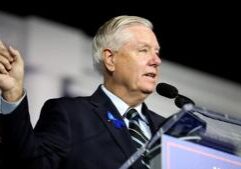
Sen. Lindsey Graham, R-S.C., has put forward a similar constitutional amendment where lawmakers would receive no pay during the shutdown, and the forfeited money instead would go to the Treasury to help reduce the national debt.
“If Members of Congress had to forfeit their pay during government shutdowns, there would be fewer shutdowns and they would end quicker,” Graham said. “The U.S. Constitution requires Members of Congress to be paid, even during government shutdowns. This is the most constitutionally sound way to deal with this problem.”
In the U.S. House, Rep. Mike Kennedy’s, R-Utah, No Work, No Pay Act of 2025; Rep. Angie Craig’s, D-Minn., No Pay for Disarray Act; and Rep. Derrick Van Orden’s, R-Wis., constitutional amendment would each ensure that members of Congress receive no pay as long as the shutdown continues.
The salary for most senators and representatives is $174,000 annually as of 2025, according to the Congressional Research Service. Given that both chambers are in session for less than half of the year, that means lawmakers would lose more than a thousand dollars per workday during a shutdown, if such a bill passes.
But Rep. Frederica Wilson’s, D-Fla., Government Shutdown Salary Suspension Act goes a step further, preventing not only Congress but also the president and vice president from receiving pay during a shutdown.
President Donald Trump, meanwhile, is losing patience with senators as the government shutdown begins to affect critical federal programs like SNAP. The president told Republicans in a Friday social media post to “Get rid of the Filibuster, and get rid of it, NOW!”
So far, shutdown negotiations have led nowhere, with Democratic and Republican leaders seeming content to wait each other out.
Democrats have demanded that any funding deal extend the pandemic-era expansion of the Obamacare Premium Tax Credit, set to expire Dec. 31. Republicans refuse, accusing Senate Democrats of “holding the government hostage.”
There are some bipartisan efforts to prevent future shutdowns, however. Reps. Bill Huizenga, R-Mich., and Scott Peters, D-Calif., have together introduced the No Budget, No Pay Act, another bill that would withhold lawmaker salaries during a lapse in appropriations.
“If Congress can’t fulfill its most basic duty to pass a budget, it shouldn’t get paid, and Members of Congress shouldn’t get back-pay either,” Huizenga stated.





Sunny then Slight Chance Showers And Thunderstorms
Latest News Stories

Democrats call on Lutnick to resign over Epstein ties

Texas congressional delegation calls for federal investigation into H-1B visa fraud

Foxx: Prosecutors’ ‘silence’ on murder exonerations doesn’t mean ‘innocent’
Illinois Quick Hits: ISU union workers reach deal, return to work

Trump’s Iran objective moves from ‘surrender’ to nuclear deal

Democrats demand answers from Trump on consumer costs of Iran conflict

Illinois Dems eye $7B from new tax proposals, push ‘Billionaire Wealth Tax’

Plan would have state taxpayers provide $50M for ICE-impacted businesses

Homan threatens crackdown if New York limits ICE cooperation
Feds sue Colorado over ban on certain firearm magazines

Group calls for clear lines of authority after UVA member’s communications released

States pushing back on data center sales tax breaks as Wisconsin forgoes $1.5B