Amnesty International condemns U.S. strikes on suspected drug boats
Amnesty International, a human rights organization, condemned U.S. military strikes on suspected drug boats in the Caribbean and eastern Pacific that have killed 57 people since September.
The group called on Congress to stop the strikes.
“In the last two months, the U.S. military’s Southern Command has gone on a murder spree by following the Trump administration’s illegal orders,” said Daphne Eviatar, Amnesty International USA’s Director for Human Rights and Security. “The administration has not even named its victims, nor provided evidence of their alleged crimes. But even if they did, intentionally killing people accused of committing crimes who pose no imminent threat to life is murder.”
Eviatar said Congress must act.
“It is well past time for Congress to exercise its oversight role over the administration’s unlawful behavior, put an end to these illegal air strikes, and hold those responsible for these murders accountable,” she said.
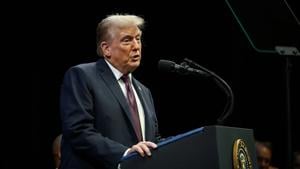
President Donald Trump and Secretary of War Pete Hegseth have said the strikes will continue.
“These narco-terrorists have killed more Americans than Al-Qaeda, and they will be treated the same,” Hegseth said Tuesday. “We will track them, we will network them, and then, we will hunt and kill them.”
Last week, Trump said his administration plans to inform Congress about using the military to target drug traffickers, but stopped short of saying they would ask for authorization to use military force.
Amnesty International officials said that even if Trump got authorization from Congress, the strikes would still be illegal under international human rights law.
“The laws of war simply do not apply here. The Caribbean and eastern Pacific are not warzones where the U.S. military can bomb boats the White House claims carry enemies,” said Daniel Noroña, Amnesty International USA’s Advocacy Director for the Americas. “Deploying the army on alleged law enforcement grounds is an old and failed trick of the authoritarian playbook that has repeatedly led to serious human rights violations in Latin America. These air strikes also send a chilling message of tacit approval to other leaders seeking to extrajudicially execute people.”
The Senate recently shut down a proposal led by Democrats that would have required Trump to get congressional approval before using the military to destroy suspected drug boats in the region.
Trump has said every suspected drug boat destroyed at sea saves 25,000 American lives from overdose.
After one of the U.S. strikes against a speedboat, agents from the Dominican Republic’s National Drug Control Directorate and the Dominican Republic Navy seized 377 packages of suspected cocaine about 80 nautical miles south of Beata Island, Pedernales province.
Previously, U.S. military vessels, including the U.S. Coast Guard, would stop suspected drug smuggling boats, seize drugs and turn those on board over to local authorities.
Trump and Hegseth have shifted course in the areas around Venezuela amid a buildup of U.S. military forces in the region. So far, U.S. officials have reported military strikes on 13 boats, killing at least 57 people. Most of the strikes so far have been in the Caribbean, but last week the military started engaging in the eastern Pacific. The Pentagon has yet to provide more details about the strikes outside of Trump and Hegseth’s videos and social media posts.
Trump’s shift to military strikes instead of interdiction has drawn criticism from Democrats, a few Republicans and some foreign leaders. Experts have raised legal and ethical questions about the justification for the strikes.
The administration is putting pressure on Nicolás Maduro, the president of Venezuela. Maduro has been accused of consolidating power through fraudulent elections. In 2024, his reelection was widely condemned as illegitimate, with allegations of vote tampering and intimidation of opposition leaders. Maduro is also facing allegations of human rights abuses, corruption, and involvement in illegal narcotics trafficking. U.S. prosecutors have charged Maduro with running a drug cartel using cocaine trafficking as a tool to sustain the regime and put a $50 million bounty on information leading to his arrest.
Since the 9/11 terrorist attacks in 2001, U.S. presidents of both parties have used the military to kill terrorists abroad, including members of Al-Qaeda and ISIS.

Showers And Thunderstorms
Latest News Stories
High schools throughout California stage walkouts over ICE
Pritzker celebrates expansion of French cheese maker in GOP leader’s district

WATCH: WA GOP lawmaker asking Trump administration to investigate fraud allegations
IL Accountability Commission chair: “People need to be prosecuted”
Graham blocks govt. funding vote over policy demands as deadline looms
Trump sues the IRS for $10 billion
Walz, Ellison to appear before House Oversight Committee
BREAKING: Don Lemon arrested for involvement in church attack
Lawmaker calls Pretti shooting an injustice, points to NRA statement as validation
DOJ to release more than 3 million Epstein documents Friday

WATCH: Commission meets as Chicago mayor seeks to prosecute ICE; SNAP changes Sunday

Illinois Quick Hits: Unemployment up over last year