Trump plans to tell Congress about new drug war, won’t seek permission
President Donald Trump and his administration plan to inform Congress about using the military to target drug traffickers, but stopped short of saying they would ask for authorization to use military force.
Since September, Trump has been using the U.S. military to destroy suspected drug boats in the Caribbean and eastern Pacific Ocean. The military campaign and build-up of U.S. military forces comes amid fresh pressure on Latin American countries.
On Friday, Trump ordered the Gerald R. Ford Carrier Strike Group to the U.S. Southern Command.
“These forces will enhance and augment existing capabilities to disrupt narcotics trafficking and degrade and dismantle [transnational criminal organizations],” Chief Pentagon Spokesman Sean Parnell said in a statement.
Also on Friday, the U.S. Treasury’s Office of Foreign Assets Control designated Colombian President Gustavo Francisco Petro Urrego for alleged drug activities, effectively cutting off access to the U.S. financial system to Petro, his wife, his son, and a close associate.
Friday’s moves come after a series of U.S. military strikes on suspected drug boats in the region. Previously, U.S. forces would stop and search such boats and turn anyone on board over to local authorities. But in September, Trump started blowing up suspected drug boats. The U.S. military has carried out at least 10 such strikes, killing more than 30 people.
Trump is also putting pressure on Nicolás Maduro, the president of Venezuela, who has been accused of consolidating power through fraudulent elections. In 2024, his reelection was widely condemned as illegitimate, with allegations of vote tampering and intimidation of opposition leaders. Maduro is also facing allegations of human rights abuses, corruption, and involvement in illegal narcotics trafficking. U.S. prosecutors have charged Maduro with running a drug cartel using cocaine trafficking as a tool to sustain the regime and put a $50 million bounty on information leading to his arrest.
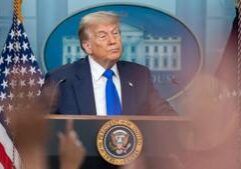
“We may go to the Senate and we may go to the Congress and tell them about it. But I can’t imagine they’d have any problem with it,” Trump said Thursday at a White House roundtable discussing his plans to use the military to go after drug traffickers at sea and on land.
Democrats and Republicans have raised questions about the legality of the strikes and asked for more information from the administration, including legal justification.
Since the 9/11 terrorist attacks in 2001, U.S. presidents of both parties have used the military to kill terrorists abroad, including members of Al-Qaeda and ISIS.
Walter Olson, a senior fellow at the Cato Institute’s Robert A. Levy Center for Constitutional Studies, said that despite Trump’s move to designate cartels and other groups as foreign terrorist organizations, U.S. laws restrict the use of the military, even in international waters.
“It requires a lot of creative thinking to say that the shipment of drugs into the United States is the same as flying a plane into a skyscraper or launching an attack on an American embassy,” Olson told The Center Square.
Most of the boat strikes have been near Venezuela.
Colombian President Gustavo Petro previously called for a criminal investigation into Trump and other U.S. officials related to the military strikes on suspected drug boats in the Caribbean. Petro recently proposed that Qatar could serve as a mediator to help stop the strikes.
Olson noted that over the course of the long U.S. war on drugs, tactics have rarely resulted in a significant decline in the shipment of drugs to the U.S. American demand for illicit drugs isn’t affected by the military strikes.
“There is no reason to believe that this will curb the drug problems,” he told The Center Square.
He noted that previous U.S. crackdowns on illicit drugs have often resulted in more potent drugs coming across the border as smugglers look to limit risk and boost profits.
Olson said it would be worth studying the recent decrease in U.S. overdose deaths, but he said the recent strikes were unrelated.
“It has nothing to do with these flashy made-for-video strikes or the idea that it’s somehow too expensive to go on using Coast Guard boats to intercept these vessels,” he said. “Senator Rand Paul made a great point that I hope everyone pays attention to, which is that we have a lot of data from the boat interdictions that the Coast Guard has been doing, and about a quarter of the time it turns out they don’t find drugs, and they let everyone go because they didn’t find drugs.”

Sunny then Slight Chance Showers And Thunderstorms
Latest News Stories
Analyst: Southern Poverty Law Center indictment will increase scrutiny of group

Illinois Quick Hits: Bears want more from state
Will County Board Approves Controversial Solar Farms Following Court Mandate
Bears, megaprojects tax incentive bill heads to Senate after clearing House
Lawmakers, administrator offer differing perspectives on proposed NASA budget
House Dems pass redistricting amendment GOP says will lead to more gerrymandering
TCS exclusive leads to revised legal arguments in income tax referendum lawsuit

Frankfort Village Board Greenlights Dutch Bros Coffee Drive-Through on LaGrange Road
Republican lawmakers press Trump trade rep on tariff relief

WATCH: WA GOP leader calls AG’s income tax emails ‘certainly improper’

Illinois Quick Hits: Governor announces green tax credits for film and TV
‘Plaintiffs’ lawyer paradise:’ IL lawsuit-friendly courts jack up costs, report says