Measles outbreak continues along Arizona-Utah border
Health officials along the Arizona-Utah border continue to deal with measles cases.
In Utah, there are 44 cases in the southwest part of the state, followed by seven cases in Utah County, three cases in southeast Utah and four cases in Bear River.
“For those who have not been keeping up with the news, there is a pretty tight-knit community down there in the Hilldale, Colorado City area,” Utah Department of Health and Human Services epidemiologist Clarissa Keisling told The Center Square. “This is kind of the epicenter of the outbreak where it kind of initially began, but now because there’s a lot of travel in that area, folks move around, we’ve seen that community spread now in areas of St. George and Iron County.”
An online dashboard is offered by DHHS to track the cases.
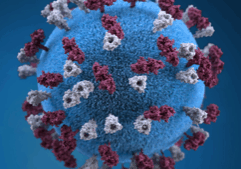
Measles is a contagious virus that officials say can remain airborne up to two hours after a person with measles has left a room. Symptoms are known to start seven to 14 days after exposure and include high fever, cough, runny nose, watery eyes and a rash.
“Out of our 58 cases, we’ve had seven hospitalizations,” said Keisling. “Thirty-three of our cases are in individuals that are less than 18 years old, which means that 25 of our cases are individuals over 18.”
Utah is also doing wastewater monitoring.
Keisling said officials are “looking for and detecting viral shedding in communities around the state” to detect whether there is community transmission early. A positive finding in wastewater allows officials to focus on early response and work with the local health department before cases, if any, are reported.
The Center Square asked Keisling whether the 44 cases in southwest Utah are the result of unvaccinated residents or unvaccinated people who’ve moved into the areas. Keisling said it is primarily due to the low vaccination rates.
“Vaccination rates have been declining over the past few years in southwest Utah, as well as exemptions, so, vaccine exemptions going into kindergartners, going into school-age children,” said Keisling. “So as those exemption rates are increasing, vaccination rates are declining. The local health department down there and us at the state, we were not surprised to kind of see the cases quickly begin to increase and kind of spiral as soon as we had our first case down there.”
DHHS is recommending people get vaccinated for measles. Keisling said it is the No.1 way to keep yourself safe.
“There can be some pretty severe complications from getting infected with measles,” said Keisling.
It is recommended that people being vaccinated for measles get two doses. According to Keisling, “two doses is 97% effective or protective.”
If a vaccinated person comes down with measles, the infection will be much milder, Keisling said, noting there’s a lot of data to support that.
The Center Square called and emailed the Arizona Department of Health Services to request a comment and did not receive a response. However, an online dashboard operated by DHS shows 84 total cases along with three hospitalizations and zero deaths.
Eighty cases are in Mohave County. The other four are in Navajo County.





Chance Rain Showers then Partly Sunny
Latest News Stories

Congress used government funding bill to ‘erase’ $3.4 trillion in deficits
Illinois patient relies on ACA tax credits, experts warn they drive higher premiums

Trump rolls back tariffs on over 200 foods in sharp reversal

Trump says $2,000 tariff rebate checks won’t come before Christmas

Chicago mayor threatens layoffs, property tax hikes if council rejects head tax
Goldwater Institute sues Arizona attorney general for records
Illinois quick hits: Four officers injured during ICE protest
California asks court to end federalization of National Guard

ICE, Florida officers arrest 230, including 150 sex offenders

With shutdown over, fight over Obamacare reform is on

Feds launch initiative to conduct welfare checks on unaccompanied minors

Will County Committee Denies Appeal for Crete Township ‘Tiny Home’ Permit

Judge: Biden-era decree deal requires release of 600+ from ICE detention

Poll: Majority believe free speech in U.S. headed in wrong direction